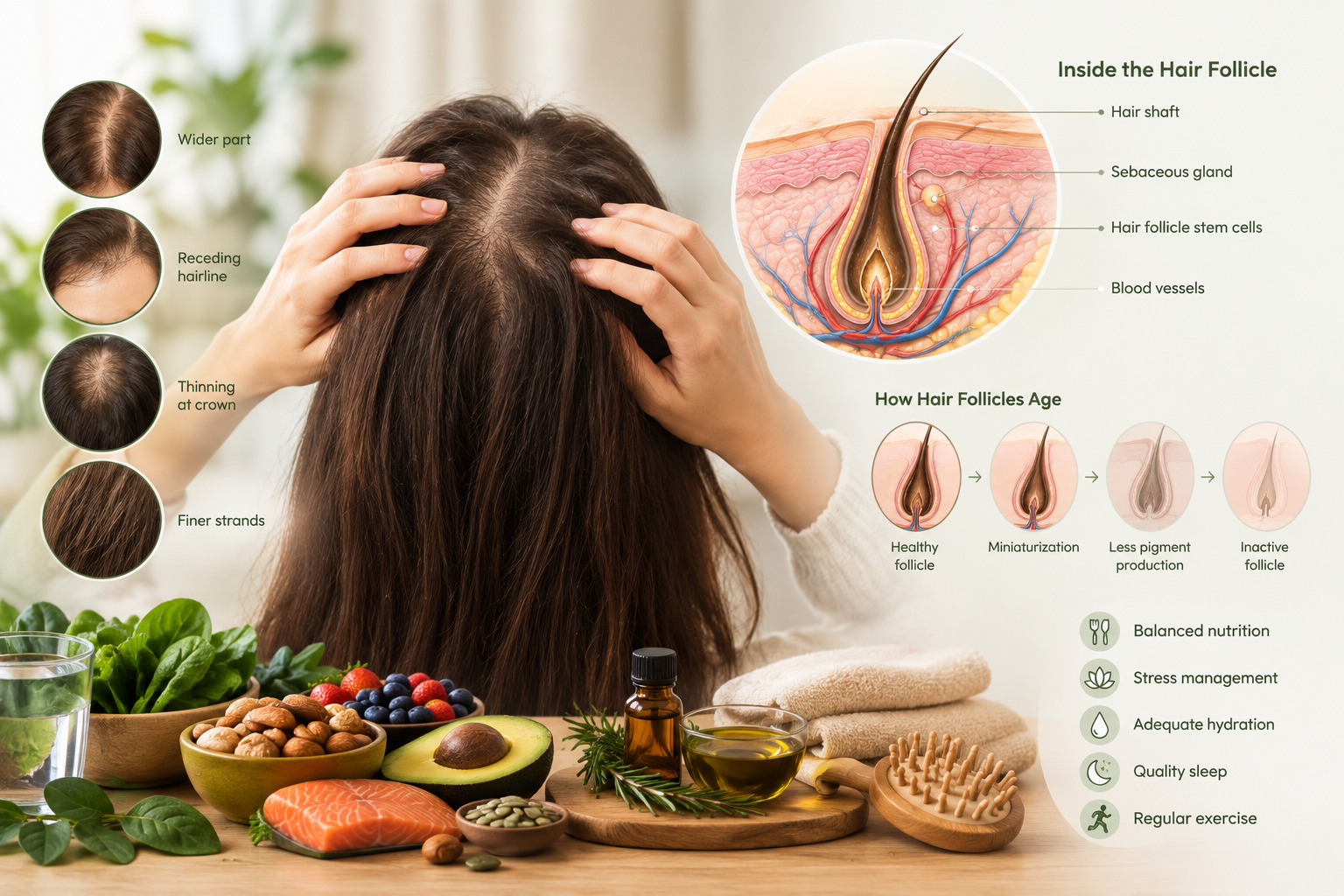

Hair thinning can be frustrating, especially when your part looks wider, your scalp becomes more visible, or your ponytail feels smaller than it used to. But thin hair and hair loss are not always the same thing. Understanding what is happening inside the hair follicle can help you choose the right approach instead of relying on random hair-loss remedies.
Thin Hair vs. Thinning Hair: What’s the Difference?
Fine hair refers to the diameter of an individual strand. You can naturally have fine hair while still having a normal number of follicles.
Thinning hair, however, usually means reduced hair density or progressive loss of follicle activity. A person may notice a widening part, thinning on top of the head, a receding hairline, or being able to see the scalp through the hair.
One important process behind hereditary hair loss is hair follicle miniaturization. The follicle gradually produces smaller, finer hairs and may eventually produce very little visible hair. Androgenetic alopecia—the most common form of hereditary hair loss—can affect both men and women. (Also Read)
Why Is My Hair Getting Thinner?
There isn’t one universal cause. Common possibilities include:
- Genetics and hormonal changes
- Androgenetic alopecia
- Stress and illness
- Nutritional deficiencies
- Thyroid or other medical conditions
- Tight hairstyles and repeated pulling
- Chemical treatments and excessive heat
- Scalp disorders or inflammation
- Certain medications
In women, thinning may appear as overall reduced density or a widening part, while some women experience noticeable hair thinning at the front. Men commonly develop recession around the hairline or thinning around the crown. (Also Read)
Stress or a major physical event can also cause increased shedding. In these situations, hair may eventually regrow once the underlying trigger is addressed. (Also read our article on hormones and hair loss)
Can Thinning Hair Be Reversed?
Sometimes, yes—but it depends on why the hair is thinning.
Temporary shedding caused by illness, significant stress, certain nutritional problems, or other reversible triggers may improve when the underlying problem is corrected. Hereditary hair loss is different: treatment can slow progression and encourage some regrowth, but results vary.
For example, minoxidil is an established treatment for certain types of hereditary hair loss. Dermatologists generally emphasize identifying the cause before choosing a hair-loss treatment because no single treatment works for everyone.
This is also why simply searching for a “baldness treatment” or “natural remedy for thin hair” may not give you the right solution.
Nutrition and Hair Follicle Health
Hair follicles require adequate energy and nutrients to maintain normal growth. A balanced diet containing protein, iron-rich foods, zinc, vegetables, fruits, whole grains and healthy fats supports overall nutritional health.
However, taking large amounts of hair supplements is not automatically better. The American Academy of Dermatology recommends supplementing nutrients such as iron, zinc or biotin when testing shows a deficiency, because excessive amounts can also be harmful.
What Does Barbara O’Neill Recommend?
In a transcript attributed to one of Barbara O’Neill’s hair-loss talks, she discusses stress, hormonal imbalance, anemia, nutritional problems and physical damage as possible contributors to hair loss. She also recommends a scalp massage using coconut oil, castor oil and rosemary essential oil. (Also Read)
Her commonly circulated recipe uses coconut oil, castor oil and rosemary essential oil, with massage intended to stimulate the scalp. However, this should be regarded as her holistic recommendation, not a proven treatment for every type of hair loss.
Rosemary oil itself has some preliminary evidence for hair growth, but it should not be presented as a guaranteed way to reverse baldness.

How to Support Thinning Hair Naturally
Whether you’re dealing with hair thinning in women, hair thinning in men, fine and thin hair, or increased hair fall, focus on the basics:
- Eat enough protein and a varied, nutrient-rich diet.
- Avoid consistently tight hairstyles that pull on the follicles.
- Reduce excessive heat and chemical processing.
- Handle wet hair gently to reduce breakage.
- Keep the scalp clean and comfortable.
- Manage chronic stress and prioritize adequate sleep.
- Seek professional evaluation when thinning is persistent or progressing.
If you can suddenly see much more of your scalp, develop bald patches, lose eyebrows, or experience scalp pain, itching or inflammation, it’s particularly important to identify the underlying cause rather than treating the symptom at home. Early diagnosis can improve the chances of successful management.
The Bottom Line
Hair thinning is a symptom, not a diagnosis. Your hair may become thinner because individual follicles are producing finer strands, because more hairs are entering the shedding phase, or because some follicles are gradually becoming inactive. Understanding the follicle—and finding the reason for the change—is the first step toward healthier, thicker-looking hair.