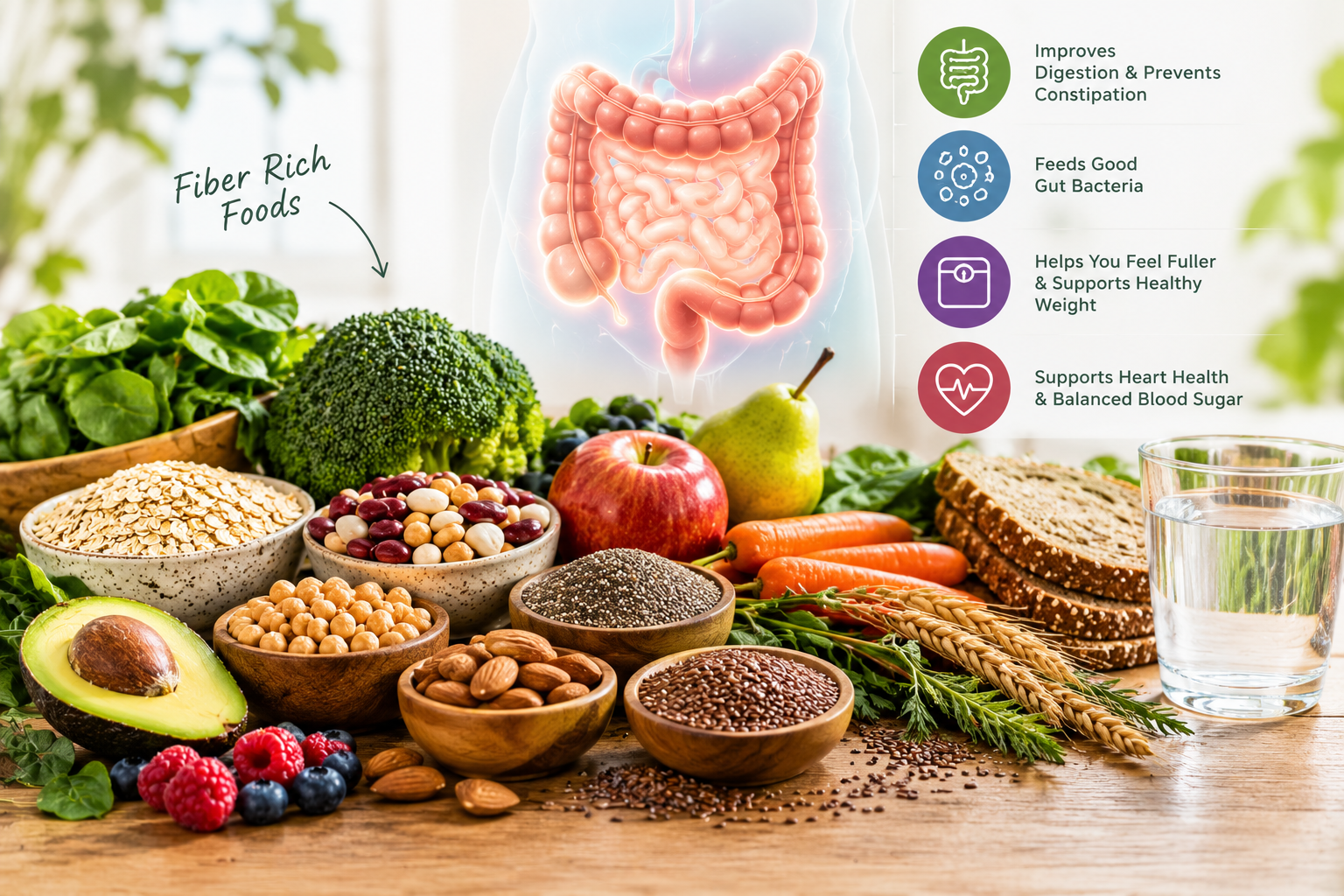

Dietary fiber is one of the most important parts of a balanced diet, yet many people do not eat enough of it. Found naturally in fruits, vegetables, whole grains, legumes, nuts, and seeds, fiber supports digestion and helps the body maintain several important functions.
But what does fiber actually do to your stomach, bowel movements, and overall health? From helping prevent constipation to supporting fullness and healthy cholesterol levels, eating more fiber can benefit your body in several ways—but increasing it gradually is important. (Also Read)
What Does Fiber Do to Your Body?
Unlike many other carbohydrates, dietary fiber is not completely broken down and absorbed in the small intestine. Different types of fiber work in different ways as they move through the digestive system.
1. It Supports Regular Bowel Movements
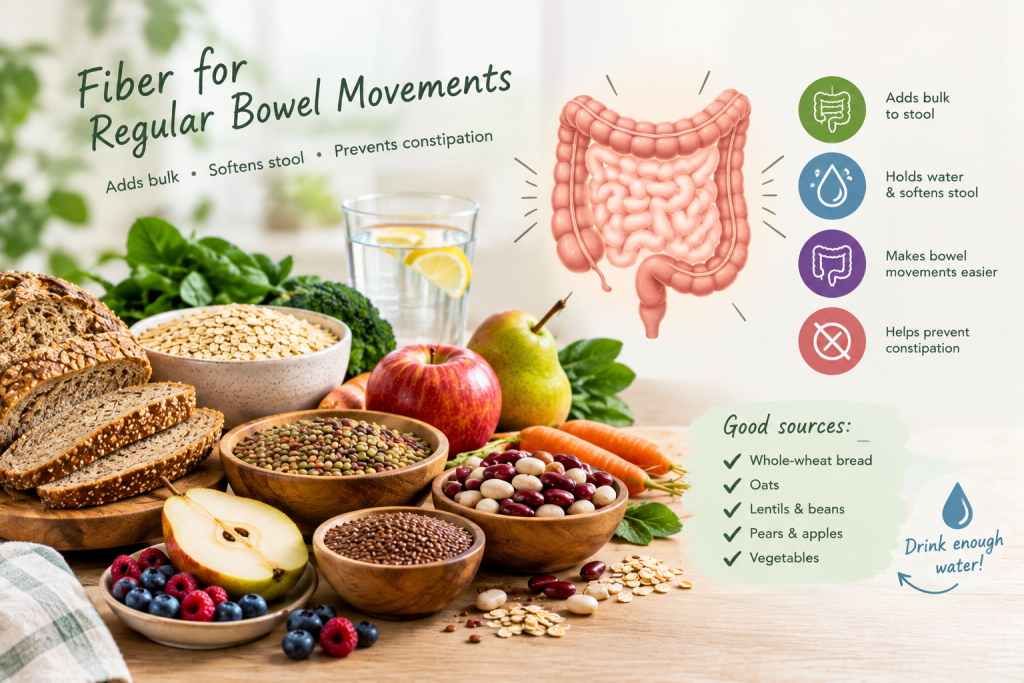
One of the best-known benefits of fiber is its role in digestion. Insoluble fiber helps add bulk to stool, while certain soluble fibers hold water and help soften it. Together, these effects can make bowel movements easier and help prevent constipation.
If you often experience hard stools or irregular bowel movements, adding fiber-rich foods may help. Good sources include whole-wheat bread, oats, lentils, beans, pears, apples, and vegetables. Drinking enough fluids also helps fiber do its job.
2. It Nourishes Beneficial Gut Bacteria
Some types of fiber act as prebiotics, meaning gut microbes can use them as food. When these bacteria ferment certain fibers, they produce compounds called short-chain fatty acids, which help support the intestinal environment.
This is one reason a varied, plant-rich diet can benefit gut health. However, not all fibers behave identically, and the effects depend on the fiber type, quantity, and individual gut microbiome.(Also Read)
3. It May Help You Feel Fuller and Manage Weight
Have you ever eaten a meal and felt hungry again shortly afterward? Fiber-rich foods can help you feel satisfied for longer because they often require more chewing and slow digestion.
Foods such as lentils, chickpeas, oats, apples, pears, and vegetables can make meals more filling. This may support weight management by helping you regulate hunger and food intake. However, fiber does not directly burn body fat; its benefits work alongside overall eating habits and physical activity.
4. It Supports Heart and Blood Sugar Health
Certain soluble fibers, including those found in oats, beans, and some fruits, can help reduce the absorption of cholesterol in the digestive tract. Some types can also slow the absorption of carbohydrates, helping moderate rises in blood sugar after meals.
These effects make fiber an important part of a balanced diet that supports cardiovascular and metabolic health. The benefits depend on the type of fiber and the overall dietary pattern.
Best High-Fiber Foods to Add to Your Diet
You do not need expensive supplements or special products to increase your fiber intake. Start with ordinary, minimally processed plant foods.
- Soluble fiber foods: oats, lentils, beans, peas, apples, pears, and chia seeds.
- Insoluble fiber foods: whole-wheat grains, wheat bran, many vegetables, and the skins of suitable fruits.
- Fiber-rich vegetables: broccoli, carrots, green peas, and leafy greens.
- Other high-fiber foods: chickpeas, almonds, flaxseeds, berries, and whole-grain bread.
Most plant foods contain a mixture of soluble and insoluble fiber, so eating a variety is more useful than focusing on only one source. Also read our article on the benefits of fiber for our health.
What Does Barbara O’Neill Recommend for Gut Health?
In her Gut Health – Chronic Fatigue and IBS lecture, Barbara O’Neill discusses digestion and the importance of dietary habits. In a separate interview, she also emphasizes legumes such as beans as useful sources of fiber and protein, recommending that people who experience gas introduce them gradually.
This whole-food approach aligns with established nutritional guidance: build meals around a variety of vegetables, fruits, legumes, nuts, seeds, and whole grains. However, individual recommendations from wellness speakers should not replace medical advice, particularly for people with ongoing digestive disorders.
Can Eating Too Much Fiber Cause Constipation?
Yes, it can contribute to discomfort in some circumstances. Increasing fiber too quickly may cause gas, bloating, and abdominal cramps. If you do not drink enough fluids, adding large amounts of fiber may also make constipation worse.
To increase fiber safely:
- Add one or two fiber-rich foods at a time.
- Drink adequate water throughout the day.
- Increase portions gradually as your digestion adjusts.
- Stay physically active to support normal bowel function.
Adults generally need around 22–34 grams of fiber daily, depending on age and sex, although individual requirements vary. If you have persistent constipation, severe abdominal pain, or a condition that affects your intestines, seek medical advice before making major dietary changes.
The Bottom Line
Eating more fiber can support regular bowel movements, beneficial gut bacteria, fullness, cholesterol management, and blood sugar control. The simplest approach is to eat a wider variety of whole plant foods and increase your intake gradually.
Your gut benefits from consistency, not sudden extremes. Small, sustainable changes to everyday meals can help you build a more fiber-rich diet while keeping digestion comfortable.