

Introduction
Many foods promoted as healthy—such as flavored yogurt, granola, protein bars, and plant-based milk—can contain surprising amounts of hidden sugars. While these products may offer valuable nutrients, added sugars can offset their health benefits when consumed regularly. Excess intake of hidden sugars has been linked to obesity, insulin resistance, type 2 diabetes and non-alcoholic fatty liver disease (NAFLD). Understanding where sugar hides and learning to read nutrition labels can help you make smarter food choices and protect your long-term health.
What Are Hidden Sugars?
Hidden sugars are added sugars incorporated into processed foods to enhance flavor, texture, or shelf life. They often appear under unfamiliar names, making them difficult to recognize. Common examples include:
- High-fructose corn syrup
- Cane sugar
- Brown rice syrup
- Dextrose
- Maltose
- Sucrose
- Glucose
- Fructose
- Fruit juice concentrate
- Agave syrup
Unlike the natural sugars found in whole fruits and vegetables, which are accompanied by fiber, vitamins and antioxidants, added sugars provide calories with little nutritional value. The American Heart Association (AHA) recommends limiting added sugar intake to no more than 25 g (6 teaspoons) daily for women and 36 g (9 teaspoons) for men to reduce the risk of chronic disease.
5 Healthy Foods with Surprisingly High Sugar Content
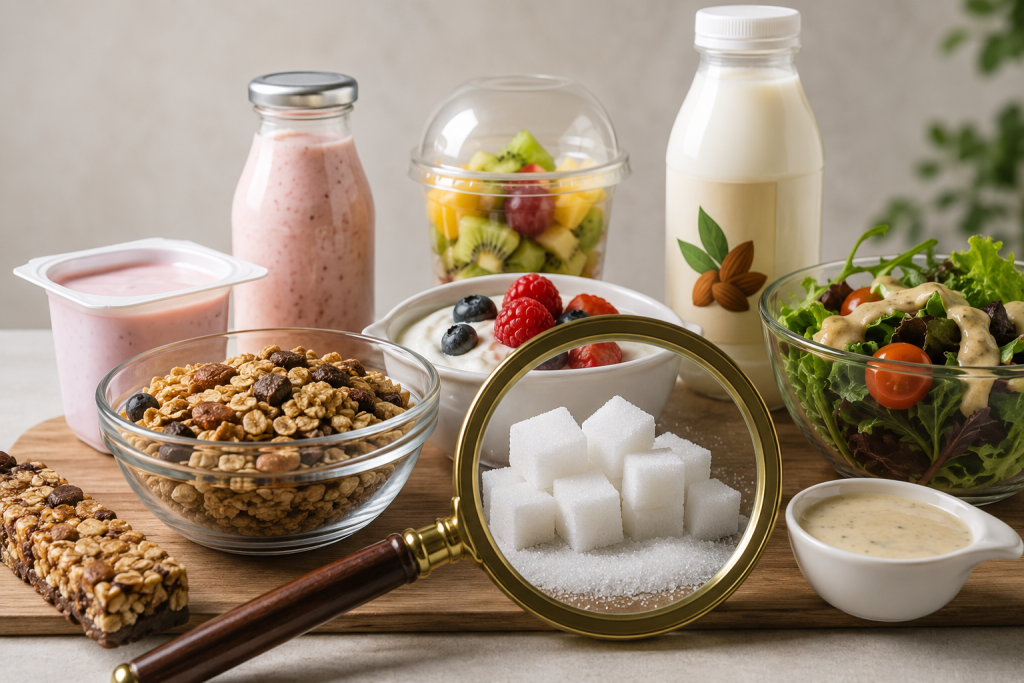
Many foods marketed as nutritious contain more sugar than most people realize.
1. Flavored Yogurt
Yogurt is an excellent source of calcium and probiotics, but flavored varieties may contain 15–25 grams of added sugar per serving. Plain Greek yogurt topped with fresh berries is a healthier alternative.
2. Granola and Breakfast Cereals
Granola and breakfast cereals are often sweetened with honey, maple syrup or cane sugar. Even whole-grain options may contain enough added sugar to cause unwanted blood sugar spikes if eaten regularly.
3. Protein and Energy Bars
Many protein bars are marketed as fitness foods but contain sugar levels comparable to candy bars. Ingredients like brown rice syrup, glucose syrup and cane sugar frequently appear near the top of the ingredient list.
4. Bottled Smoothies and Fruit Drinks
Store-bought smoothies and fruit beverages often contain fruit juice concentrates and additional sweeteners. Although they contain fruit, they may deliver significantly more sugar than whole fruit while lacking its beneficial fiber.
5. Plant-Based Milk and Bottled Salad Dressings
Flavored oat, almond and soy milk commonly contain added sugar to improve taste. Likewise, many bottled salad dressings include sugar to balance acidity, making salads less healthy than expected.
Reading both the Nutrition Facts panel and ingredient list is the best way to identify hidden sugars in everyday foods.
Hidden Sugar Dangers
Consuming excess added sugar over time can negatively affect nearly every system in the body. Research shows that diets high in added sugars contribute to:
- Blood sugar spikes
- Insulin resistance
- Increased risk of type 2 diabetes
- Weight gain and obesity
- Elevated triglycerides
- Non-alcoholic fatty liver disease (NAFLD)
- Tooth decay
- Chronic inflammation
High consumption of fructose-containing sweeteners is particularly associated with liver fat accumulation, which may lead to elevated liver enzymes such as alanine aminotransferase (ALT) and increase the risk of fatty liver disease (source).
Common signs that you may be consuming too much sugar include persistent cravings, fatigue, frequent hunger, mood swings, and difficulty maintaining a healthy weight. Reducing hidden sugars can improve energy levels and support healthier blood glucose control.
How to Spot Hidden Sugars on Food Labels
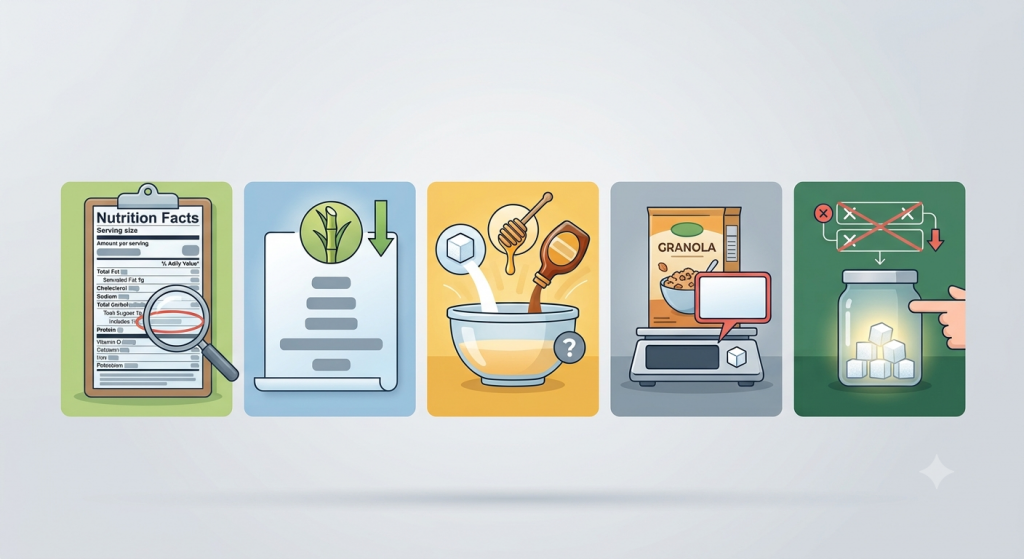
Identifying hidden sugars begins with carefully reading food labels.
Look for:
- “Added Sugars” on the Nutrition Facts label.
- Sugar listed among the first three ingredients.
- Multiple sugar names in one ingredient list.
- More than 10–15 grams of added sugar per serving.
Don’t rely solely on packaging claims such as “natural,” “organic” “low-fat” or “healthy.” Many of these products still contain substantial amounts of added sugar. Choosing minimally processed foods with shorter ingredient lists is generally a healthier strategy.
Healthier Low-Sugar Alternatives
Replacing processed foods with whole-food options is one of the easiest ways to reduce hidden sugar intake.
Choose foods like:
- Plain Greek yogurt with fresh fruit
- Unsweetened almond or soy milk
- Homemade smoothies
- Fresh fruit instead of fruit snacks
- Unsalted nuts and seeds
- Plain oatmeal topped with cinnamon
- Fresh vegetables with hummus
These foods provide fiber, protein, vitamins and healthy fats that help stabilize blood sugar while promoting satiety and overall metabolic health.
Conclusion
Hidden sugars in healthy foods are more common than many consumers realize. Products marketed as nutritious can still contain significant amounts of added sugar that contribute to weight gain, blood sugar imbalance, insulin resistance and fatty liver disease. By learning the different names for added sugars, reading food labels carefully and choosing minimally processed whole foods, you can significantly reduce your daily sugar intake. Small dietary changes today can support better metabolic health, healthier blood sugar levels and long-term disease prevention.