
Introduction
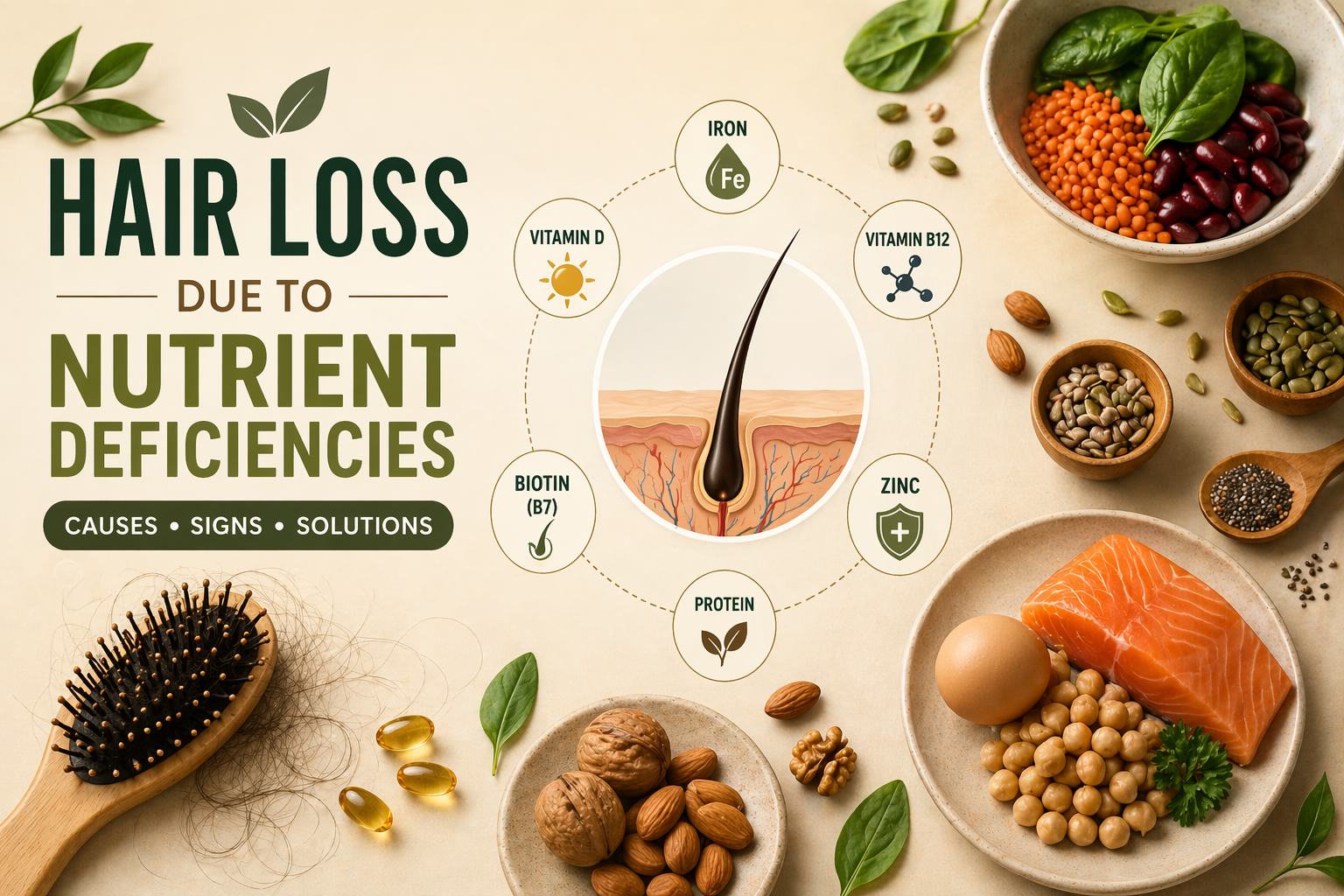
Hair loss is a widespread concern, but one of the most overlooked causes is nutrient deficiencies. If you’ve been searching which deficiency causes hair loss or what vitamin deficiency leads to hair fall, research shows that inadequate intake of key nutrients can disrupt the hair growth cycle and lead to noticeable thinning.
Can Nutrient Deficiencies Cause Hair Loss?
Yes, nutritional deficiencies can directly contribute to hair loss, particularly a condition known as telogen effluvium, where hair prematurely enters the shedding phase. Hair follicles are metabolically active and require a steady supply of micronutrients. When the body lacks essential vitamins and minerals, it prioritizes vital organs over hair growth, resulting in increased shedding.
Key Nutrient Deficiencies That Cause Hair Loss
1. Iron Deficiency (Most Common Cause)
Iron deficiency is one of the leading causes of hair loss, especially in women. Low iron levels reduce oxygen supply to hair follicles, weakening them and causing excessive shedding.
Common signs: fatigue, pale skin, brittle nails and hair thinning.
2. Vitamin D Deficiency
Vitamin D plays a role in creating new hair follicles. A deficiency can disrupt the hair growth cycle, leading to increased hair fall and thinning. Many people with unexplained hair loss have low vitamin D levels.
Common signs: hair thinning, slow regrowth
3. Biotin (Vitamin B7) Deficiency
Biotin is essential for keratin production, the protein that makes up hair. A lack of biotin can result in weak, brittle hair and noticeable hair fall.
Common signs: brittle hair, thinning strands.
4. Vitamin B12 Deficiency
Vitamin B12 supports red blood cell formation, which delivers oxygen to the scalp. Deficiency may contribute to hair loss through impaired follicle oxygenation (source)
Common signs: hair shedding, fatigue, weakness.
5. Zinc Deficiency
Zinc helps repair hair tissue and supports oil glands around follicles. Zinc supplementation has shown improvement in some hair loss cases.
Common signs: hair shedding, scalp issues.
6. Protein Deficiency
Hair is primarily made of protein (keratin, a structural protein). Insufficient protein intake can push hair into the resting phase (telogen), resulting in excessive shedding.
Common signs: thinning hair, slow growth.
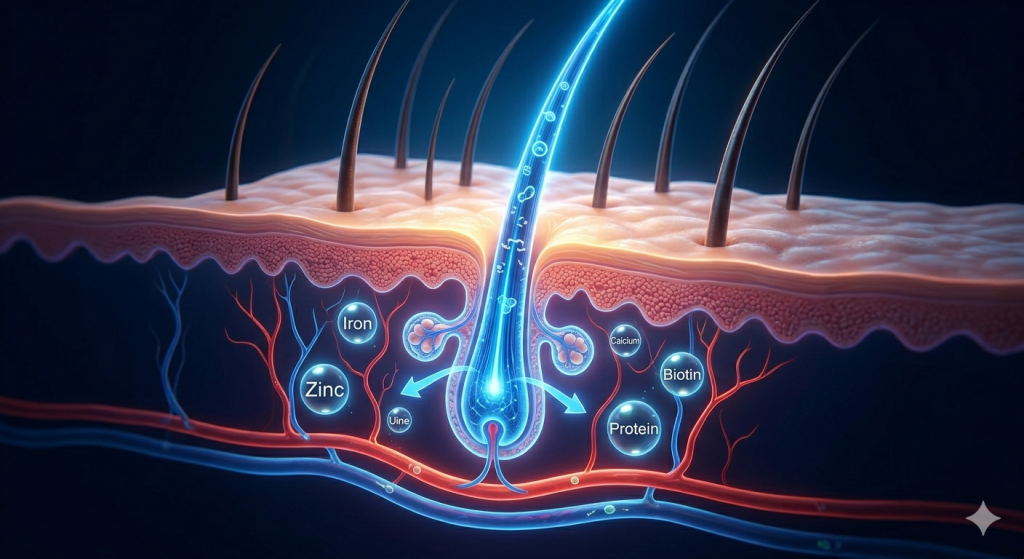
Signs Your Hair Show Due to a Deficiency
Recognizing deficiency-related hair fall, early can help prevent worsening. Look for:
- Diffuse thinning across the scalp
- Increased hair shedding during brushing or washing
- Dry, brittle, or weak hair strands
- Fatigue or weakness (linked to iron or B12 deficiency)
- Slow hair regrowth
If you’re asking, what vitamin is lacking which causes the hair fall, these symptoms often point toward nutritional imbalance.
What Blood Tests Help Diagnose Hair Loss?
To confirm whether a nutritional deficiency is causing loss of hair, doctors often recommend:
- Serum ferritin test → evaluates iron stores
- Vitamin D levels → detects deficiency
- Vitamin B12 test → assesses red blood cell health
- Zinc levels → identifies mineral imbalance
- Thyroid function tests → rules out hormonal causes
These tests are essential for confirming which nutritional deficiency causes hair loss and guiding treatment.
How to Fix Hair Loss Due to Nutrient Deficiencies
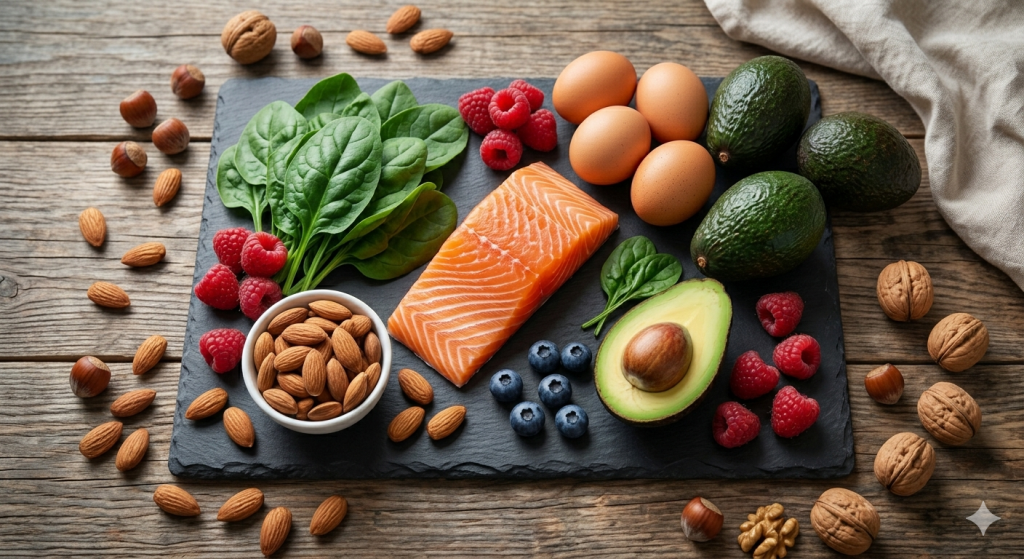
1. Improve Your Diet
A balanced diet is key to reversing deficiency-related hair fall. Include:
- Iron-rich foods: spinach, lentils, red meat
- Vitamin D sources: sunlight exposure, fortified foods
- Biotin foods: eggs, nuts, seeds
- Protein sources: chicken, fish, legumes
- Zinc-rich foods: pumpkin seeds, whole grains
2. Take Supplements (If Needed)
Supplements can help correct deficiencies but should be taken under medical guidance.
- Biotin or multivitamins if dietary intake is low
- Iron supplements for anemia
- Vitamin D capsules for deficiency
3. Lifestyle and Absorption Factors
Stress, poor sleep and crash dieting can worsen deficiencies. A healthy lifestyle supports better nutrient absorption and hair growth. Ensure proper gut health for nutrient absorption because gut is not only responsible for digestion but also plays a key role in nutrient absorption. You may read our article on this topic “Gut Health and Hair Loss” to understand that how gut health influence the hair growth.
Can Hair Grow Back After Fixing Deficiencies?
Yes, in most cases, hair loss due to nutrient deficiencies is reversible. Once nutrient levels are restored, hair regrowth typically begins within 3–6 months. However, consistency in diet and treatment is essential for long-term results.
Best Vitamins for Hair Growth and Prevention
If you’re wondering which vitamin helps stop hair fall, focus on:
- Vitamin D → supports follicle growth
- Biotin (B7) → strengthens hair structure
- Vitamin B12 → improves oxygen supply
- Iron → prevents shedding
- Zinc → aids repair and growth
These nutrients play a critical role in maintaining healthy, strong hair.
Conclusion
Hair loss due to nutrient deficiencies is both common and treatable. Understanding which deficiency causes hair loss—whether it’s iron, vitamin D, biotin, or protein—can help you take the right steps toward recovery. By improving your diet, addressing deficiencies and maintaining a healthy lifestyle, you can restore not only your hair but also your overall well-being.