
Introduction
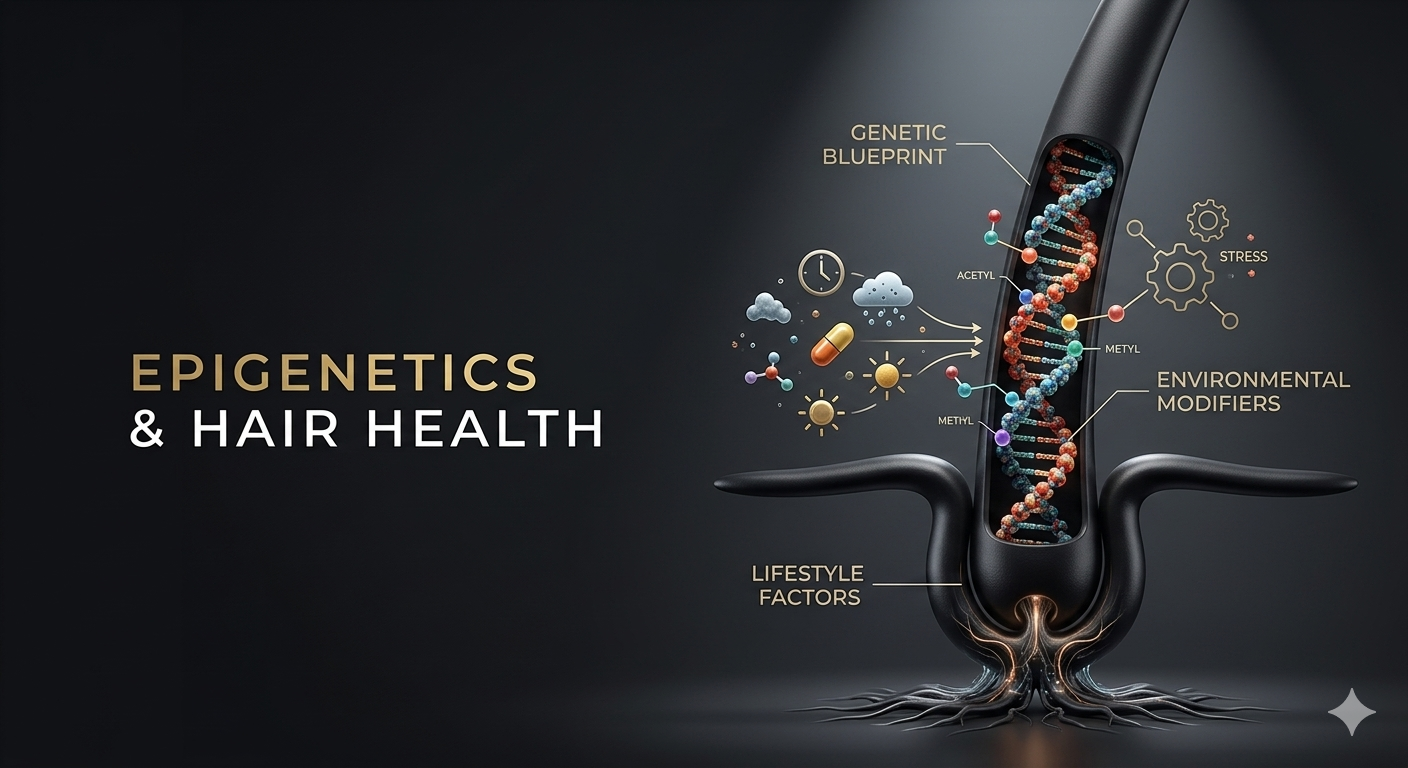
Hair loss is often blamed on genetics, but modern science shows it’s more complex. The field of epigenetics and hair health reveals that while genes provide the blueprint, environmental and lifestyle factors determine how those genes are expressed. This evolving understanding offers new hope for managing epigenetics and hair loss naturally.
What Is Epigenetics and How Does It Affect Hair Health?
Epigenetics refers to changes in gene expression without altering the DNA sequence. Mechanisms such as DNA methylation and histone modification regulate whether certain genes are active or inactive.
In terms of epigenetics hair growth, these mechanisms influence:
- Hair follicle cycling
- Duration of the growth (anagen) phase
- Follicle response to hormones
Research shows that these genetic regulation plays a key role in maintaining healthy hair follicles and preventing premature hair loss.
Can Epigenetics Cause Hair Loss?
A frequently asked question is: can epigenetics affect hair loss? Scientific evidence suggests yes. Epigenetic changes can disrupt normal hair growth patterns.
Key Biological Mechanisms
- DHT sensitivity: Increased expression of androgen receptors can shrink hair follicles
- Inflammation: Chronic inflammation alters gene expression linked to hair cycling
- Hormonal imbalance: Particularly relevant in female hair loss
A study in Nature Communications highlighted that epigenetic modifications influence hair follicle stem cell activity, contributing to thinning and shedding (source).
What Gene and Enzyme Are Linked to Hair Loss?
Hair loss is influenced by multiple genes and enzymes, particularly those involved in hormone metabolism.
Key Factors
- Androgen receptor (AR) gene: Determines follicle sensitivity to DHT
- 5-alpha reductase enzyme: Converts testosterone into DHT
- Wnt signaling pathway: Essential for hair follicle regeneration
Epigenetic regulation of these pathways can lead to follicle miniaturization, a hallmark of androgenetic alopecia.
Hair Loss Increasing in Younger Generations
Questions like why do Gen Z bald so fast? are becoming more common. While genetics play a role, modern environmental factors are significant.
Epigenetic Triggers
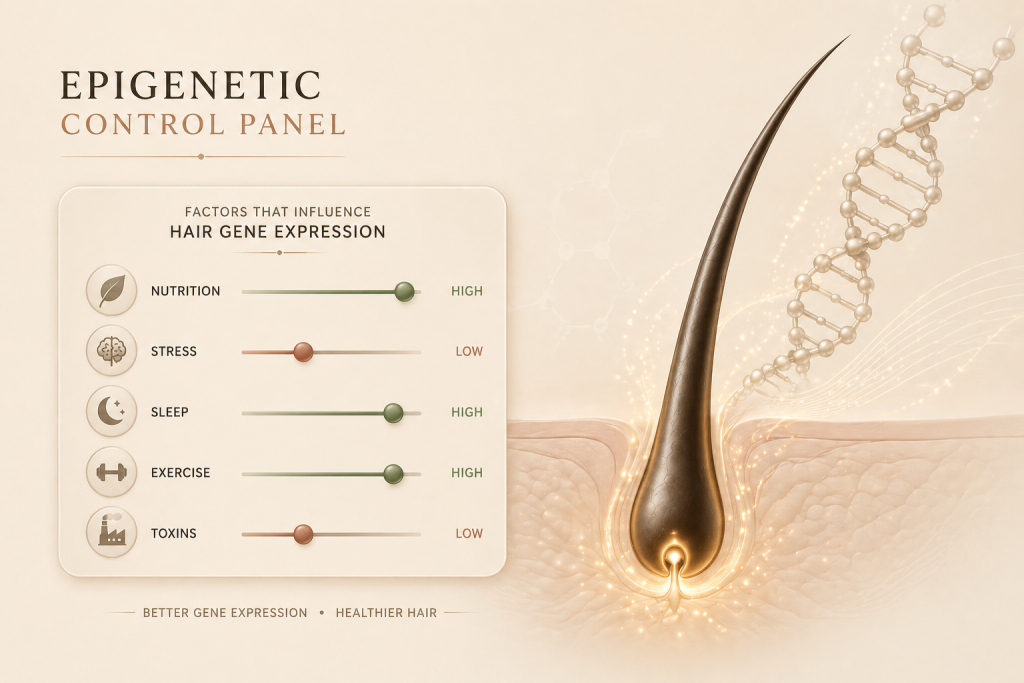
- Chronic stress
- Nutrient deficiencies
- Poor sleep cycles
- Environmental toxins
These factors can alter gene expression and accelerate genetic hair loss, even in individuals without a strong genetic predisposition.
Can You Reverse Genetic Hair Loss Naturally?
While complete reversal of genetic hair loss remains difficult, epigenetics suggests that gene expression can be influenced.
Lifestyle Strategies for Epigenetics Hair Growth
- Nutrient-rich diet: Supports gene regulation
- Stress reduction: Lowers cortisol-related hair loss
- Regular sleep: Maintains hormonal balance
- Scalp health: Improves blood circulation
Studies show that lifestyle interventions can positively impact epigenetic markers linked to hair and skin health.
Best Nutrients and Foods for Epigenetic Hair Support
Many people ask, what is the best vitamin for hair growth? The answer lies in a combination of essential nutrients.
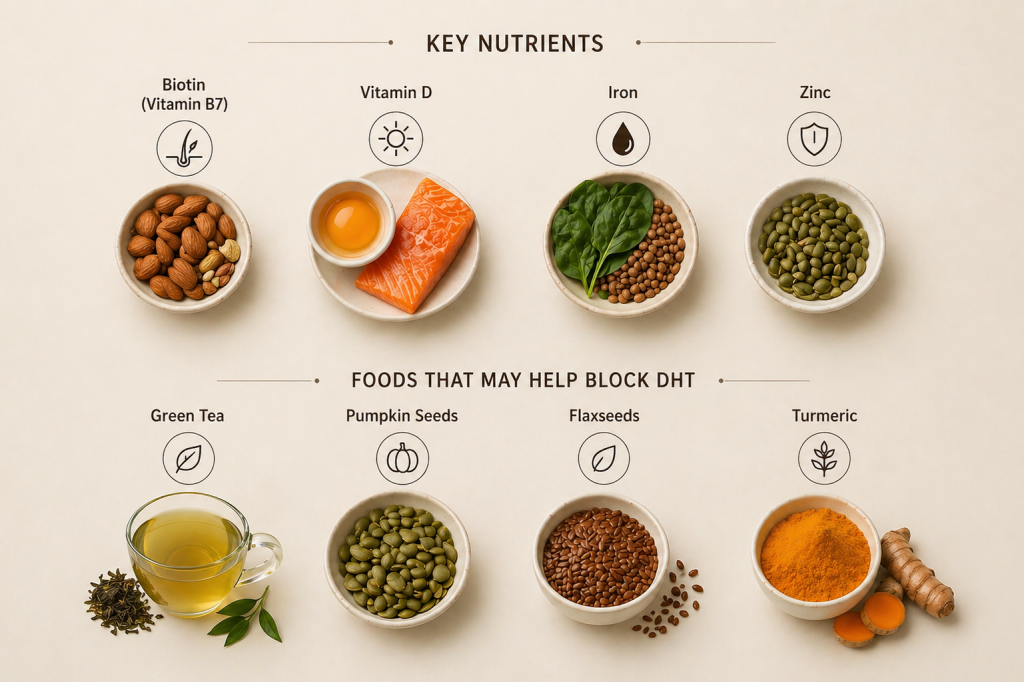
Key Nutrients
- Biotin (Vitamin B7): Supports keratin synthesis
- Vitamin D: Regulates follicle cycling
- Iron: Prevents excessive shedding
- Zinc: Aids tissue repair
Foods That May Help Block DHT
- Green tea
- Pumpkin seeds
- Flaxseeds
- Turmeric
Certain plant compounds may influence hormone metabolism and reduce DHT activity, supporting healthier follicles.
Epigenetic Hair Analysis: Does It Work?
Services such as epigenetic hair analysis, epigenetics hair test and epigenetic hair scan are gaining popularity.
What These Tests Claim
- Detect mineral imbalances
- Analyze environmental exposure
- Provide personalized recommendations
However, scientific evidence supporting epigenetic hair analysis tests is still limited and experts caution against relying solely on them for diagnosis.
Can Gene Therapy Cure Baldness?
Another major question is: how close are we to curing baldness?
Emerging Treatments
- Gene therapy: Targeting defective hair-related genes
- Stem cell therapy: Regenerating hair follicles
- Epigenetic drugs: Modifying gene expression
Early studies show promise, but these treatments are still under development and not yet widely available.
Do Hair Genes Come from Mother or Father?
It’s a myth that hair loss comes only from the mother’s side.
- Hair loss is polygenic (multiple genes involved)
- Both parents contribute genetic risk
- Epigenetics can modify inherited traits
This means lifestyle choices can influence outcomes, even if genetic risk is present.
Conclusion
The science of epigenetics hair demonstrates that hair health is not entirely predetermined. While genetics set the foundation, environmental and lifestyle factors shape how those genes function.
By focusing on nutrition, stress management, and overall wellness, individuals can positively influence epigenetics and hair growth. Although a complete cure for hair loss is still being researched, epigenetics provides a powerful, science-backed approach to healthier, stronger hair.



Interesting.
Are epigenetics influence other body traits like height, skin colour, growth and immunity factor?
Yes off course it does, epigenetics effect your genetics and yours genetics is the base of all the traits