
Introduction
Nutrition, scalp health and structural proteins also play important roles in maintaining healthy hair. Collagen, one of the body’s most abundant proteins, has gained attention for its potential benefits for hair strength and scalp health. But can it really make hair thicker, reduce thinning or support hair growth? Understanding that whether collagen-rich foods and supplements deserve a place in your hair-care routine.
What Is Collagen and Why Does Hair Need It?
It is a structural protein that provides strength and support to the skin, bones, tendons and connective tissues. It is particularly important in the dermis, the deeper layer of skin that surrounds and supports hair follicles. Also read our article on the overview of collagen and its roles in our body.
Although hair strands are primarily composed of keratin rather than collagen, but the tissues surrounding hair follicles depend on it for structural support. A healthy scalp environment helps maintain normal follicle function and provides a foundation for healthy hair.
As we age, its natural production gradually declines. This has increased interest in its supplementation as a potential way to support scalp health and maintain stronger-looking hair.
How Does Collagen Support Stronger Hair?
It may contribute to hair health through several biological mechanisms.
1. Supports the Scalp’s Structural Framework
It forms part of the extracellular matrix, a network of proteins that supports skin cells and tissues. This framework helps maintain the structure and integrity of the scalp, where hair follicles develop and function.
2. Provides Amino Acids for Protein Synthesis
It contains amino acids such as glycine, proline and hydroxyproline. When consumed, its peptides are digested into smaller peptides and amino acids that contribute to the body’s protein metabolism. These nutrients support general tissue maintenance, although it does not directly turn into keratin.
3. Helps Support Antioxidant Defense
Oxidative stress occurs when free radical production exceeds the body’s antioxidant defenses. Research suggests oxidative stress may contribute to cellular damage and disturbances in hair follicle function. Some laboratory studies indicate that collagen-derived peptides have antioxidant properties, but their ability to prevent hair loss in humans requires further investigation.
Can It Make Hair Thicker and Reduce Thinning?
One of the most common questions is whether it can make hair thicker. Although collagen may support the tissues surrounding hair follicles, strong clinical evidence that it alone increases hair density or reverses hair thinning is still limited.
A randomized, controlled study by Milani and colleagues investigated a supplement containing marine hydrolyzed collagen, amino acids, iron and selenium in individuals experiencing hair loss. The researchers reported improvements in hair-related outcomes over three months. However, because the supplement contained multiple ingredients, it individual contribution could not be established. (source)
Hair thinning can also result from genetics, hormonal changes, nutritional deficiencies, stress and medical conditions. It should therefore be considered a possible nutritional support, not a proven treatment for hair loss.
What Form of Collagen Is Best for Hair Growth?
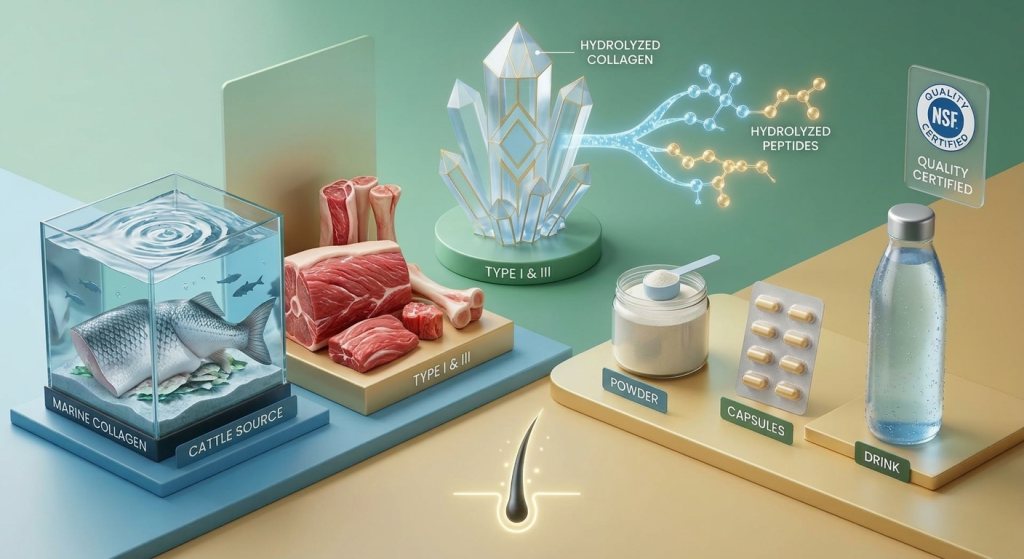
Hydrolyzed collagen peptides are among the most common forms used in dietary supplements. They are produced by breaking it into smaller peptides, making them easier to digest and absorb.
Popular sources include:
- Marine: Usually obtained from fish skin and scales.
- Bovine: Derived from cattle tissues and commonly contains its type I and III.
- Peptides: Available in powders, capsules and drinks.
There is currently insufficient evidence to establish one collagen source or type as superior for the growth of hair. Choose a reputable product with clearly listed ingredients and quality testing. Remember that no supplement guarantees thicker hair.
Collagen vs. Biotin
Both of these support different biological functions. Collagen provides amino acids involved in protein metabolism and supports connective tissues, whereas biotin (vitamin B7) helps enzymes involved in energy metabolism.
Neither supplement is a guaranteed solution for hair thinning. Biotin deficiency can cause hair loss, but deficiency is uncommon. Supplementing beyond normal nutritional requirements has not been shown to reliably improve hair growth in people without a deficiency.
The better choice depends on individual nutritional needs rather than popularity.
Natural Ways to Support Collagen Production
A balanced diet provides nutrients required for its normal synthesis and healthy hair. Include these foods in your daily routine:
- Protein-rich foods: Eggs, fish, chicken and legumes supply amino acids needed for protein synthesis.
- Vitamin C sources: Citrus fruits, strawberries and bell peppers support its natural formation.
- Mineral-rich foods: Nuts, seeds and seafood provide zinc and copper, which contribute to normal connective tissue maintenance.
- Collagen-containing foods: Bone broth, gelatin and fish skin provide dietary or gelatin-derived proteins.
Combining these foods with a balanced diet supports overall nutrition rather than relying entirely on supplements.
Side Effects and Precautions
Its supplements are generally well tolerated, but some people may experience bloating, nausea, digestive discomfort, or an unpleasant aftertaste. Marine collagen may trigger allergic reactions in individuals with fish allergies.
Before taking collagen, check its source, ingredients and quality standards. Avoid combining multiple supplements without considering overlapping nutrients or excessive intake. Vitamin C can be consumed alongside it as part of a balanced diet, although a specific timing or combination is not essential.
People taking regular medication or those who are pregnant or breastfeeding should consult a healthcare professional before starting supplementation.
Conclusion
Collagen offers promising possibilities for scalp support and overall tissue health, but its direct effects on human hair growth remain under investigation. A nutrient-rich diet, adequate protein intake, and appropriate scalp care provide a stronger foundation for healthier hair than relying on supplements alone.
Want to improve your hair health naturally? Start by nourishing your body from within, choosing evidence-based hair-care practices and understanding the nutrients your follicles need. Explore more Science Quick articles on hair nutrition, essential vitamins and natural ways to support stronger, healthier hair.