
Introduction
Collagen is often called the body’s beauty protein, but its importance extends far beyond healthy skin and hair. As the most abundant protein in the human body, it provides structural strength and support to bones, joints, muscles, blood vessels and connective tissues. It helps maintain tissue integrity, supports normal body functions and contributes to healthy aging. Understanding its powerful role can help you make better nutritional and lifestyle choices to support your body’s natural collagen production.
What Is Collagen and Where Is It Found?
Collagen is a structural protein made from amino acids, particularly glycine, proline and hydroxyproline. It forms a supportive framework throughout the body and is an essential component of connective tissues.
According to the National Institutes of Health (NIH), vitamin C plays an essential role in its biosynthesis by supporting the enzymes responsible for producing and stabilizing its fibers. (Source).
It is found in the skin’s dermis, bones, cartilage, tendons, ligaments and blood vessels. Different types perform specialized functions:
- Type I: Abundant in skin, bones, tendons and ligaments.
- Type II: Primarily found in cartilage, supporting joint structure.
- Type III: Present in skin, muscles, and blood vessels.
What Does Collagen Do in the Body?
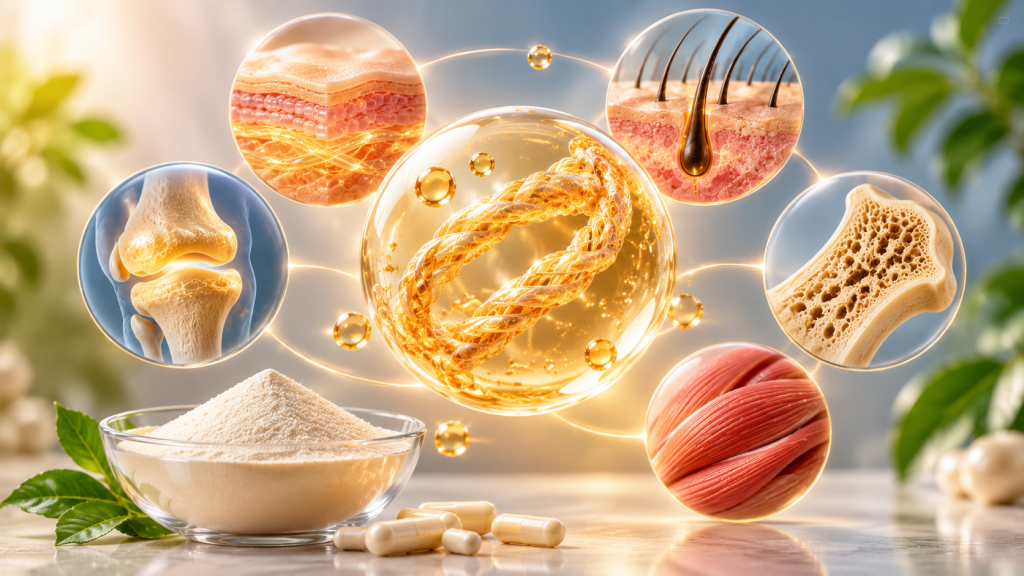
It acts as the body’s natural structural framework. It helps tissues maintain their strength, flexibility and integrity. Its functions extend across several important body systems.
1. For Skin, Hair and Nails
It provides structural support to the skin, helping maintain firmness and elasticity. As its natural production declines with age, skin gradually loses some of its firmness, contributing to wrinkles and visible signs of aging.
It also supports the connective tissues surrounding hair follicles. However, hair itself is primarily composed of keratin, not collagen. Although its supplements provide amino acids involved in protein metabolism, scientific evidence directly linking them to increased hair growth remains limited.
2. For Bones, Joints and Muscles
Collagen forms an important part of the bone matrix, providing a flexible framework that supports bone strength. It is also a major component of cartilage, tendons and ligaments, helping joints withstand physical movement and mechanical stress.
Research published in Applied Physiology, Nutrition and Metabolism has investigated its supplementation in relation to joint health and exercise-related recovery. Its peptides may help support joint comfort in some individuals, although further research is needed to establish their effectiveness.
3. For Connective Tissues
It strengthens tendons, ligaments, blood vessels and other connective structures. These tissues connect, protect and support different parts of the body. Without its sufficient amount, maintaining normal tissue structure and mechanical strength would be difficult.
What Causes its Levels to Decline?
The body’s natural collagen production gradually decreases with age. This process can contribute to wrinkles, reduced skin elasticity, joint changes and alterations in connective tissue strength.
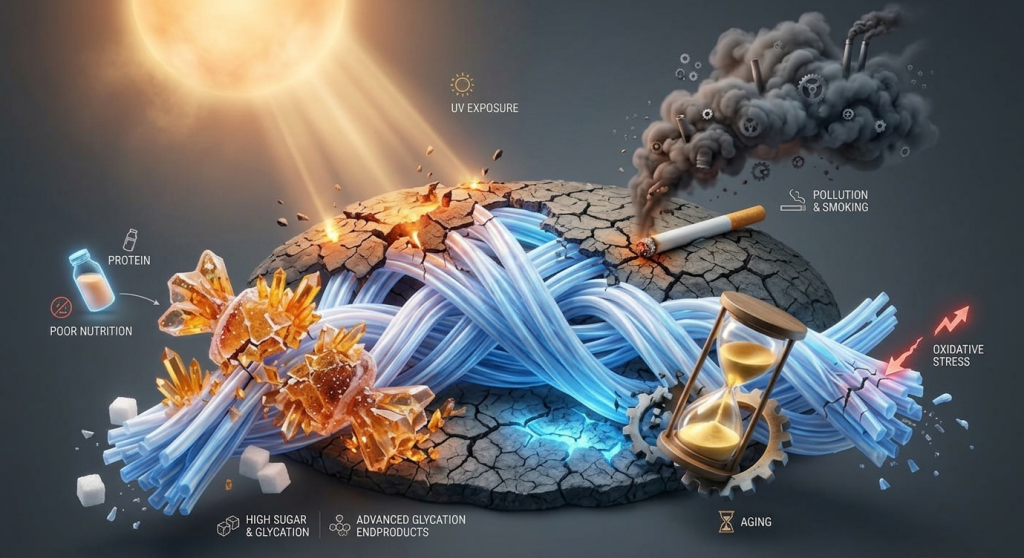
Several lifestyle and environmental factors may accelerate its breakdown:
- Excessive ultraviolet (UV) exposure.
- Smoking and environmental pollution.
- High sugar intake and excessive glycation.
- Poor nutrition and inadequate protein intake.
- Chronic oxidative stress.
A study published in The Journal of Clinical Investigation explains how UV exposure contributes to its degradation and visible skin aging. Protecting your skin from excessive sunlight and maintaining healthy lifestyle habits can help preserve existing collagen.
Should You Take Collagen Supplements?
Its supplements are commonly available as powders, capsules, and liquid formulations. Most contain its hydrolyzed form, also known as its peptides, which are smaller protein fragments produced through enzymatic processing.
Research published in Nutrients has reported potential improvements in skin hydration and elasticity following the supplementation. Some studies also suggest benefits for joint comfort. However, results vary and more high-quality independent research is needed.
Most of its supplements come from bovine, marine or chicken sources. Vegetarian and non-animal collagen products generally contain nutrients intended to support the body’s own production rather than its actual form.
Side Effects and What to Avoid
Collagen supplements are generally well tolerated, but some people may experience bloating, digestive discomfort, or an unpleasant aftertaste. People with fish or other food allergies should check supplement ingredients carefully.
Choose quality-tested products and avoid exaggerated claims promising instant hair growth or wrinkle removal. Taking it at night is generally acceptable, but there is no strong scientific evidence that nighttime consumption is more effective than daytime use.
Conclusion
Collagen is much more than a beauty protein. It supports skin, bones, joints, muscles, and connective tissues, making it essential for overall structural health. A balanced diet, adequate protein, vitamin C, sun protection, and healthy lifestyle habits can help support its natural production as you age.
Want to support your body’s health from within? Start by incorporating collagen-supporting foods into your daily diet and protecting your existing collagen through healthy habits.
Read the next related guide: Discover how specific nutrients and food combinations can support its production and promote healthier skin, hair, and joints. Continue exploring Science Quick for practical, research-informed ways to improve your everyday health.