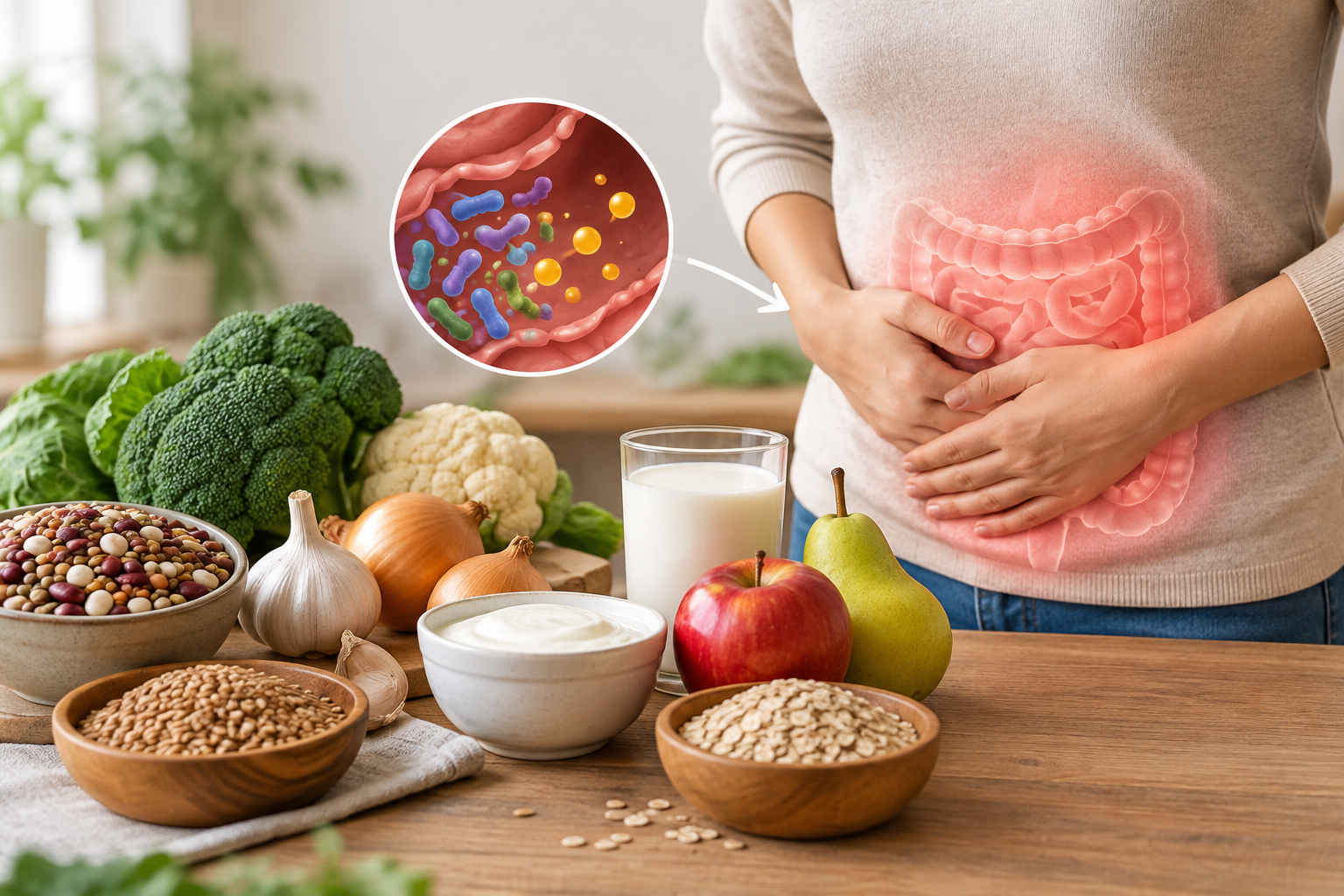

Have you ever eaten a healthy meal only to find your stomach swollen, heavy, and uncomfortable afterward? Bloating after eating is a common digestive complaint, and certain foods can make it worse. The reason often lies in a natural process called gut fermentation, in which bacteria break down undigested carbohydrates and produce gas.
Understanding why certain foods cause bloating can help you improve digestion, identify food triggers, and support your gut health naturally.
What Causes Bloating After Eating?
Bloating is the feeling of fullness, pressure, or swelling in your abdomen. Sometimes, your belly may also appear larger than usual.
One of the main causes of gut bloating is the accumulation of gas in the digestive tract. Gas can develop when you swallow air while eating or when bacteria in the large intestine break down carbohydrates that your small intestine has not fully digested.
Other causes include constipation, food intolerances, eating too quickly, and digestive conditions such as irritable bowel syndrome (IBS).
How Does Gut Fermentation Cause Bloating?
Your gut contains trillions of microorganisms that help break down certain components of food. When undigested carbohydrates reach the large intestine, gut bacteria ferment them, releasing gases such as hydrogen, methane, and carbon dioxide.
This process is normal and can support a healthy gut microbiome. However, excessive gas production or increased sensitivity to intestinal stretching can cause discomfort, abdominal swelling, and bloating.
Certain carbohydrates called FODMAPs are particularly likely to trigger symptoms in sensitive individuals. These include fermentable sugars found in onions, garlic, beans, wheat, some fruits, and dairy products containing lactose.
People with IBS may experience more pronounced symptoms because their digestive system can be sensitive to changes in gas and fluid within the intestines. (Also read)
Which Foods Commonly Cause Bloating?
Not everyone reacts to the same foods. However, several foods are known to trigger gas and bloating in some people.
- Beans and lentils: Contain fermentable carbohydrates that gut bacteria break down, producing gas.
- Onions and garlic: Contain fructans, a type of carbohydrate that may trigger bloating.
- Milk and dairy products: Can cause symptoms in people who have difficulty digesting lactose.
- Apples and pears: Contain certain sugars that may be poorly absorbed by sensitive individuals.
- Cruciferous vegetables: Broccoli, cauliflower, and cabbage can increase gas production.
- Whole grains and high-fiber foods: Fiber supports digestion, but suddenly increasing your intake may cause temporary gas and bloating. (Also read)
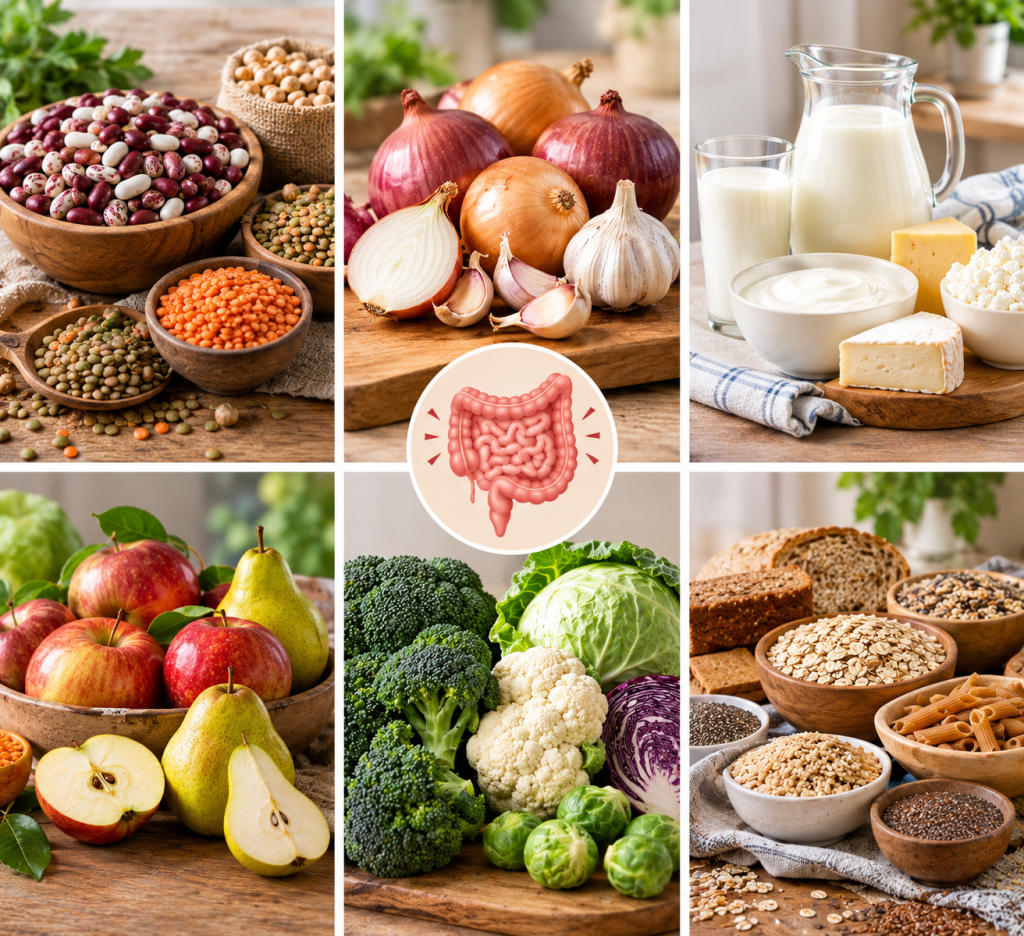
These foods are nutritious and do not need to be avoided by everyone. Your individual tolerance, portion size, and overall digestive health all influence how your body responds.
How to Reduce Bloating Naturally
If you frequently feel bloated after eating, a few simple habits may help.
1. Eat slowly and chew thoroughly. Eating too quickly can increase swallowed air and may contribute to gas. Taking your time with meals can help reduce this problem.
2. Increase fiber gradually. Fiber supports regular bowel movements, but suddenly consuming large amounts of beans, whole grains, or vegetables may increase gas. Introduce high-fiber foods gradually and drink enough water.
3. Identify your food triggers. Keep a food diary and record when bloating occurs. This can help you recognize patterns without unnecessarily eliminating nutritious foods.
4. Walk after meals. Gentle physical activity may help support normal digestion and intestinal movement.
5. Choose a balanced, minimally processed diet. Vegetables, fruits, whole grains, and other nutritious foods support overall health. However, some healthy foods may still trigger bloating in sensitive individuals.

Also read our article on natural remedies for bloating.
What Does Dr. Barbara O’Neill Say About Gut Health?
Dr. Barbara O’Neill emphasizes understanding digestion, identifying potential dietary triggers, and adopting supportive lifestyle habits. In her gut-health lectures, she discusses the digestive process and suggests that digestive difficulties may contribute to discomfort and bloating. (Also read)
These teachings encourage attention to eating habits and digestive health. However, her explanations should be considered alongside established research. Gut fermentation is a normal biological process, and bloating does not automatically indicate low stomach acid or poor digestion.
If symptoms persist, identifying the underlying cause is more helpful than assuming that one digestive problem explains every case.
The Bottom Line
Bloating often occurs when gut bacteria ferment undigested carbohydrates, producing gas that stretches the intestines. Beans, onions, certain fruits, dairy products, and sudden increases in dietary fiber may trigger symptoms in susceptible people.
Eating slowly, increasing fiber gradually, staying active, and tracking food triggers can help you discover what works for your digestive system.
However, persistent bloating, severe abdominal pain, unexplained weight loss, or changes in bowel habits should be medically evaluated rather than managed solely with natural remedies.