
Introduction
Hair damage is often blamed on everything from heat styling to chemical treatments, but many people wonder whether keratin structure itself can harm their hair. Since keratin treatments are marketed as solutions for smoother, shinier hair, questions such as Can keratin damage your hair? have become increasingly common. To answer these concerns, it is important to understand keratin structure and how hair damage actually occurs.
What Is Keratin and Why Is It Important for Hair?
Keratin is a naturally occurring fibrous protein found in hair, nails and the outer layer of the skin. In fact, hair and nails are composed mainly of keratin, making it one of the most important structural proteins in the human body. Keratin provides strength, flexibility and protection to hair fibers while helping them withstand everyday mechanical stress (source).
The hair shaft consists primarily of alpha-keratin, a highly organized protein structure that forms strong filaments within the hair cortex. These filaments are responsible for maintaining hair integrity, elasticity and resistance to breakage. Without keratin, hair would lack the structural framework needed to remain healthy and resilient.
Understanding Keratin Structure and Bonds
Keratin has a complex structural organization that contributes to the physical properties of hair. At the molecular level, keratin contains amino acids, particularly cysteine, which form strong disulfide bonds. These bonds act as molecular bridges that stabilize the protein structure and determine the shape, strength and texture of hair.
The protein also exhibits a secondary structure known as an alpha-helix. Multiple alpha-helices twist together to form coiled coils, creating the robust architecture that characterizes human hair. Research has shown that damage to these protein structures weakens the hair shaft and reduces its ability to resist environmental and mechanical stress.
Can Keratin Damage Your Hair?
Contrary to popular belief, keratin itself does not damage hair. Because keratin is already a natural component of hair, applying keratin-containing products is generally not harmful. In many cases, keratin treatments temporarily smooth the hair cuticle, reduce frizz and improve manageability.
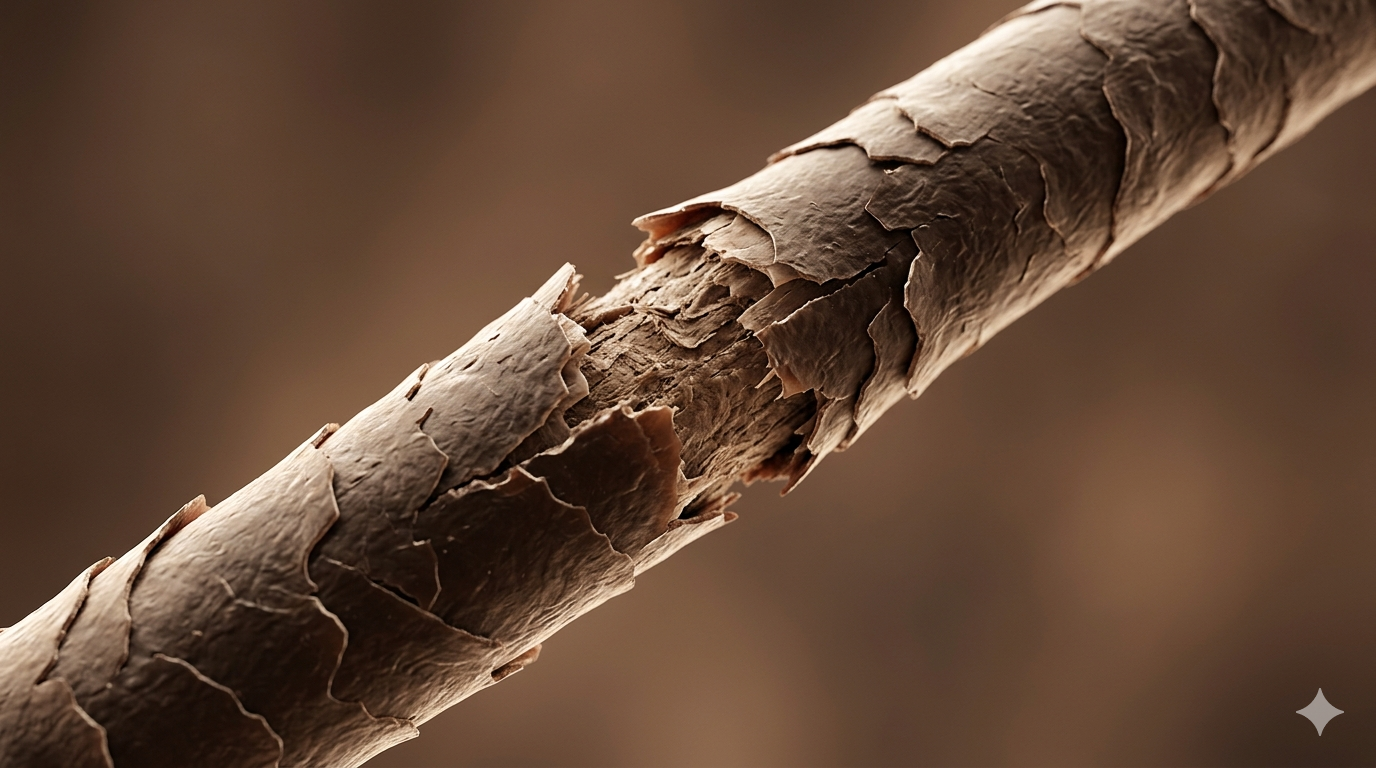
However, the concern arises from certain keratin treatments rather than keratin itself. Many professional smoothing treatments require high-temperature flat irons and chemical ingredients that alter the natural structure of hair. Repeated exposure to heat can denature keratin proteins and weaken disulfide bonds, increasing the risk of brittleness and breakage.
Additionally, excessive use of protein-rich products may lead to what hair professionals call “protein overload.” When hair receives more protein than moisture, it can become stiff, dry and prone to snapping. This explains why too much keratin can sometimes contribute to hair problems despite its beneficial role.
Signs of Keratin-Related Hair Damage
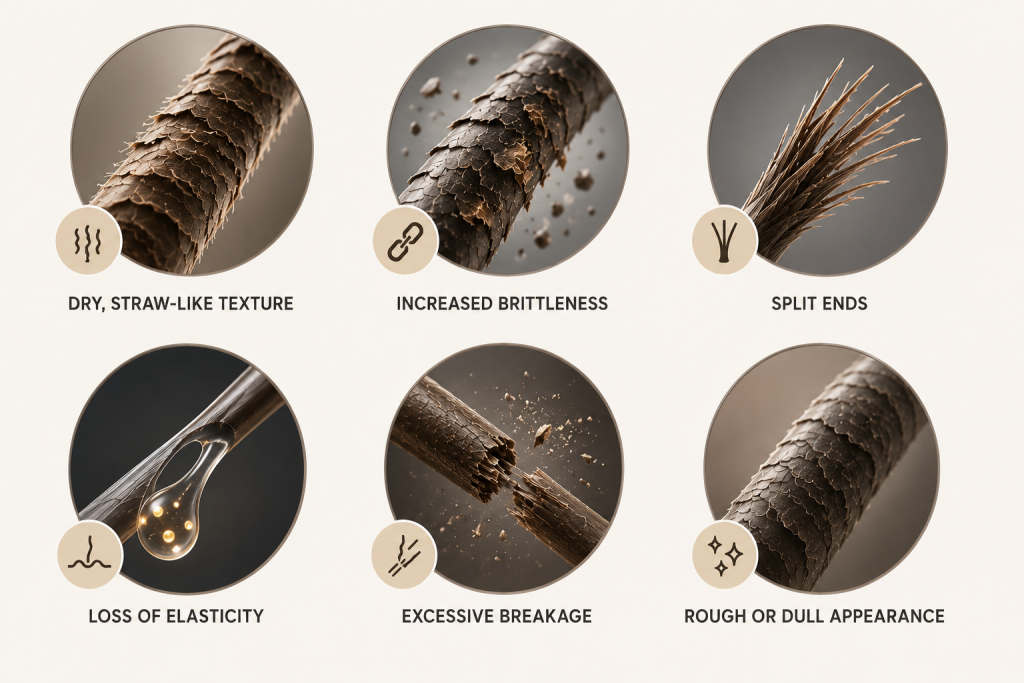
Although keratin itself is beneficial, excessive treatments may cause symptoms associated with protein imbalance. Common signs include:
- Dry, straw-like texture
- Increased brittleness
- Split ends
- Loss of elasticity
- Excessive breakage
- Rough or dull appearance
These symptoms often indicate that the hair requires additional moisture and restorative care rather than more protein treatments.
What Really Damages Hair?
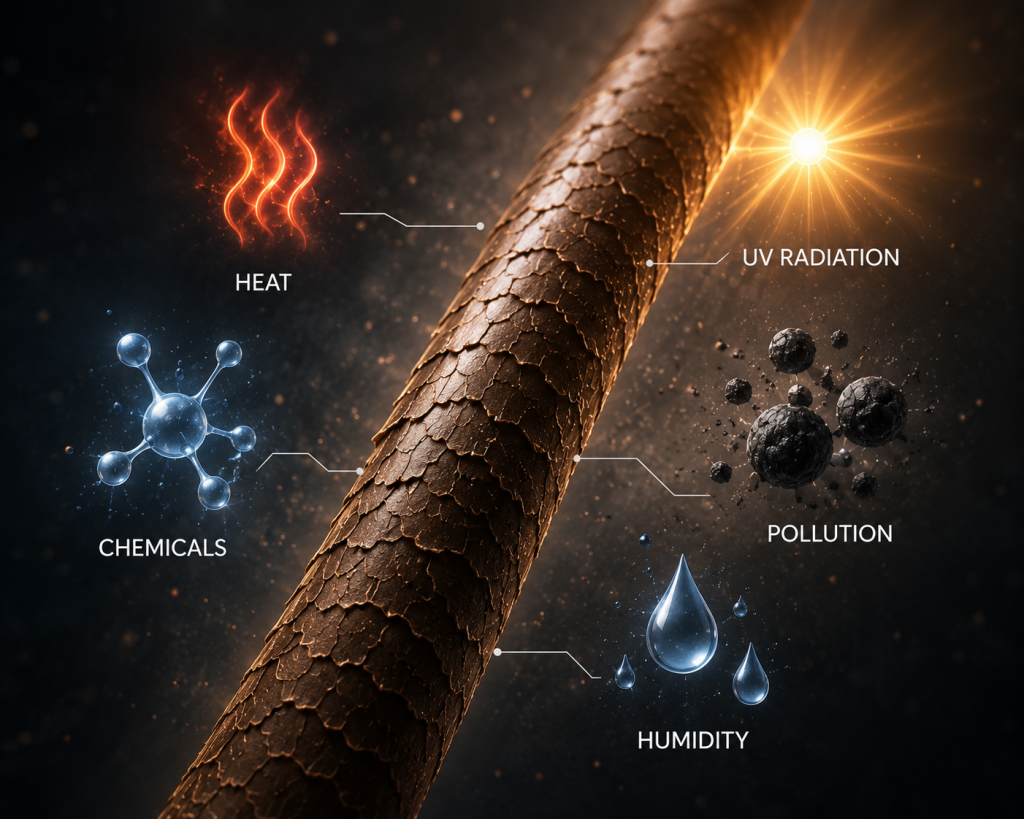
Scientific evidence shows that the primary causes of hair damage are not keratin but external stressors that disrupt the hair’s protein structure.
Heat Styling
Frequent use of flat irons, curling irons, and blow dryers can damage the hair cuticle and alter keratin proteins. Excessive temperatures remove moisture and reduce hair elasticity, making strands more vulnerable to breakage.
Chemical Treatments
Hair coloring, bleaching, perming, and straightening treatments can break down the disulfide bonds that provide strength and stability. Repeated chemical processing often causes structural weakening within the hair cortex.
Environmental Factors
Ultraviolet radiation, pollution, humidity fluctuations, and oxidative stress can gradually degrade hair proteins. Studies suggest that prolonged UV exposure damages both the cuticle and cortical keratin, leading to roughness and loss of shine.
Mechanical Stress
Aggressive brushing, tight hairstyles, and friction from rough fabrics can create physical damage to the hair shaft. Over time, this mechanical wear contributes to split ends and increased breakage.
How to Protect Hair’s Natural Keratin Structure
Maintaining healthy hair involves protecting its natural keratin framework. Limiting heat exposure, using mild shampoos and applying moisturizing conditioners can help preserve hair strength. Deep-conditioning treatments can improve hydration and restore flexibility, particularly after chemical processing.
When considering a keratin treatment, choosing reputable products and avoiding excessive treatment frequency can reduce the risk of damage. Individuals with already fragile or heavily processed hair should prioritize repairing moisture balance before undergoing additional protein-based treatments. You may read our article on natural hair smoothing and straightening without keratin treatments.
Conclusion
Keratin is not the true cause of hair damage. As the primary structural protein in hair, it provides strength, resilience, and protection through its sophisticated arrangement of alpha-helices and disulfide bonds. The real threats to healthy hair are excessive heat, harsh chemical treatments, environmental exposure, and mechanical stress. Understanding keratin structure helps clarify an important fact: protecting the natural protein architecture of hair is far more important than avoiding keratin itself. With proper care and a balanced approach to hair treatments, it is possible to maintain strong, healthy, and damage-resistant hair.