
Introduction
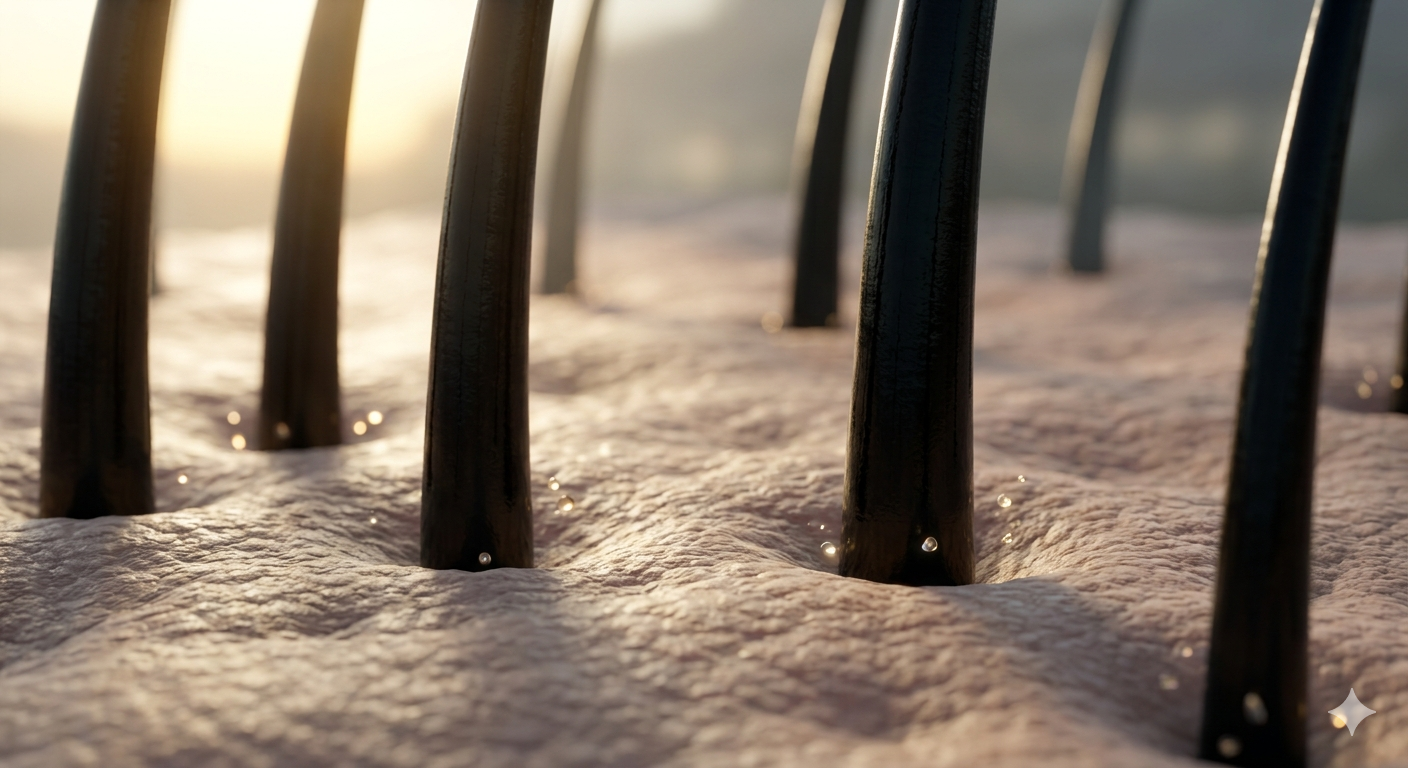
Hair growth may seem simple on the surface, but it is actually a highly regulated biological process with specialized structures known as hair follicles. These tiny organs continuously cycle through phases of growth, rest and renewal, determining the length, thickness and overall health of your hair. Understanding the science of hair follicle growth can help explain why some people experience slow growth, thinning hair, or excessive shedding, while others maintain thick, healthy hair throughout life.
What Is a Hair Follicle?
A hair follicle is a complex mini-organ embedded within the skin that produces hair fibers. Growth of the hair occurs from the base of the follicle, where rapidly dividing matrix cells generate the hair shaft. Each follicle contains dermal papilla cells, stem cells, sebaceous glands, and blood vessels that work together to support continuous hair production.
Research published in Physiological Reviews describes follicles as one of the most dynamic organs in the human body due to their ability to undergo repeated cycles of growth and regeneration. Hair follicles are present across most of the body and play a critical role in hair growth, skin protection, and temperature regulation.
The Hair Growth Cycle Explained
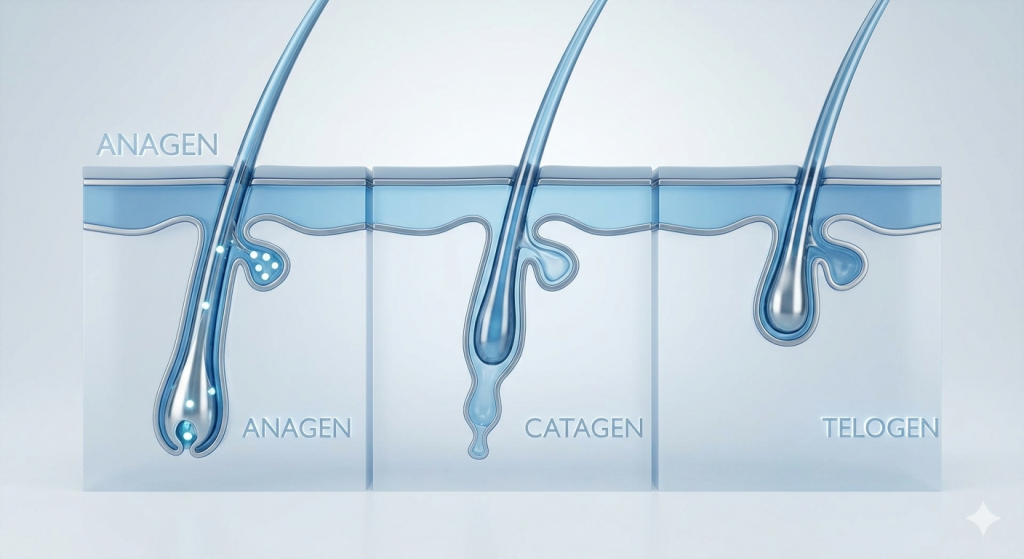
The growth cycle of a hair follicle consists of four distinct phases. These growth stages of hair follicles determine how long hair grows before it sheds and is replaced.
Anagen:
The anagen phase is the active growth phase during which cells divide rapidly and produce new hair fibers. Scalp hair remains in the anagen phase for approximately two to seven years, allowing significant hair growth over time. Studies show that about 85–90% of scalp hair are typically in the anagen phase at any given moment. Duration of anagen largely determines maximum hair length, which is why some individuals can grow very long hair while others cannot.
Catagen:
The catagen phase is a short transitional stage lasting approximately two to three weeks. During this period, cell division slows dramatically, and the follicle begins to shrink. The lower portion of the follicle regresses, preparing for the resting phase.
Telogen and Exogen:
In the telogen phase, the follicle becomes inactive for approximately two to four months. This is followed by the exogen phase, during which old hairs are shed naturally. Losing 50–100 hairs daily is considered normal and reflects healthy follicular cycling rather than hair loss.
You may read our article to understand these 3 stages of hair growth cycle completely.
Why Do Hair Follicles Stop Growing?
Many people wonder why their hair follicles are not growing or why their hair growth seems unusually slow. In reality, follicles rarely stop functioning completely. Instead, they may become dormant or produce progressively thinner hairs.
One common cause is androgenetic alopecia, a condition characterized by hair follicle miniaturization. In this process, follicles gradually shrink and produce finer, shorter hairs over time. According to research published in Nature Reviews Disease Primers, genetic sensitivity to dihydrotestosterone (DHT) is a primary driver of follicle miniaturization.
Other contributing factors include chronic stress, low ferritin levels, hormonal imbalances, autoimmune disorders, inflammation and aging. These conditions can disrupt the normal growth phase of hair follicles and increase shedding.
What Determines Hair Follicle Growth?
Several biological factors determine the growth cycle of your hair follicle. Genetics plays the most significant role by influencing hair density, texture, growth rate and susceptibility to hair loss. Hormones such as testosterone, estrogen, thyroid hormones and cortisol also regulate follicular activity.
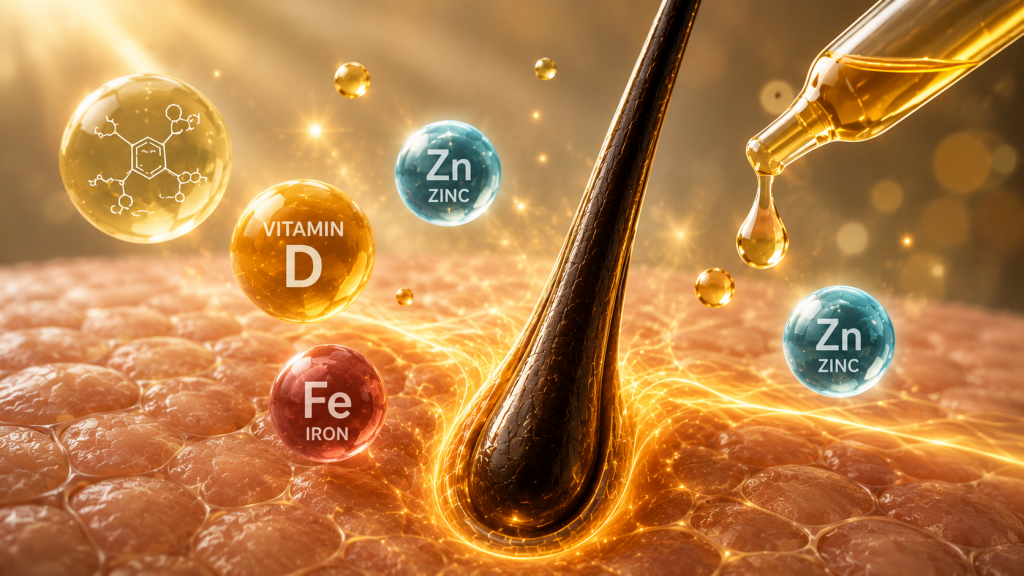
Nutrition is another major factor. Hair follicles are among the fastest-dividing tissues in the body and require adequate protein, iron, zinc, vitamin D and B vitamins to function efficiently. Research published in Dermatology and Therapy found that nutrient deficiencies are frequently associated with increased hair shedding and impaired hair growth (source).
Additionally, healthy blood circulation supplies oxygen and nutrients to follicular cells, while molecular signaling pathways and hair follicle stem cells regulate regeneration and repair.
Can New Hair Follicles Grow?
The growth of new hair follicles in adults is limited. Most hair regrowth occurs when existing follicles re-enter the anagen phase rather than through the formation of entirely new follicles. However, advances in regenerative medicine and stem cell research have generated significant interest in hair follicle neogenesis—the creation of new follicles.
Researchers continue to investigate how hair follicle stem cells and molecular signaling pathways could be used to stimulate new follicle formation in the future. While these treatments remain experimental, they represent a promising frontier in hair restoration science.
Conclusion
The science of hair follicle growth involves a complex interaction between genetics, hormones, nutrition, stem cells, and the hair growth cycle. Healthy follicles continuously progress through the anagen, catagen, telogen, and exogen phases to maintain normal hair production. Understanding why hair follicles stop growing and how to stimulate them naturally can help support healthier, stronger hair. By maintaining proper nutrition, managing stress, and supporting scalp health, individuals can optimize the conditions needed for long-term hair growth and follicle function.