
Introduction
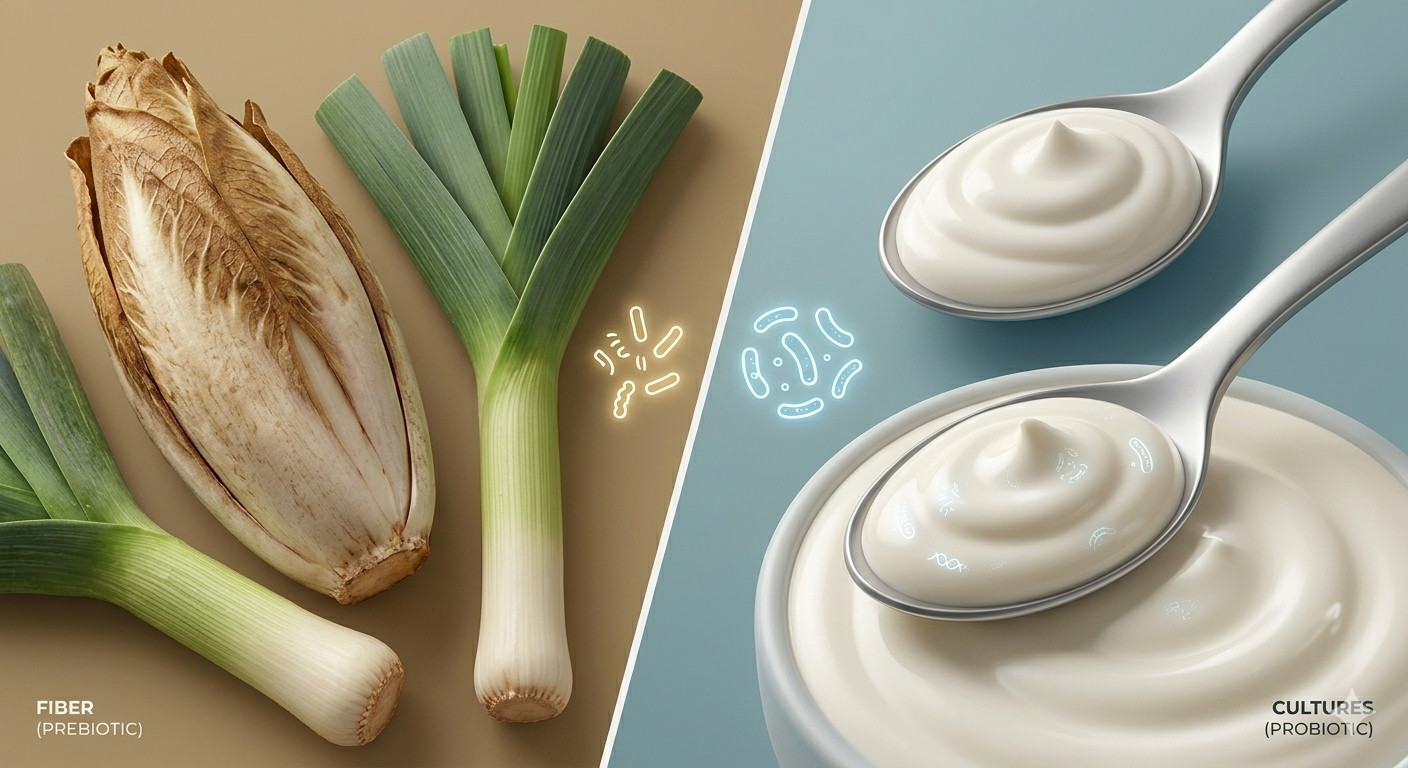
The growing interest in gut health has made prebiotic vs. probiotic foods one of the most searched nutrition topics worldwide. Although the terms sound similar, they perform different functions in the digestive system. Understanding their difference can help improve digestion, immunity, nutrient absorption and overall wellness. Research shows that a healthy gut microbiome may also influence mental health, metabolism and inflammation.
What Are Prebiotics?
Prebiotics are non-digestible fibers that feed beneficial bacteria already living in the gut. Instead of being broken down in the stomach, these fibers reach the colon where healthy bacteria ferment them into short-chain fatty acids that support digestive and immune health.
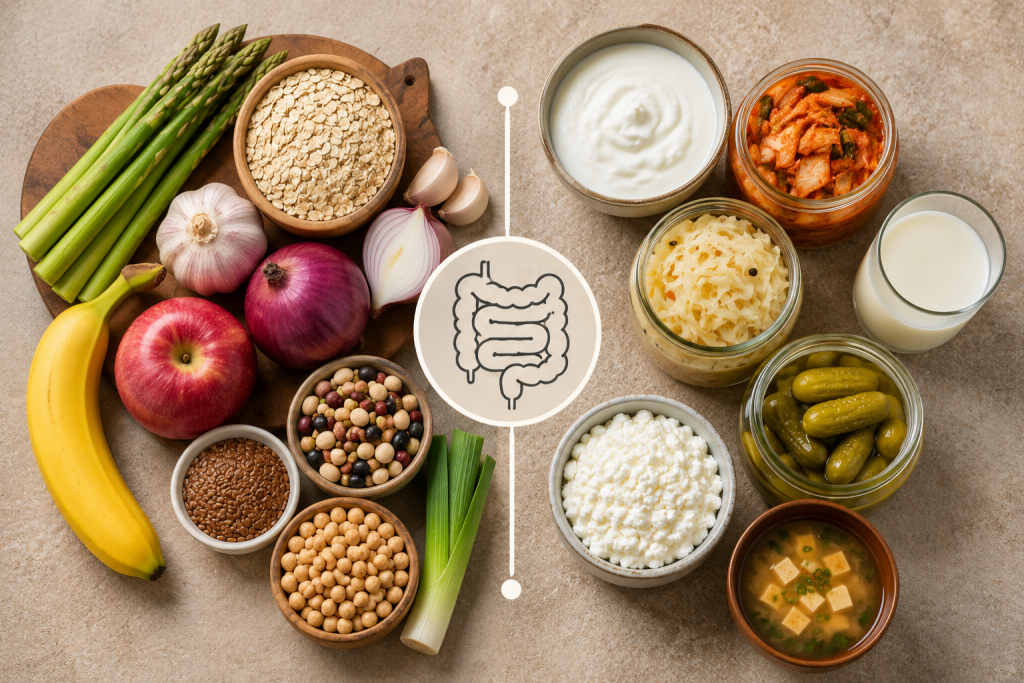
Many people ask, what foods are high in prebiotics? Some of the best natural prebiotic foods include garlic, onions, bananas, oats, apples, asparagus, lentils, chickpeas and flaxseeds. Chicory root is considered one of the richest natural sources of prebiotic fiber.
Prebiotics help beneficial bacteria grow, improve bowel regularity, and may reduce inflammation. Diets rich in dietary fiber are associated with better digestive and metabolic health. Signs that may indicate a need for more prebiotic-rich foods include constipation, bloating, irregular digestion and low energy levels.
What Are Probiotics?
These are live beneficial microorganisms that help maintain a healthy balance of bacteria in the digestive system. They are commonly found in fermented foods and supplements. Probiotics may improve digestive health, strengthen immunity and support recovery after antibiotic use.
Common probiotic foods include yogurt, kefir, kimchi, sauerkraut, kombucha, miso and naturally fermented pickles. Yogurts labeled “live and active cultures” generally contain higher beneficial bacteria. Unsweetened yogurt is often recommended because excess sugar may negatively affect gut bacteria balance.
What’s the Difference?
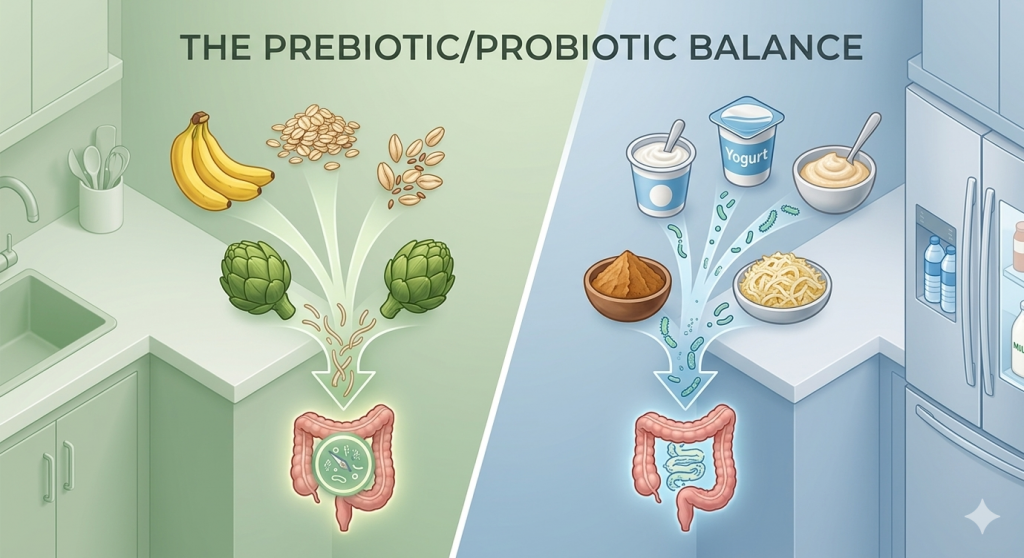
Their main difference between lies in their role. Probiotics are the healthy bacteria themselves, while prebiotics are the food source that nourishes those bacteria. In simple terms, probiotics add beneficial microbes to the gut and prebiotics help them thrive.
Many people wonder, which one is better? Experts suggest that both are important because they work together to support a balanced microbiome. Combining both of the foods is often more effective than consuming either alone.
There is also growing interest in postbiotic foods. Postbiotics are beneficial compounds produced when probiotics digest prebiotic fibers. These compounds may help regulate inflammation and support gut barrier function (source).
Ideal Timing For Consumption
Studies suggest probiotics may survive better when consumed before meals or alongside food. Prebiotic foods can be eaten throughout the day as part of balanced meals. Consistency matters more than timing. Regular consumption of both these foods supports long-term gut health and digestive balance.
Best Foods for Healthy Gut
When discussing what foods are prebiotics and probiotics, combining fiber-rich and fermented foods is ideal. Prebiotic foods include bananas, onions, garlic, oats, lentils and beans. Research indicates that diets rich in diverse plant fibers and fermented foods may improve microbial diversity in the gut, which is linked with better health outcomes.
For probiotics, yogurt, kefir, kimchi, sauerkraut and fermented vegetables are excellent choices. Most fermented foods primarily provide live, beneficial bacteria created during fermentation. You may read our article to fully understand the role of probiotic foods for the healthy microbiome.
Should You Take Supplements?
Probiotic supplements may be useful after antibiotic treatment or digestive illness, while prebiotic supplements can help individuals with low fiber intake. However, excessive supplementation may cause gas, bloating, or digestive discomfort. People with weakened immune systems should consult healthcare professionals before taking these supplements regularly. While supplements may help certain individuals, experts recommend prioritizing whole foods whenever possible.
Conclusion
Understanding prebiotic vs probiotic foods is essential for maintaining a healthy gut microbiome. Prebiotics nourish beneficial bacteria, while probiotics introduce healthy microorganisms into the digestive system. Together, they support digestion, immunity and overall wellness. Instead of choosing one over the other, combining both through whole foods is the best approach. Including fruits, vegetables, legumes, yogurt and fermented foods in daily meals can naturally improve gut microbiome and overall well-being.