
Why Consider a Herbal Alternative to Keratin Treatment
Herbal alternatives aim to support the hair’s natural keratin structure rather than artificially sealing it. These methods focus on strengthening the hair shaft, improving moisture retention, and reducing frizz without altering hair bonds chemically. Research shows that plant-based compounds rich in amino acids, antioxidants, and polysaccharides can improve hair tensile strength and surface smoothness naturally.
Understanding Keratin Treatment
Keratin treatments are salon-based hair-smoothing procedures designed to reduce frizz, add shine, and temporarily straighten hair by coating it with hydrolyzed keratin proteins. While effective, but it releases formaldehyde or formaldehyde-releasing compounds when heat is applied, which can irritate the scalp, eyes, and respiratory system. Studies have linked prolonged exposure to formaldehyde with adverse health effects, prompting growing concern over the safety of repeated keratin treatments.
Is There a Natural or Plant-Based Keratin?
Keratin itself is an animal-derived protein and does not exist in plants. However, plants provide keratin-supporting nutrients such as cysteine, methionine, silica, and biotin, which are essential for keratin synthesis in the body. Plant proteins like soy protein, wheat protein, and rice protein mimic keratin’s strengthening effect by binding to damaged areas of the hair cuticle.
Herbs That Act as Natural Keratin Alternatives
Several herbs traditionally used in Ayurveda and herbal medicine function as effective keratin alternatives:
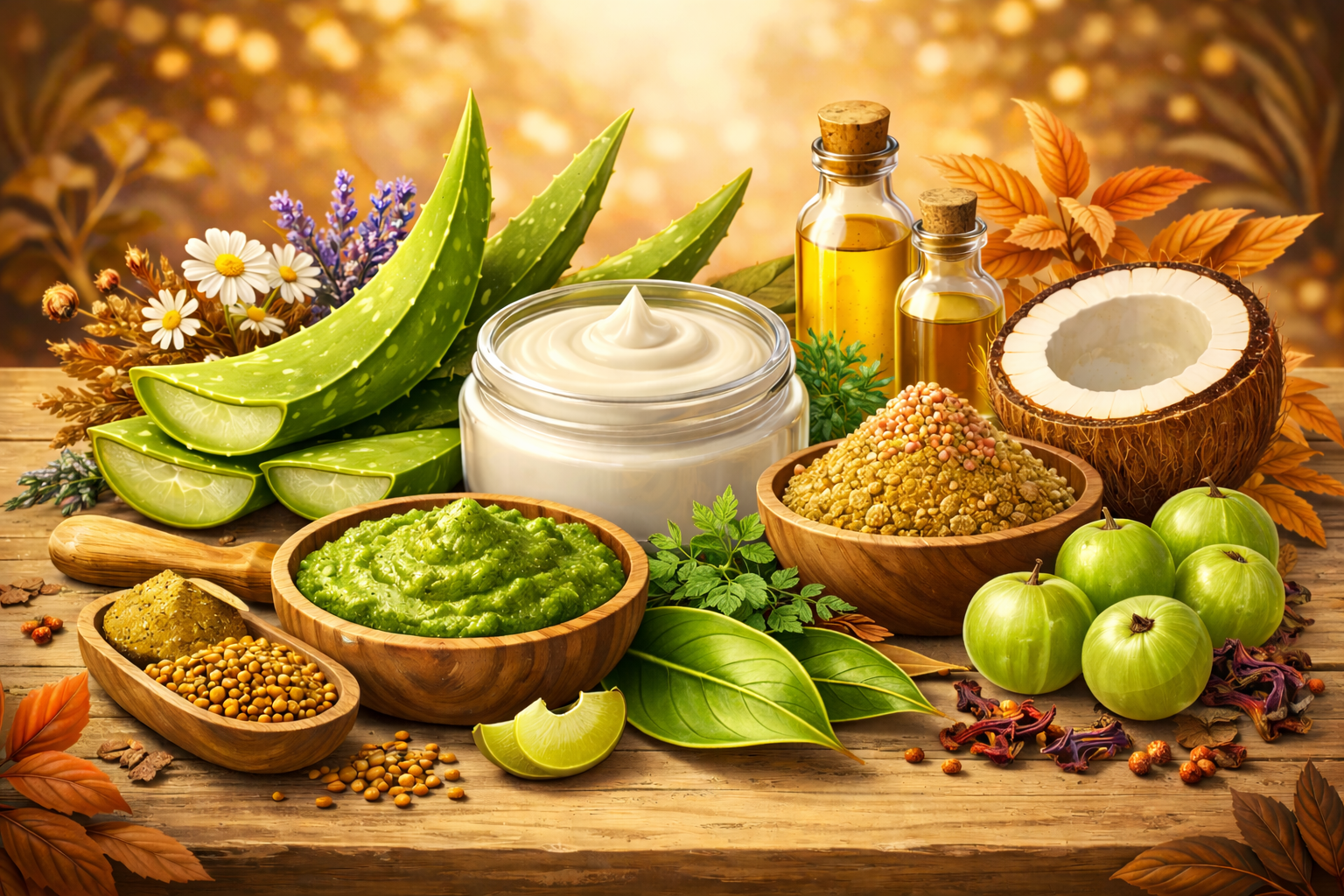
- Amla (Phyllanthus emblica): Rich in vitamin C and antioxidants, amla supports collagen and keratin production, improving hair strength and shine.
- Bhringraj (Eclipta alba): Known as the “king of hair,” it promotes hair thickness and reduces breakage.
- Fenugreek (Trigonella foenum-graecum): Contains lecithin and proteins that deeply condition and smooth frizzy hair.
- Aloe Vera: Its polysaccharides improve hair hydration and cuticle alignment, reducing frizz naturally.
Natural Hair Smoothing and Straightening Without Keratin
Herbal treatments do not permanently straighten hair like chemical relaxers but gradually improve smoothness and manageability. Regular use of herbal masks, oil infusions, and protein treatments can relax curls slightly and reduce puffiness. Studies show that consistent conditioning improves cuticle integrity, making hair appear straighter and shinier without structural damage.
DIY Herbal Keratin Alternative Treatments at Home
A natural at-home herbal hair treatment may include:
- Aloe vera gel for hydration
- Fenugreek paste for protein support
- Coconut or argan oil for lipid replenishment
Such formulations help repair surface damage and reduce friction between hair fibers. Unlike chemical keratin kits, herbal treatments do not require heat activation, reducing thermal damage and protein denaturation (source).
Safety Comparison
Unlike keratin treatments, herbal alternatives:
- Are chemical-free
- Do not emit toxic fumes
- Are safe for frequent use
- Support long-term scalp health
Scientific reviews emphasize that botanical hair treatments have a lower risk profile compared to chemical straightening agents, especially for individuals with sensitive skin or respiratory conditions (source).
Are Herbal Alternatives Suitable for Curly and Frizzy Hair?
Yes. Herbal alternatives are especially well-suited for curly, wavy, and frizzy hair types, which are naturally more prone to dryness, breakage, and uneven moisture distribution. Curly hair has a more open cuticle structure, making it vulnerable to frizz and protein loss. Herbal treatments address these issues by restoring moisture balance, strengthening the hair shaft, and enhancing natural elasticity rather than altering the hair’s internal bonds.
Unlike keratin treatments that may loosen curl patterns permanently and cause long-term dryness, herbal alternatives work with the hair’s natural texture, preserving curls while making them softer, shinier, and more manageable. With consistent use, herbal treatments can improve curl resilience, reduce shrinkage, and enhance overall hair health, making them a safer long-term option for textured hair.
Conclusion: A Healthier Long-Term Hair Care Choice
While keratin treatments provide fast, visible smoothness, their effects are temporary and often come with potential health and hair-damage risks, particularly due to chemical exposure and heat activation. In contrast, herbal alternatives offer a sustainable, low-risk, and scalp-friendly solution that supports the hair’s natural biology rather than masking damage.
By delivering plant-based proteins, essential amino acids, antioxidants, and moisturizing compounds Scientific literature on botanical hair care confirms that regular use of plant-derived compounds enhances hair integrity without disrupting its natural structure. Ultimately, herbal alternatives represent a holistic and long-term approach to hair care, especially for individuals seeking chemical-free solutions—without the risks associated with traditional keratin treatments.