

1. Introduction: Understanding Mindful Breathing and Inflammation
Inflammation is a natural protective response of the body to injury or infection; however, when inflammation becomes chronic, it can contribute to long-term health problems such as cardiovascular disease, autoimmune disorders, and respiratory conditions. Recently, mind–body interventions such as mindful breathing have attracted scientific interest for their potential anti-inflammatory effects. Mindful breathing focuses on slow, intentional awareness of the breath to regulate physiological stress responses. Emerging research suggests that by reducing stress and modulating the nervous system, mindful breathing may help lower inflammation levels in the body.
2. Concept of Mindful Breathing
Mindful breathing is a mindfulness-based practice that involves directing attention to the natural process of respiration without judgment. The goal is not to control breathing forcefully but to observe it with awareness. This conscious attention helps disengage from stress-inducing thought patterns and promotes relaxation, which plays a key role in inflammatory regulation.
The basic principles of mindful breathing include slow breathing, diaphragmatic engagement, and sustained attention on the breath. These practices shift the body away from stress-driven sympathetic activation toward parasympathetic dominance, supporting both mental calmness and physical healing processes.
3. Inflammation and It’s Effects on the Body
3.1 Types of Inflammation
- Acute inflammation
Acute inflammation happens as a part of our defense mechanism to clear out pathogens. So, when a virus or bacteria invades us, we need to quickly mount an acute inflammatory response to get rid of the pathogen.
- Chronic inflammation
Chronic inflammation happens because the body fails to get rid of the cause of the inflammation, such as viruses and bacteria. In those conditions, such as, chronic infection with HIV or hepatitis virus or lung COVID, in which there may be a persistent viral reservoir that’s causing this chronic inflammation and the inflammation itself becomes the enemy. source
3.2 Can Inflammation Affect Breathing?
Inflammation can significantly impair respiratory function. Inflammatory conditions of the lungs and airways often cause symptoms such as shortness of breath, chest tightness, and difficulty breathing. Chronic inflammation can also worsen breathing efficiency by increasing airway resistance and reducing oxygen exchange, especially under stress.
4. Mindful Breathing Techniques That May Reduce Inflammation
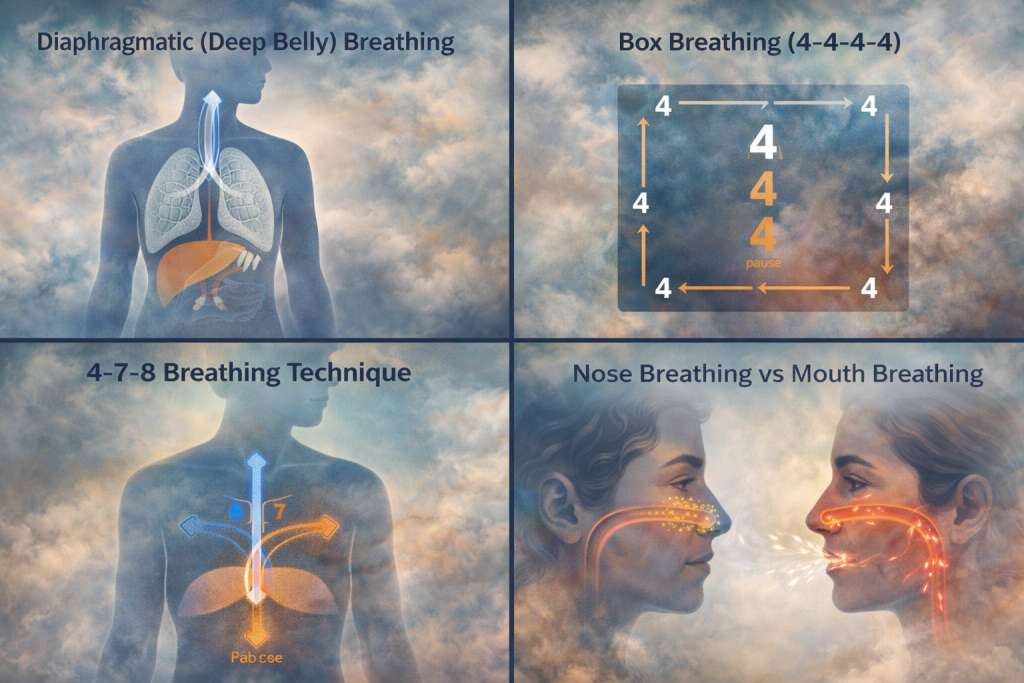
4.1 Diaphragmatic (Deep Belly) Breathing
Diaphragmatic breathing engages the diaphragm fully and encourages efficient lung expansion. This technique reduces shallow breathing patterns that are associated with stress and inflammation. Studies suggest that long, slow breathing patterns help regulate autonomic balance and reduce inflammatory stress responses. source
4.2 Box Breathing (4-4-4-4)
Box breathing involves equal phases of inhalation, breath retention, exhalation, and pause. This structured technique calms the nervous system and reduces sympathetic overactivity. By lowering stress-related hormonal release, box breathing indirectly contributes to inflammation reduction.
4.3 ‘4-7-8’ Breathing Technique
The 4-7-8 breathing technique emphasizes extended exhalation, which activates the parasympathetic nervous system. This method is particularly effective for stress and anxiety reduction, both of which are linked to elevated inflammation. Regular practice may therefore support inflammatory balance. source
4.4 Nose Breathing vs Mouth Breathing
Nose breathing promotes the release of nitric oxide, a molecule with anti-inflammatory and vasodilatory properties. In contrast, chronic mouth breathing is associated with shallow breathing and increased stress responses. Mindful nasal breathing supports healthier oxygen exchange and reduces inflammation-related breathing dysfunction.
5. Special Approaches: Wim Hof Breathing and Inflammation
Wim Hof breathing combines controlled hyperventilation with breath retention and has been shown to influence immune and inflammatory responses. Research demonstrates that this technique can suppress pro-inflammatory cytokines through voluntary activation of the nervous system. However, it differs from traditional mindful breathing and should be practiced with caution.
6. Practice To Start a Mindful Breathing
Mindful breathing can begin with a simple two-minute exercise focusing on slow nasal inhalation and relaxed exhalation. Practicing once or twice daily can gradually improve stress resilience and inflammatory control. Consistency is key, as regular practice strengthens the body’s relaxation response. (Also read our article on breathing techniques)
7. Limitations and Important Considerations
Although mindful breathing can help regulate inflammation, it should be viewed as a complementary approach rather than a replacement for medical treatment. Individuals with chronic inflammatory or respiratory diseases should integrate breathing practices alongside professional healthcare guidance.
8. Conclusion
Scientific evidence suggests that mindful breathing can reduce inflammation by calming stress responses, activating the vagus nerve, and supporting immune regulation. While it is not a cure, mindful breathing is a low-risk, accessible practice that can meaningfully complement conventional approaches to inflammation management.