
Introduction
Hair, like skin, is vulnerable to sun damage. Prolonged exposure to ultraviolet (UV) radiation can weaken hair fibers, fade color, cause dryness, and lead to breakage. While sunscreen for skin is widely discussed, UV protection for hair often goes unnoticed. Fortunately, botanical extracts and plant-based oils offer natural UV protection by shielding strands from environmental stress. Understanding how plant compounds defend against UV damage can help you choose safer, effective solutions for healthier hair.
Understanding UV Radiation and Hair Damage
Before exploring natural protection, it is important to understand the difference between UV-A and UV-B rays. UV-A rays penetrate deeply and contribute to long-term damage, weakening hair structure and fading pigment. UV-B rays are more intense and can damage the outer layer of hair, leading to dryness and roughness. (source)
Excessive sun exposure generates free radicals, causing oxidative stress. This process breaks down keratin proteins and reduces moisture retention. The result is brittle, dull, and frizzy hair. Natural photoprotection works by absorbing, reflecting, or neutralizing UV radiation before it damages hair fibers.
How Plants Naturally Protect Themselves from UV Rays
Plants survive constant sun exposure through built-in defense systems. They produce protective pigments and antioxidant compounds that absorb harmful UV radiation. This is why botanical extracts are increasingly used in hair care formulations designed for sun defense.
One major group of compounds is flavonoids, natural UV absorbers found in leaves, flowers, and fruits. Polyphenols, another class of plant antioxidants, help neutralize free radicals formed by sun exposure. These same plant-based compounds can be extracted and incorporated into hair oils, masks, and treatments to provide natural UV protection.
Botanical Extracts for Hair
Several plant-derived ingredients are known for their protective properties:
Aloe Vera (Babosa)
Aloe vera contains antioxidants and vitamins that soothe the scalp and form a light protective barrier over hair strands. It helps reduce dryness caused by UV exposure while supporting moisture balance.
Bearberry (Uva Ursi) Extract
Uva ursi is rich in arbutin and antioxidant compounds. Traditionally used in herbal formulations, it helps reduce oxidative stress and supports overall scalp and hair health when exposed to environmental aggressors.
Green Tea Extract
Green tea is high in polyphenols that help neutralize free radicals. It supports scalp health and may protect hair proteins from UV-induced damage.
Rosemary and Lavender Extracts
These herbs contain natural antioxidants that strengthen hair follicles and help defend against environmental stress.
Natural Oils with UV Protective Properties
Many people ask: “What oils provide UV protection?” While natural oils do not replace sunscreen, some offer mild UV-blocking effects due to their antioxidant content.
- Coconut Oil – Provides limited UV protection and reduces protein loss in hair.
- Olive Oil – Contains vitamin E and polyphenols that help combat oxidative damage.
- Jojoba Oil – Mimics scalp sebum and creates a protective coating around hair strands.
- Raspberry Seed Oil – Known for higher natural SPF potential compared to many plant oils.
These oils act as natural sunblock by forming a thin layer that reduces moisture loss and environmental damage.
Essential Oils and Photosensitivity
When considering essential oils for UV protection, it is important to understand photosensitivity-an abnormal, heightened reaction to UV light, where sunlight or tanning beds cause rapid burning, itchy rashes, or in extreme cases, hair loss/breakage. Some citrus oils can increase sun sensitivity and should be avoided before sun exposure.
Non-photosensitive options like lavender and rosemary are safer choices for daytime use. Always dilute essential oils properly in carrier oils to avoid irritation.
Benefits Natural Botanical Extracts
Using botanical extracts on hair for UV protection offers multiple advantages:
- Reduces color fading in dyed hair
- Prevents dryness and split ends
- Minimizes protein degradation
- Protects scalp from oxidative stress
- Enhances shine and smoothness
Plant-based UV protection is especially beneficial in hot climates where sun exposure is intense.
How to Use Botanical Extracts for Hair Protection?
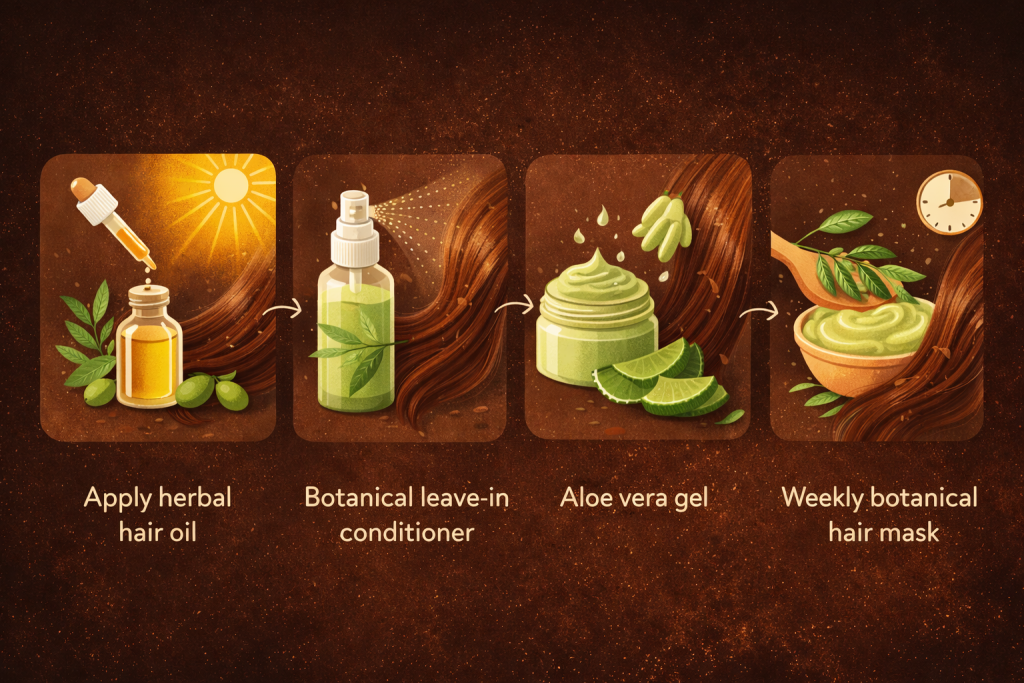
Natural UV protection can be incorporated into a routine in several ways:
- Apply a lightweight herbal hair oil before sun exposure.
- Use a botanical leave-in conditioner containing plant antioxidants.
- Apply aloe vera gel to damp hair for added hydration.
- Use a weekly botanical hair mask to repair UV damage.
Consistency is key. Natural ingredients provide cumulative protection when used regularly.
Limitations of Natural UV Protection
Although botanical extracts offer protective benefits, they do not provide standardized SPF levels like chemical or mineral sunscreens. Their protection is supportive rather than absolute.
For prolonged sun exposure, combining natural oils with physical protection—such as hats or scarves—is recommended.
Conclusion
Natural UV protection for hair using botanical extracts is a safe and effective way to defend against sun damage. By harnessing plant-based antioxidants, flavonoids, and nourishing oils, you can reduce oxidative stress, maintain moisture balance, and preserve hair strength.
While botanical ingredients may not fully block UV rays, they offer valuable support in preventing dryness, fading, and structural damage. When combined with smart sun habits, natural hair oils and herbal extracts can help keep your hair healthy, resilient, and radiant under the sun.