
Introduction: Connection Between Different Hormones
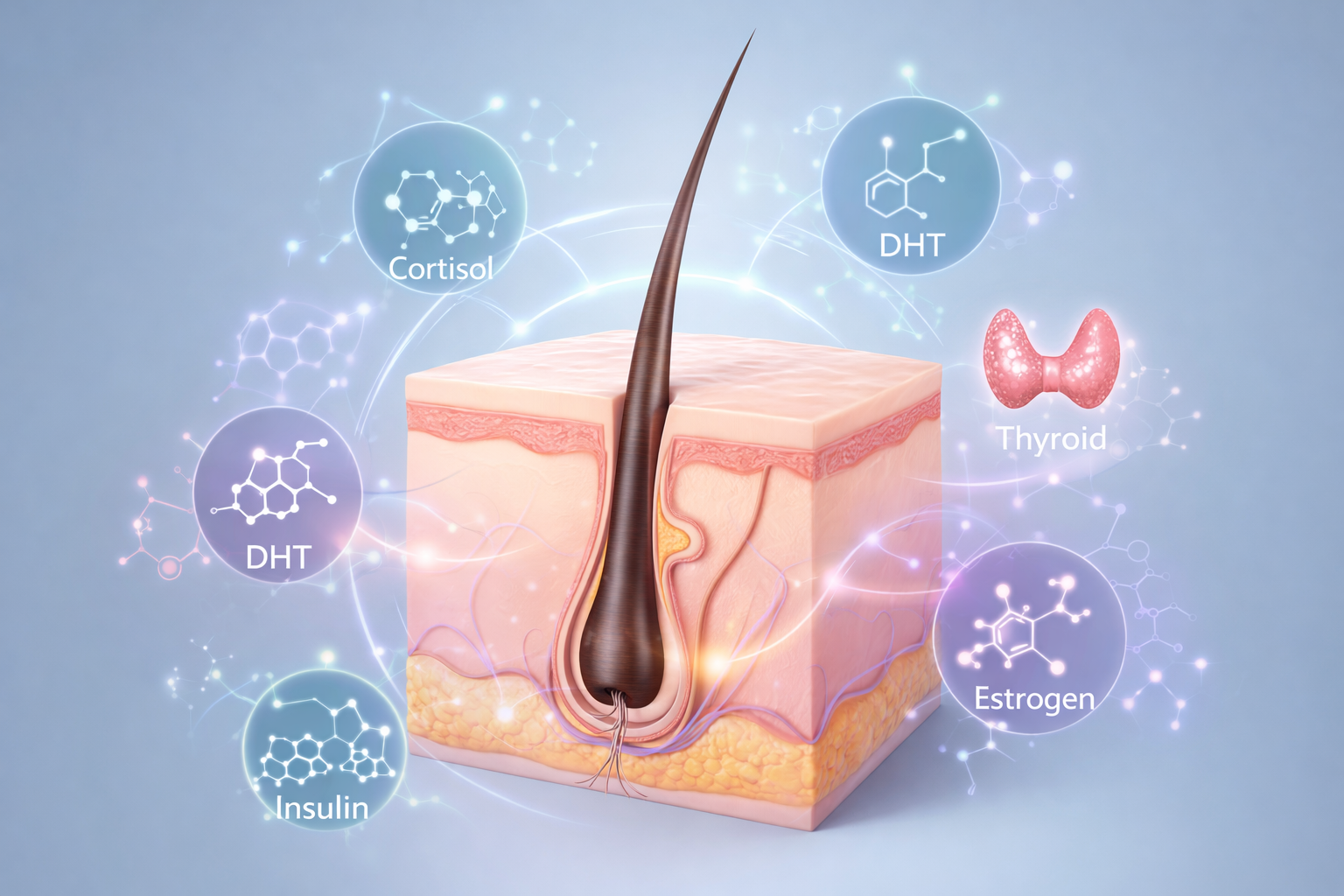
Hair loss is often linked to genetics, but hormones play an equally important role. If you are wondering, “Can hormone imbalance affect hair loss?” — the answer is Yes. Several hormones including Androgens, Thyroid hormones, Cortisol, Insulin and Estrogen directly influence the hair growth cycle. When these hormones become imbalanced, hair thinning and shedding can occur.
Understanding how hormones affect hair loss helps in identifying the root cause and choosing the right treatment.
How Hormones Control the Hair Growth Cycle
Hair grows in three stages:
- Anagen (growth phase)
- Catagen (transition phase)
- Telogen (resting and shedding phase)
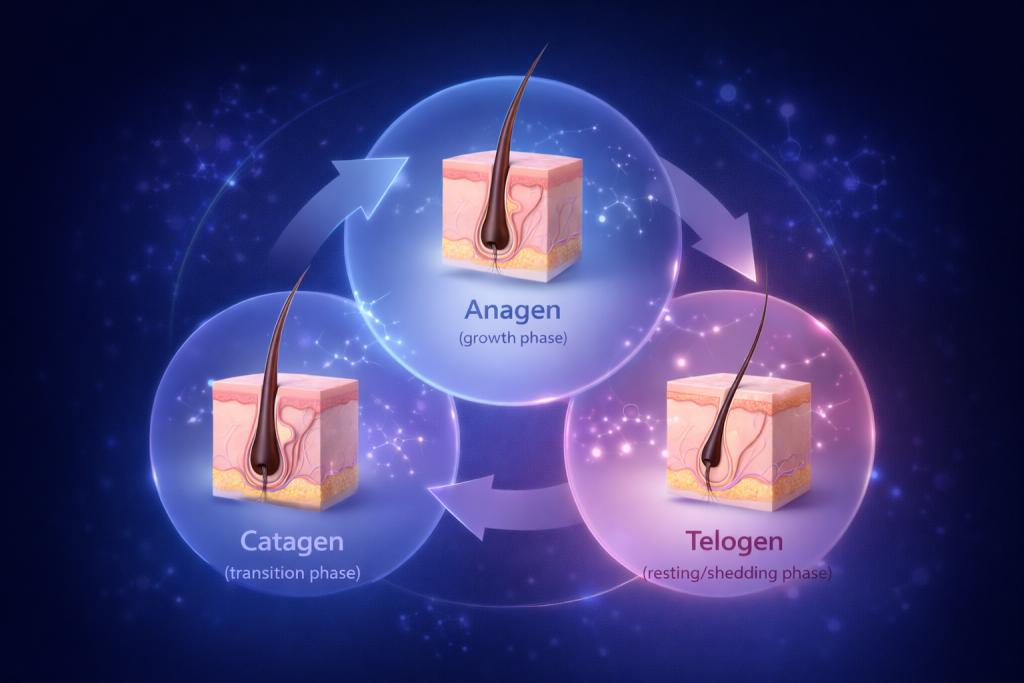
Hormones regulate how long hair stays in the growth phase. When hormonal imbalance occurs, more hairs enter the telogen phase prematurely, leading to excessive shedding — a condition called telogen effluvium.
This explains why stress, thyroid disorders, pregnancy, or metabolic issues can suddenly trigger noticeable shedding of hair.
Androgens: The Main Hormones Behind Pattern Hair Loss
Androgens are frequently referred to as male sex hormones because they are responsible for developing and maintaining masculine characteristics, however, they are present and essential in both genders. The most important one linked to hair loss is dihydrotestosterone (DHT).
In genetically sensitive individuals, DHT binds to hair follicles and causes them to shrink over time. This process is called follicular miniaturization, which leads to thinner and shorter hair strands (source).
- In men, this causes male pattern baldness.
- In women, it leads to diffuse thinning over the crown.
Conditions like polycystic ovary syndrome (PCOS) can increase androgen levels and contribute to hormonal hair shedding in women.
Thyroid Hormones and Hair Thinning
Thyroid hormones (T3 and T4) regulate metabolism and energy production. Both hypothyroidism (low thyroid) and hyperthyroidism (overactive thyroid) can cause hair loss.
Low thyroid hormone levels slow down hair follicle activity and push hair into the resting phase. Hair may become dry, brittle and thin. Severe thyroid imbalance can also cause eyebrow thinning.
Diffuse hair shedding is commonly seen in thyroid-related disorders. Blood tests such as TSH, T3, and T4 are recommended if thyroid hormones and hair loss are suspected.
Stress Hormones (Cortisol) and Hair Loss
Stress can lead to hair loss due to increased production of Cortisol, the primary stress hormone. Chronic stress disrupts the hair cycle and may trigger telogen effluvium. Research shows that stress can affect hair follicle stem cells and prolong the resting phase.
Common triggers include:
- Emotional stress
- Major illness
- Surgery
- Sudden weight loss
The good news is that stress-related hormonal hair shedding is usually temporary once stress levels normalize.
Insulin Resistance and Hair Loss
Insulin is a metabolic hormone that controls blood sugar levels. When the body becomes resistant to insulin, it can indirectly increase androgen production.
Higher insulin levels stimulate ovarian androgen release, especially in women with PCOS. This hormonal imbalance may lead to scalp hair thinning while increasing facial hair growth.
The connection between cortisol, insulin, and thyroid hormones shows how metabolic health is closely linked to hair health.
Estrogen, Pregnancy, and Postpartum Hair Loss
Estrogen supports hair growth by extending the anagen phase. During pregnancy, high estrogen levels often make hair look thicker and fuller.
After delivery, estrogen levels drop sharply. This sudden hormonal change causes many hairs to enter the shedding phase at once. This is known as postpartum hair loss. Postpartum shedding usually begins 2–4 months after childbirth and improves within 6–12 months as hormone levels stabilize.
Bioidentical Hormones and Hormone Therapy
Some individuals using hormone replacement therapy (HRT) or bioidentical hormones report changes in hair growth. If hormone levels are not properly balanced, especially androgens, hair thinning may worsen. Careful medical supervision and regular monitoring are essential during hormone therapy.
What Tests Are Done for Hormonal Hair Loss?
If you are asking, “How can I check what’s causing my hair loss?”, doctors may recommend blood tests to assess:
- Thyroid profile (TSH, T3, T4)
- Testosterone and DHT levels
- Ferritin (iron stores)
- Vitamin D and B12
- Blood glucose and insulin levels
Nutrient deficiencies, particularly iron and vitamin D, are also associated with hair shedding (source).
Is Hormonal Hair Loss Reversible?
The answer depends on the cause.
- Stress-related hair loss – usually reversible
- Postpartum hair fall – temporary
- Thyroid-related thinning – improves with treatment
- Androgenetic alopecia – manageable but often long-term
Early diagnosis improves outcomes. Treatment may include stress management, correcting deficiencies, thyroid medication, lifestyle changes, or DHT-blocking therapies.
Conclusion
Hormones and hair loss are closely connected. Androgens, Thyroid hormones, Cortisol, Insulin, and Estrogen each influence the hair growth cycle in different ways. When these hormones become imbalanced, hair thinning and shedding can occur.
Understanding which hormone is responsible allows for targeted treatment rather than guesswork. If hair loss persists, medical testing is essential to identify hormonal imbalance and begin appropriate management.


Very informative 🧑🏻🦲👩🏽🦲
Thank you so much.