
Introduction
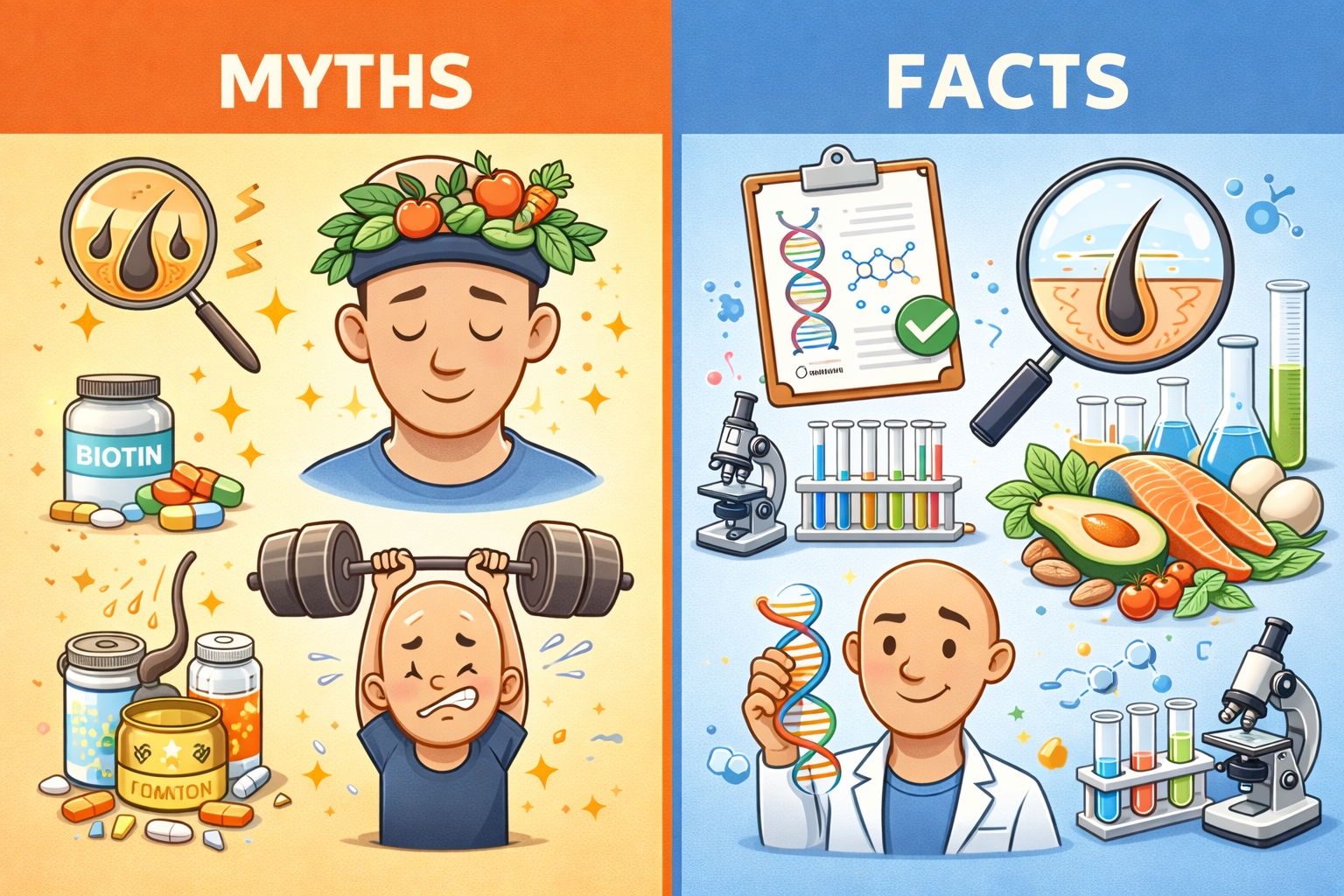
Hair health is often surrounded by myths, half-truths, and cultural beliefs. From viral diet trends to supplement promises, many people are left confused about what truly affects hair growth. While nutrition does play a role in hair health, scientific research shows it is not a miracle cure. Understanding what science actually says helps separate evidence-based facts from popular hair nutrition myths.
Why Are There So Many Myths About Hair Nutrition?
Hair is closely tied to identity, beauty, and confidence, which makes people more susceptible to exaggerated or misleading claims. According to the American Academy of Dermatology (AAD), hair loss is a complex condition influenced by genetics, hormones, and health status—not just diet. Social media and (unreliable) success stories often oversimplify this complexity, creating myths that spread faster than scientific evidence.
The Science of Hair Growth — What Actually Makes Hair Grow?
How Hair Grows at the Biological Level
Hair growth begins in the follicle beneath the scalp, not in the visible hair strand. Each follicle follows a cycle consisting of the anagen (growth), catagen (transition), and telogen (resting) phases. Disruption of this cycle—due to stress, illness, or nutrient deficiency—can cause shedding. However, genetics largely determine follicle behavior and growth potential, as outlined in clinical dermatology research. source
What Nutrients Does Hair Really Need?
Hair fibers are primarily composed of keratin, a structural protein, which explains why adequate protein intake matters. However, research shows hair growth also depends on iron, zinc, biotin, vitamin D, and B-complex vitamins. Severe calorie restriction or micronutrient deficiency can push hair follicles into the resting phase, leading to increased shedding (source). Contrary to popular belief, hair is not 100% protein, and consuming excess protein does not override genetic limits.
Common Hair Nutrition Myths
Myth 1: Certain Foods Can Make Hair Grow Faster Overnight
No scientific evidence supports the idea that any food can cause immediate hair growth. Hair grows approximately one centimeter per month, and nutritional improvements take several months to reflect in visible growth. According to Harvard Health Publishing, diet supports hair growth only when deficiencies are corrected—not as a quick fix.
Myth 2: Biotin Supplements Work for Everyone
Biotin deficiency is rare in healthy individuals. A review published in Dermatology and Therapy found that biotin supplementation benefits only those with a confirmed deficiency (source). The National Institutes of Health (NIH) warns that excessive biotin intake provides no added benefit and may interfere with laboratory test results.
Myth 3: Eating More Protein Always Means Thicker Hair
While protein is necessary for keratin production, excessive intake does not increase hair thickness. Research shows that low-calorie diets and nutrient imbalance, not protein deficiency alone, are more commonly associated with hair loss. Eating hair itself provides no usable protein, as keratin cannot be digested efficiently.
Hair Loss & Genetics — Myths vs Scientific Reality
Is Baldness Only Inherited From the Mother’s Side?
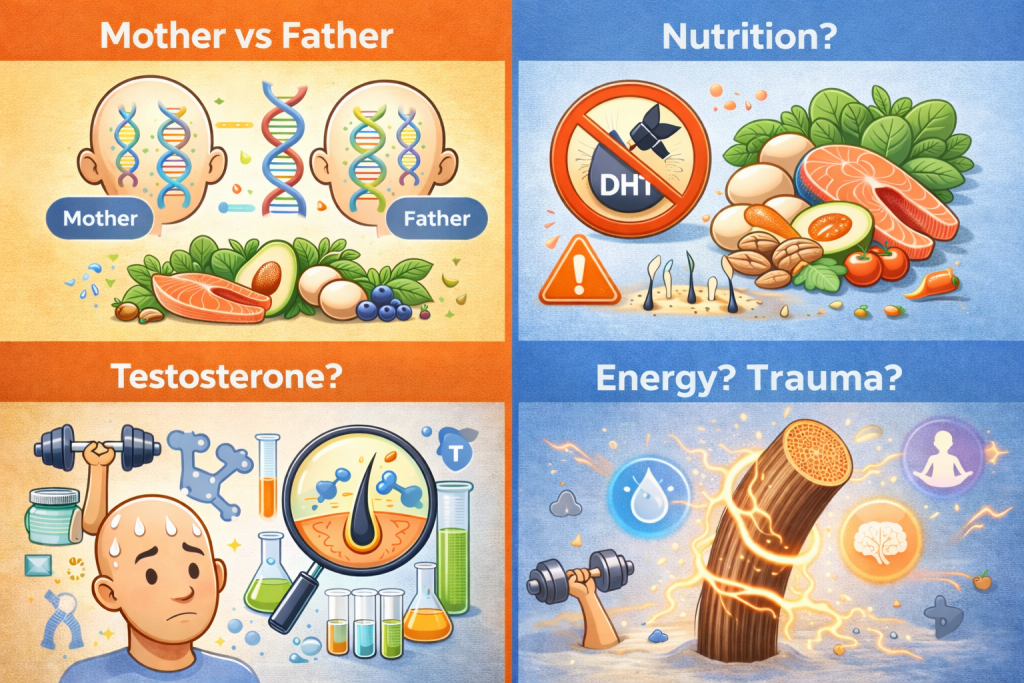
This is a persistent myth. Research shows hair loss is polygenic, involving multiple genes inherited from both parents. While some genes linked to baldness are on the X chromosome, paternal genes also play a major role.
Is Nutrition Alone Enough?
Genetic hair loss, known as androgenetic alopecia, cannot be reversed by diet alone. This condition results from follicular sensitivity to dihydrotestosterone (DHT), not nutritional insufficiency. Medical treatments may be required alongside proper nutrition (Also read our article on this topic)
Do Bald Men Have More Testosterone?
Baldness is not caused by high testosterone levels. Instead, it is linked to how hair follicles respond to DHT, a derivative of testosterone. Men with normal hormone levels can still experience hair loss due to increased follicle sensitivity.
Does Hair Hold Energy or Store Trauma?
Cultural traditions often suggest hair holds emotional or spiritual energy. From a scientific perspective, hair shafts are biologically inactive once they emerge from the scalp. There is no research evidence that hair stores trauma or energy.
Other Popular Hair Myths Worth Clarifying
- Gray hair is primarily associated with genetics and age-related pigment loss, not stress alone.
- Red hair texture and thickness are genetically determined.
- Claims about “training” hair lack scientific support.
- Laser hair removal does not increase hair growth elsewhere
- Hair transplant outcomes depend on realistic expectations and medical expertise.
Hair Nutrition Facts You Can Actually Trust
A balanced diet that meets calorie and micronutrient needs supports hair health, but no single food or supplement guarantees growth. The NIH(National Institutes of Health) and AAD(American Academy of Dermatology) both recommend blood testing before supplementation and medical evaluation for persistent hair loss. Consistency and overall health matter more than trends.
Conclusion — Separating Hair Nutrition Facts from Fiction
Science shows that nutrition supports hair health but does not override genetics or hormones. Understanding the limits of diet helps prevent misinformation and unrealistic expectations. A science-based approach—rather than myths—offers the most reliable path to maintaining healthy hair.