
Introduction
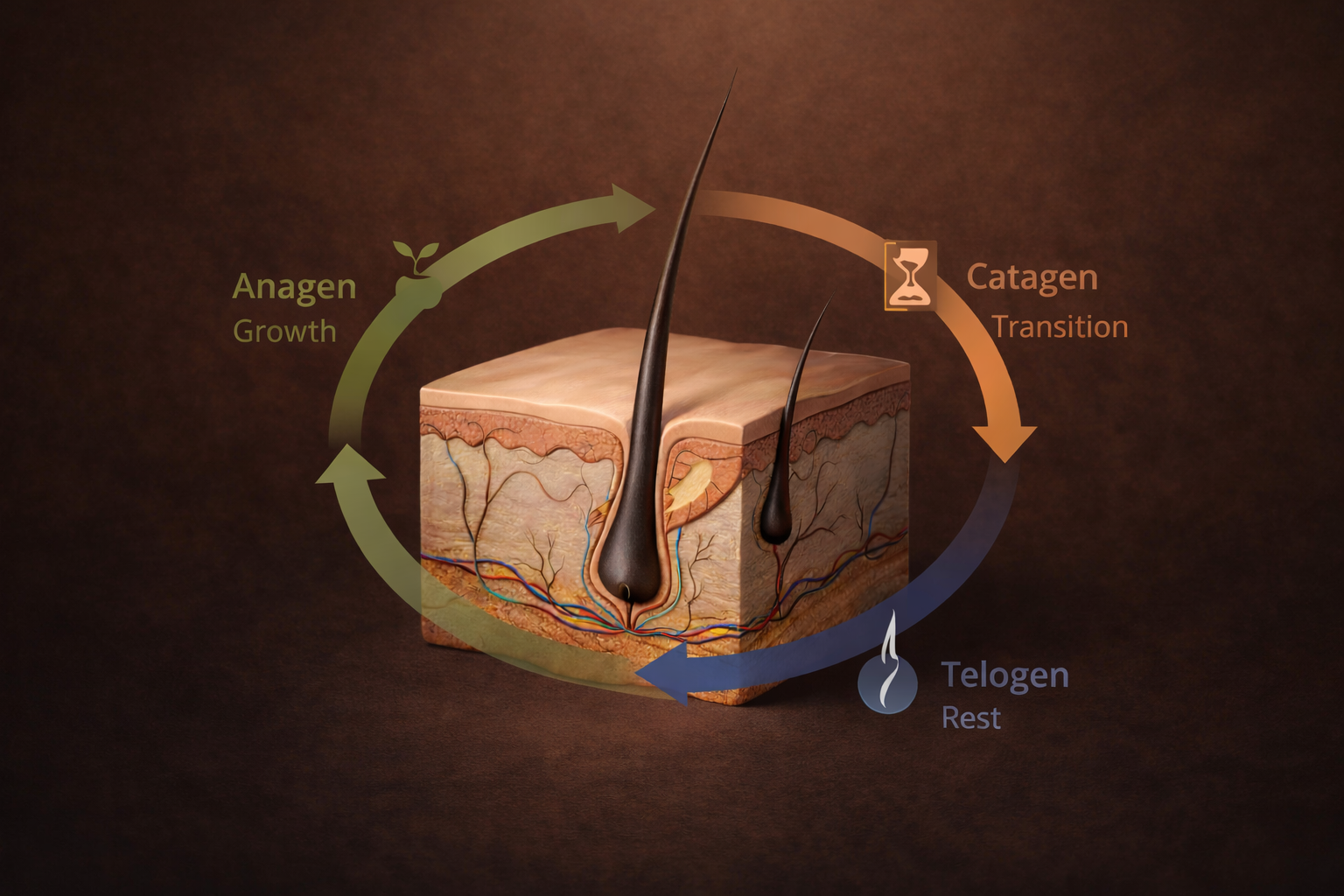
The hair growth cycle is a continuous biological process that regulates how hair grows, transitions, rests, and sheds. Each hair follicle functions independently, meaning different strands are always in different stages of hair growth. This natural cycle explains normal daily shedding and the gradual renewal of scalp hair.
According to dermatological research, scalp hair growth follows a cyclical pattern controlled by follicular stem cell activity, hormonal signals and local scalp conditions. Understanding this cycle helps explain length of the cycle, seasonal shedding patterns, and recovery after hair fall.
Factors Influencing Hair Growth Cycle
- Genetics and age
- Hormonal balance
- Nutrition and scalp health
- Stress and lifestyle habits
Stage 1: Anagen Phase – The Active Hair Growth Stage
The anagen phase is the longest and most significant stage of the cycle. During this active growth period, matrix cells in the hair bulb divide rapidly, producing the hair shaft. This phase typically lasts between 2 to 7 years, determining maximum hair length potential.
Scientific estimates suggest that approximately 85–90% of scalp hair remains in the anagen phase at any given time. Hair grows about 1 cm per month during this stage, although growth rate varies among individuals.
What Supports a Longer Anagen Phase
- Adequate protein and micronutrient intake
- Healthy scalp circulation
- Reduced oxidative stress
- Balanced hormone levels
Stage 2: Catagen Phase – The Transitional Stage
The catagen phase is a short transition period marking the end of active growth. Lasting around 2 to 3 weeks, this stage involves follicular regression where the lower part of the hair follicle shrinks and detaches from its blood supply.
Only about 1–2% of hairs are in the catagen phase at any time. Although growth of hair stops, the strand remains anchored in place while the follicle prepares for the resting phase.
Biological Changes During Catagen
- Reduced cell division
- Follicle shrinkage
- Formation of club hair
- Preparation for resting stage
Stage 3: Telogen Phase – The Resting Stage
The telogen phase represents the resting period in the stages of hair growth. This phase typically lasts 2 to 4 months, during which remain inactive while new hair begins forming underneath.
Approximately 10–15% of scalp hair is in telogen phase at any time. Daily shedding of 50–100 hairs is considered normal and reflects the natural hair growth cycle timeline.
Signs Hair show in Telogen Phase
- Increased mild shedding
- Reduced hair growth rate
- Formation of new emerging hair
- Temporary thinning after stress or illness
Exogen Phase – The Shedding Phase
Some dermatology experts describe an additional stage known as the exogen phase. This refers specifically to the active shedding of club hairs from the scalp. The exogen phase duration overlaps with telogen and new anagen growth.
Studies indicate that seasonal changes, stress, or metabolic disturbances may increase the proportion of hairs entering this shedding phase. Importantly, exogen shedding usually makes room for new hair rather than indicating permanent follicle damage.
Hair Growth Cycle Timeline and Length
The overall cycle time varies depending on genetics, age, ethnicity and environmental exposure. A complete cycle from anagen initiation to shedding may span several years.
Factors Affecting Length Of The Cycle
- Aging and hormonal fluctuations
- Nutritional deficiencies
- Chronic stress or illness
- Scalp inflammation or UV exposure
Maintaining a balanced diet, managing stress, and supporting scalp health can help regulate hair cycles of growth.
Do Seasonal Changes Affect Hair Growth
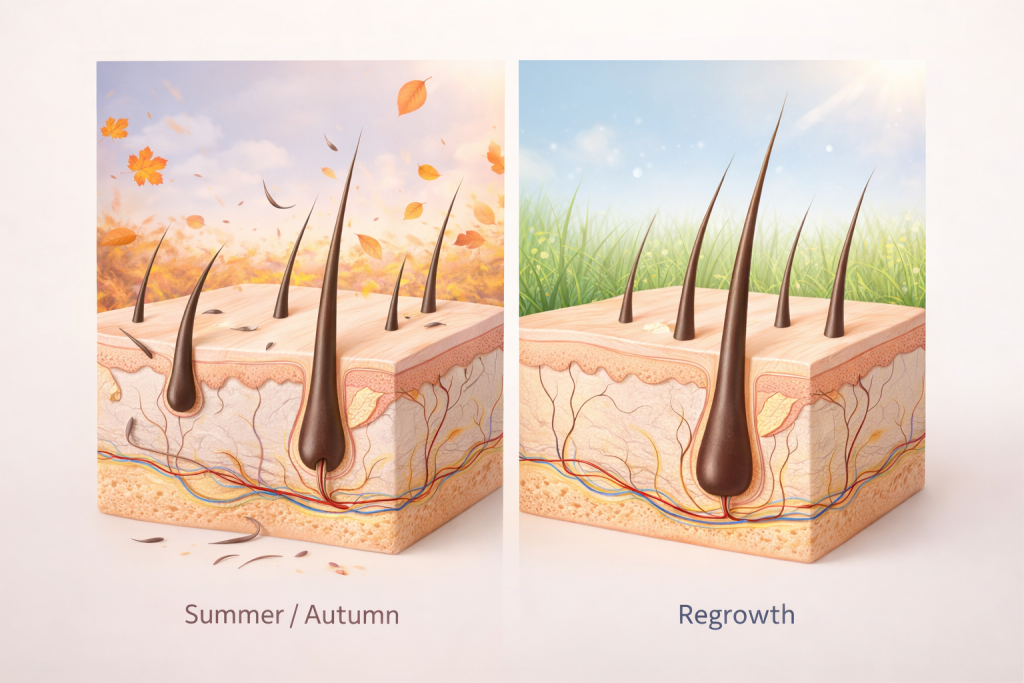
Hair growth seasonal changes have been observed in several population studies. Increased shedding during late summer and autumn may occur due to prolonged sun exposure and biological rhythm shifts (source).
While the best season for growth of hair can differ individually, consistent hair care practices and protective measures are more important than seasonal variations alone.
Supporting a Healthy Hair Growth Cycle
Promoting healthy growth phases requires both internal and external care strategies. Nutrient-dense diets rich in protein, iron, zinc, and essential fatty acids support follicular metabolism. Gentle hair handling, scalp massage, and stress management can further help maintain balanced growth cycles.
Conclusion
The three stages of the hair growth cycle — anagen, catagen, and telogen — function together to regulate hair renewal and shedding. Understanding these stages helps set realistic expectations regarding hair growth speed, temporary shedding, and recovery. By supporting scalp health and overall wellness, individuals can encourage a stable and healthy hair growth cycle over time.