

Introduction
Raw honey has long been viewed as a natural alternative to refined sugar. Many people use honey in tea, coffee, and home remedies because it is minimally processed and comes directly from nature. In natural health circles, educators such as Barbara O’Neill often highlight honey as a traditional food with therapeutic potential when used appropriately. However, the important question remains: Is honey truly better than regular sugar, or are they nutritionally similar?
Understanding the differences in composition, health effects, and recommended usage can help clarify whether honey is a healthier substitute.
Honey vs. Sugar
Composition and Processing
Regular table sugar, also known as refined sugar, is produced from sugarcane or sugar beets through extensive industrial processing. During this process, most naturally occurring nutrients are removed, leaving almost pure sucrose, a simple carbohydrate that provides calories but little nutritional value.
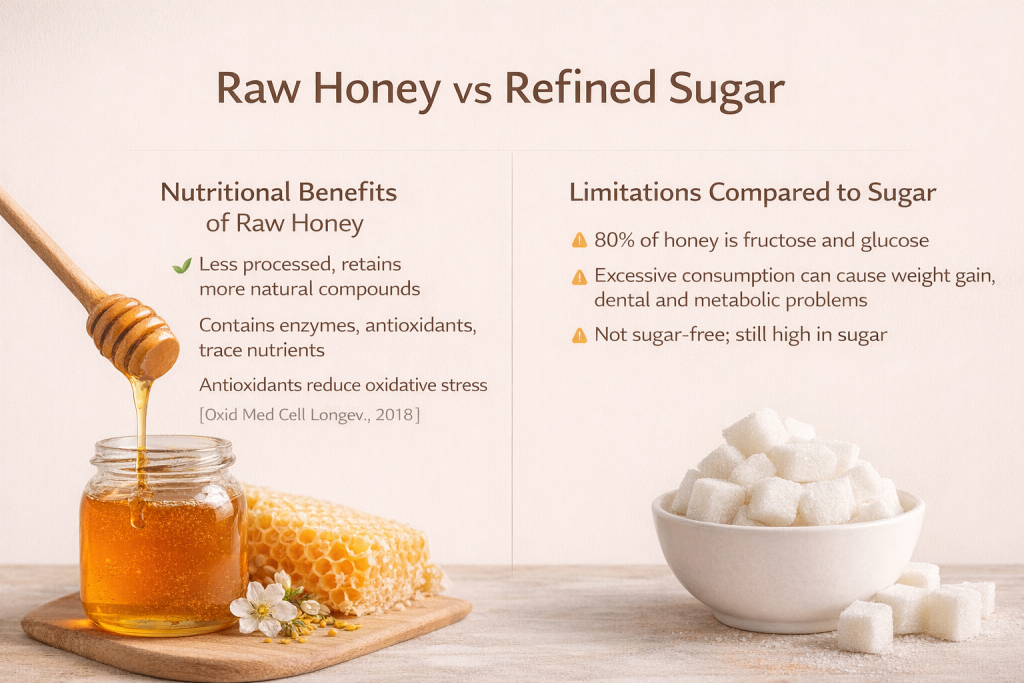
Honey, by contrast, is produced by bees from flower nectar. It contains a mixture of fructose, glucose, water, enzymes, antioxidants, and small amounts of vitamins and minerals. Because honey is less processed than refined sugar, it retains these trace nutrients and bioactive compounds.
Research published in the journal Nutrients indicates that honey contains polyphenols and flavonoids, which contribute to antioxidant activity and may help protect the body from oxidative stress (source).
Calorie Content and Sweetness
Honey is slightly sweeter than regular sugar, which means people may use smaller amounts to achieve the same sweetness. One tablespoon of honey contains about 64 calories, while one tablespoon of sugar provides approximately 49 calories. Although honey contains slightly more calories per tablespoon, its stronger sweetness may encourage moderation.
Despite these differences, both honey and sugar contribute to daily sugar intake and should be consumed in limited amounts.
Effects of Honey on Blood Sugar
Glycemic Index and Blood Glucose
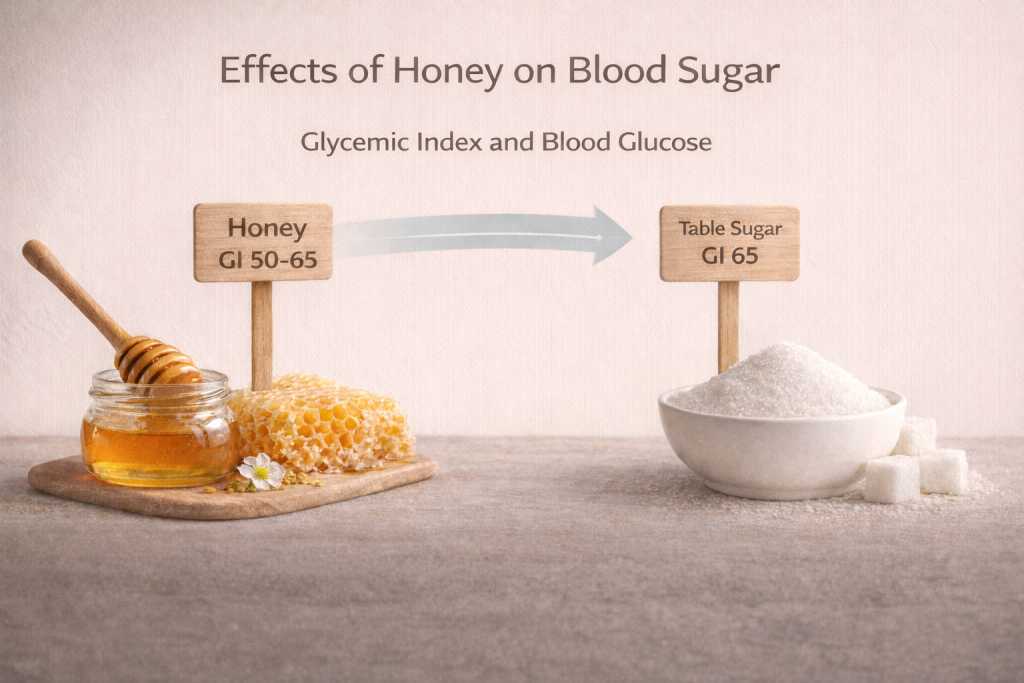
One reason people consider honey healthier than sugar is that it has a slightly lower glycemic index (GI) than refined sugar. The glycemic index measures how quickly foods raise blood glucose levels.
According to the Harvard T.H. Chan School of Public Health, raw honey generally has a GI between 50 and 65, while table sugar has a GI around 65. This means honey may cause a slightly slower rise in blood sugar, although the difference is not dramatic.
Considerations for People With Diabetes
Despite its natural origin, honey still contains significant amounts of sugar. The American Diabetes Association advises that honey should be counted as part of total carbohydrate intake for individuals managing diabetes. For this reason, people with diabetes or insulin resistance should consume honey carefully and consult healthcare professionals before replacing sugar with honey in their diet.
Is Honey a Healthy Substitute for Sugar?
Using Raw Honey in Daily Foods
Honey can be used as a substitute for sugar in various foods and beverages. Many people prefer using honey in tea, coffee, oatmeal, or baking recipes because it dissolves easily and adds a natural flavor.
When substituting raw honey for white sugar in cooking, a smaller amount is often sufficient due to its stronger sweetness. This may help slightly reduce overall sugar intake if used carefully.
Nutritional Perspective
Despite its natural origin, honey still contributes to total added sugar consumption. The World Health Organization (WHO) recommends limiting added sugars to less than 10% of total daily energy intake, regardless of whether they come from honey, sugar, or other sweeteners.
Therefore, replacing sugar with honey may offer nutritional benefits but does not eliminate the need to limit overall sugar consumption.
Limitations of Honey Compared to Sugar
High Sugar Content
Although honey contains beneficial compounds, it is still largely composed of sugar. Approximately 80% of honey consists of carbohydrates. Excessive intake of honey may contribute to the issues, similar to other forms of added sugar.
Not a Sugar-Free Alternative
Because honey is often perceived as a health food, some people may overconsume it. However, honey is not a sugar-free product and should not be viewed as a completely healthy replacement for all sweeteners.
Even natural health advocates such as Barbara O’Neill typically recommend using honey sparingly and as part of a balanced diet, rather than relying on it heavily.
Conclusion
So, is honey better than regular sugar? In certain ways, it may be. Raw honey contains small amounts of antioxidants, enzymes, and trace nutrients that refined sugar lacks. It is also less processed and has been traditionally used in many cultures as both a food and natural remedy.
However, honey is still a concentrated source of sugar and can raise blood glucose levels when consumed in excess. While it may be a more natural alternative to refined sugar, moderation remains essential.
Ultimately, the healthiest approach is to limit overall added sugar intake, choose whole foods whenever possible, and use natural sweeteners like honey thoughtfully rather than excessively.