
Introduction
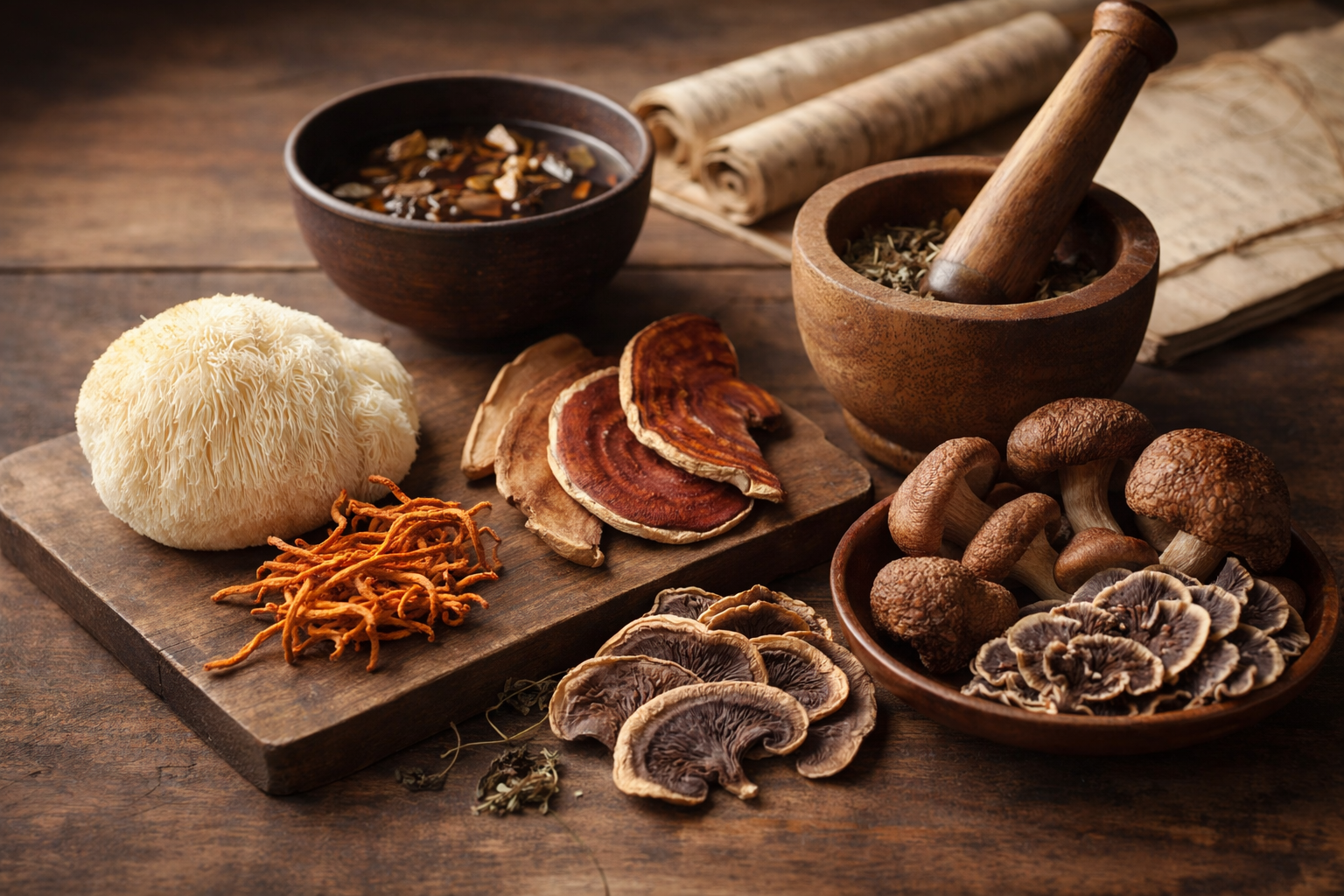
Functional mushrooms have long occupied a dual role as both nourishment and natural medicine in traditional diets. Across Asia, Eastern Europe, and Indigenous cultures, mushrooms were valued not only as edible food sources but also as therapeutic agents supporting immunity, vitality, and longevity. Today, interest in medicinal mushrooms such as lion’s mane, cordyceps, and reishi has grown significantly, raising questions like: Is there any science behind functional mushrooms? While thousands of mushroom species exist, only certain varieties are edible and safe. Understanding mushroom types and effects helps determine whether mushrooms are friendly or harmful for health.
Mushrooms in Traditional Chinese Medicine and Ayurveda
In Traditional Chinese Medicine (TCM), mushrooms such as Ganoderma lucidum (reishi) and Cordyceps sinensis were considered adaptogenic mushrooms, believed to restore balance and improve resilience to stress. Reishi was historically called the “mushroom of immortality” due to its association with immune support and longevity. Modern pharmacological reviews confirm that reishi contains bioactive polysaccharides and triterpenoids with immunomodulatory properties.
Cordyceps was traditionally used to enhance stamina and respiratory function. According to a scientific research, cordyceps species may influence energy metabolism and oxygen utilization. Similarly, Ayurveda and Indigenous diets incorporated seasonal wild edible mushrooms as strengthening foods and natural immune boosters, reflecting the deep cultural roots of mushroom types food applications.
Popular Functional Mushrooms and Their Uses
Lion’s Mane (Hericium erinaceus)
Lion’s mane is widely discussed for cognitive support. Research suggests it stimulates nerve growth factor (NGF), a protein involved in neuron maintenance. A randomized clinical trial showed that older adults consuming lion’s mane extract experienced improved cognitive function compared to placebo (source). This supports ongoing interest in whether lion’s mane increases dopamine or helps with ADHD, although more large-scale trials are needed.
Cordyceps
Cordyceps has been studied for exercise performance and fatigue reduction. A study in Medicine & Science in Sports & Exercise found that supplementation improved oxygen uptake in older adults. This may explain why questions such as “What does cordyceps do to the brain?” or “Are cordyceps like Viagra?” arise. While cordyceps may support circulation and energy, it is not a pharmaceutical substitute.
Reishi, Chaga, and Turkey Tail
Reishi has documented immune-modulating effects (Boh et al., 2007). Turkey tail (Trametes versicolor) has been researched for its polysaccharide-K (PSK) compounds used as adjunct therapy in cancer treatment in Japan (source). Importantly, functional mushrooms are non-psychoactive. People often ask, “Can you trip off functional mushrooms?” The answer is no; they do not contain psilocybin.
Edible and Non-Edible Mushrooms: Safety and Identification
There are over 14,000 identified mushroom species, though estimates suggest many more remain undiscovered. Common edible mushrooms names include button (Agaricus bisporus), shiitake (Lentinula edodes), and oyster mushrooms (Pleurotus ostreatus). These edible mushrooms scientific names are used in classification and research.
However, non edible mushrooms names include toxic varieties such as Amanita phalloides (death cap). Visual identification alone is unreliable; toxic mushrooms can closely resemble edible ones. According to the Centers for Disease Control and Prevention (CDC, 2020), proper identification and safe sourcing are essential to prevent poisoning. This underscores the importance of mushroom cultivation and its types for controlled food safety.
Health Benefits: Evidence and Limitations
Research into functional mushrooms explores their impact on cholesterol, inflammation, immunity, and cognitive health. Beta-glucans found in mushrooms are associated with immune modulation and cholesterol reduction. Lion’s mane has shown potential neuroprotective effects in both animal and human studies.
Cordyceps has demonstrated antioxidant and anti-inflammatory properties. However, while early evidence is promising, many claims—such as being the “strongest cognitive enhancer”—remain scientifically unproven. Functional mushrooms should be considered supportive components of a balanced diet rather than standalone treatments.
Safety, Interactions and Who Should Avoid Them
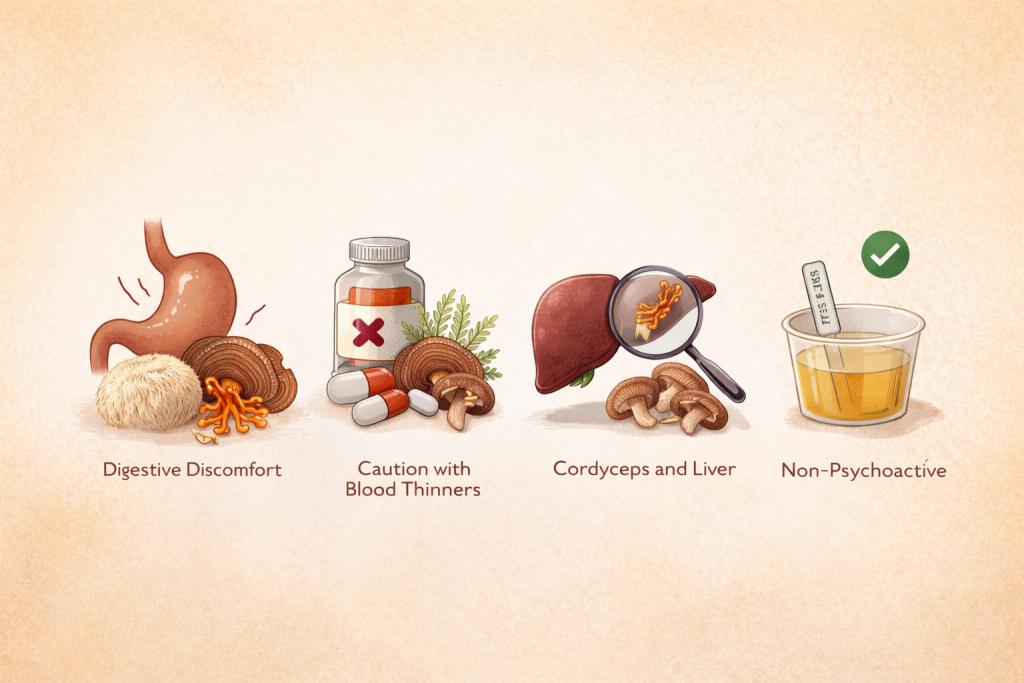
Although generally safe when consumed as food, some individuals should exercise caution. Who should not take functional mushrooms? People with autoimmune disorders, those taking blood thinners or individuals on immunosuppressive therapy should consult healthcare professionals.
Common safety concerns include:
- Can you eat too much functional mushrooms? Excess intake may cause digestive discomfort.
- What medications should not be taken with lion’s mane? Limited data suggest caution with anticoagulants.
- Is cordyceps hard on the liver? Current evidence does not show significant hepatotoxicity in healthy individuals, but monitoring is advised.
- Will functional mushrooms show up on a drug test? No, as they are non-psychoactive and do not contain controlled substances.
Moderation and medical consultation remain key.
Conclusion
Functional mushrooms in traditional diets reflect centuries of empirical knowledge. From TCM to Indigenous food systems, these mushrooms have been used as nourishment and therapeutic support. Modern science is beginning to validate some traditional claims, particularly regarding immune modulation and cognitive health.
While mushrooms are generally friendly for health when properly identified and consumed in moderation, understanding edible and non-edible varieties, potential interactions, and scientific limitations is essential. As research advances, functional mushrooms continue to bridge ancient dietary wisdom with contemporary nutritional science