

Introduction
Artificial sweeteners are synthetic or natural sugar substitutes. They taste like sugar but are chemically different, provide intense sweetness with few or zero calories. As they offer sweetness with minimal calories, helping with weight control and diabetes management, also preventing tooth decay, making them common in diet, sugar-free and low-calorie products. While approved by regulatory bodies like the FDA, some studies suggest potential links to insulin resistance, gut microbiome changes, and other metabolic issues, though research continues.
Barbara O’Neill’s emphasis that “the body is designed for natural foods, not synthetic chemicals.”
Artificial Sweeteners
• Types of Common Artificial Sweeteners
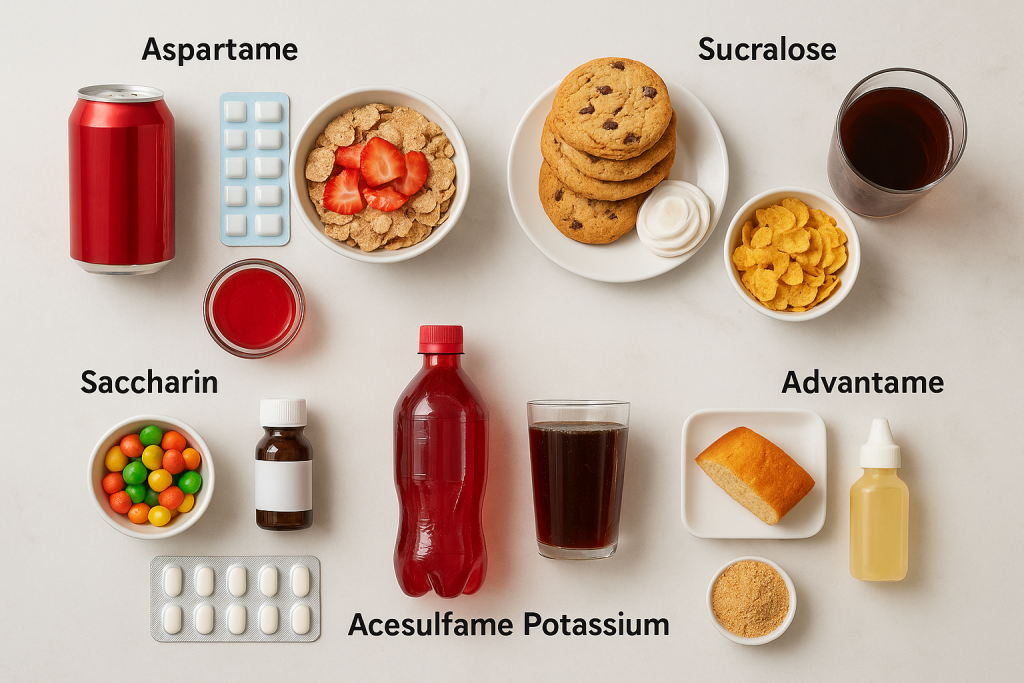
The FDA has approved several artificial sweeteners for use in food and beverages:
- Aspartame – In diet soft drinks, sugar-free chewing gum, gelatin desserts, instant breakfasts
- Sucralose – In baked goods, beverages, frozen desserts, cereals, canned fruits, and sauces.
- Saccharin – In candies, medicines, chewing gum, and canned foods.
- Acesulfame Potassium – In protein shakes, candies, carbonated drinks like Coca-Cola.
- Neotame – A variety of foods and drinks, including baked goods (7,000 to 13,000 times sweeter than sugar).
- Advantame – Used in baked goods, desserts, beverages, and as a general-purpose sweetener (it is about 20,000 times sweeter than sugar) source
• Why People Turn to Them
- Desire to reduce sugar
- Weight Management
- Managing blood sugar levels
- Marketing of “diet” and “zero calorie” products
Barbara O’Neill’s Perspective on Artificial Additives
• Preference for Natural vs. Synthetic
Her view that the body reacts differently to synthetic chemicals compared to natural sugars. Artificial sweeteners as “foreign” substances the body struggles to process. They’re seen as chemical-laden, linked to gut issues, brain fog, and potentially cause cancer, disrupting natural body processes rather than being true “health” options. Like how chemical additives increase the liver’s detoxification burden. Synergy of multiple chemicals in processed foods.
Affects on Body
• Impact on the Digestive System
- O’Neill’s claim that gut microbiome becomes disrupted by artificial chemicals.
- Changes in beneficial bacteria.
- Possible digestive irritation.
• Influence on Insulin Response
- Artificial sweeteners may stimulate insulin release despite zero calories.
- Confusion of the brain–pancreas communication system.
- This may lead to cravings and overeating.
• Effects on the Brain & Nervous System
- Sweet taste without calories can overstimulate taste receptors.
- O’Neill’s warnings about neurological irritation (e.g., headaches, dizziness).
- Potential for mood changes.
Are Artificial Sweeteners Safe Scientific vs. Natural-Health Views
• Regulatory Approval and Safety Claims
- FDA and EFSA both the regulatory bodies emphasize that the Acceptable Daily Intake (ADI) limits. Represents an amount far greater than what is typically consumed, providing a significant safety margin. Consumers with specific health conditions, such as phenylketonuria (PKU), are advised to manage their intake of certain sweeteners. The FDA encourages using them in moderation, similar to sugar and notes their role in reducing sugar calories.
• Criticisms Highlighted in O’Neill’s Talks
- Safety for long-term use of artificial sweetener is not guarantied.
- Animal studies showing concerns and conflicts.
- Daily consumption of artificial sweetener causes addiction.
• Conflicting Evidence
- There are various studies suggesting negative effects of artificial sweeteners causing cardiovascular diseases, obesity, type 2 diabetes, HbA1c, cancer and chronic kidney diseases.
- Research linking artificial sweeteners to weight gain despite being “diet-friendly.” source
Banned Artificial Sweeteners
- Cyclamate: Banned in the U.S. since 1970 after studies linked it to cancer in animals, but permitted in over 100 other countries, including Europe.
- Stevia: While refined stevia extracts (like Truvia) are approved, the FDA issued an import alert on raw stevia leaves and crude extracts in 2019 due to safety concerns.
- Aspartame: Classified as “possibly carcinogenic” by the WHO’s IARC in 2023, but the FDA and other bodies still deem it safe within acceptable daily intake levels, though some EU groups push for bans.
Conditions That Should Be Cautious
• Individuals with Gut Issues
- IBS, dysbiosis, or digestive sensitivities.
- Artificial sweeteners intensifying inflammation or irritation. source
• Children and Pregnant Women
- O’Neill’s stance on minimizing exposure during developmental years.
- Uncertain long-term effects on growth and brain development. source
• People with Neurological Symptoms
- Those prone to migraines, anxiety, or nerve irritation may be more sensitive. source
Natural Alternatives Recommended by Barbara O’Neill
• Whole-Food Sweeteners
- Honey
- Maple syrup
- Dates
- Coconut sugar
- Molasses
• Minimizing Sweet Taste Dependence
- Training the palate to enjoy less sweetness.
- Eating more whole foods.
- Even natural sweeteners should be used sparingly to avoid blood sugar spikes.
Tips for Reducing Artificial Sweetener Intake
- Read labels on diet sodas, protein powders, flavored waters, gum, vitamins.
- Replace artificially sweetened beverages with herbal teas or infused water.
- Choose whole fruits instead of sugar-free desserts.
- Gradually decrease sweetness preference.
9. Conclusion
Artificial sweeteners provide sweetness with minimal calories and are used in a range of diet products, which is attractive to those with diabetes and those who wish to cut down on sugar. But whether they are healthy for our gut, insulin response, cravings or long-term metabolic health is still in question. Some sweeteners — including aspartame and sucralose — are particularly controversial. Although regulators consider them safe in moderation, research suggests that overuse can have harmful side effects. The best option is to consume them in moderation while moving towards more natural, whole-food replacements. As, O’Neill’s view” the safest choice is natural, minimally processed foods”


