

Introduction
Premature gray hair is no longer limited to aging populations—many teens and young adults now experience early greying. This raises a common question: what causes premature grey hair? While genetics play a major role, factors like nutritional deficiencies, oxidative stress and lifestyle habits are increasingly responsible for gray hair causes in young adults. Understanding these triggers is essential for prevention and management.
What Is Premature Gray Hair?
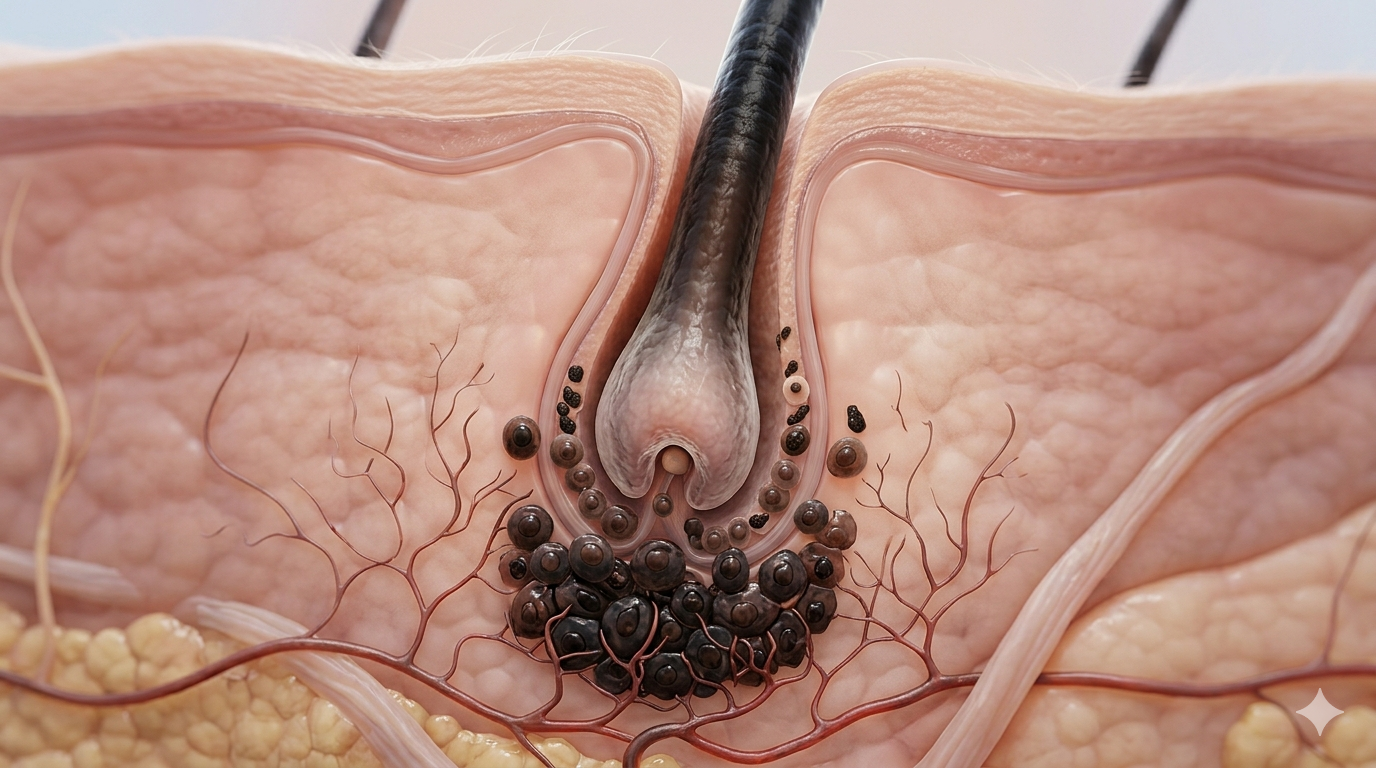
Premature hair graying refers to the loss of natural pigment before the expected age—typically before 20 in some populations. This condition, often described as white hair in early age or greying of hair in young age, occurs when melanocytes (pigment-producing cells) reduce melanin production.
Melanin is responsible for hair color and its decline leads to gray or white strands. According to research, the depletion of melanocyte stem cells is a key biological mechanism behind early graying (source).
Genetic Factors: The Leading Cause
Genetics is the most significant contributor to causes of premature grey hair. If your parents experienced early graying, you are more likely to develop it as well.
A study published in Nature Communications identified genetic variations affecting melanocyte function and hair pigmentation. These inherited traits explain why some individuals experience causes of gray hair at young age even without lifestyle triggers.
Nutritional Deficiencies and Hair Pigmentation
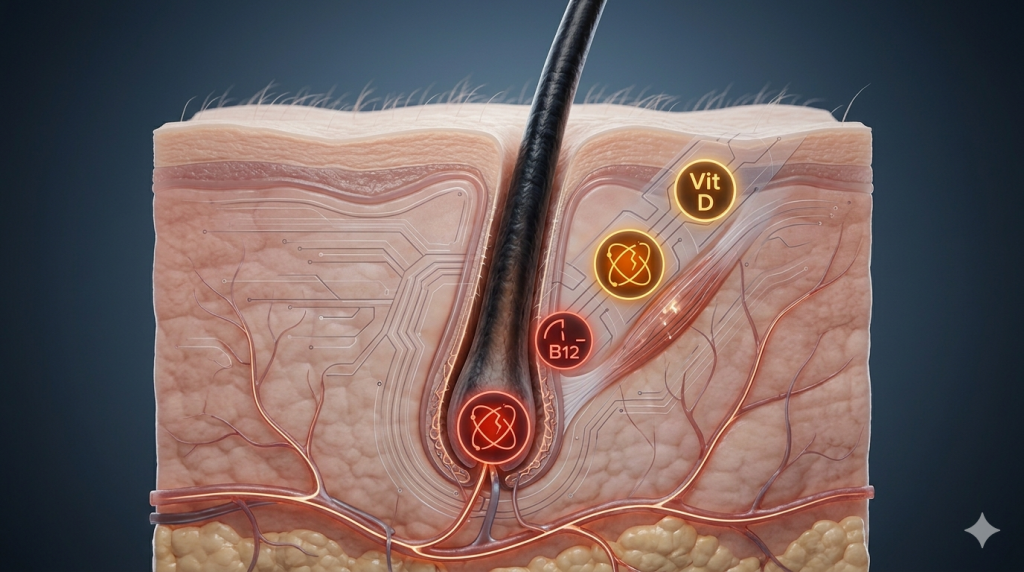
One of the most searched concerns is what deficiency causes premature grey hair. Scientific evidence strongly links nutritional deficiencies to early graying.
Key Nutrient Deficiencies:
- Vitamin B12 deficiency grey hair: Essential for DNA synthesis and red blood cell production
- Iron deficiency: Impairs oxygen delivery to hair follicles
- Vitamin D deficiency: Affects melanocyte activity
- Copper and zinc deficiency: Required for melanin production
A clinical study found that individuals with premature gray hair had significantly lower levels of Vitamin B12, ferritin and calcium. This supports the query: what vitamin deficiency causes premature grey hair.
Oxidative Stress: A Major Biological Trigger
Oxidative stress is one of the most critical reasons for grey hair in young age. It occurs when free radicals damage melanocytes, leading to reduced melanin synthesis.
Research shows that hydrogen peroxide accumulation in hair follicles bleaches hair from within by impairing melanin production. External factors such as pollution, smoking, and poor diet further accelerate this process.
This explains common concerns like hair whitening reasons at young age and highlights the role of antioxidants in prevention.
Stress and Hormonal Imbalance
Many people ask: is premature grey hair from stress? Scientific evidence suggests that chronic stress can indeed contribute to early graying.
A study in Nature demonstrated that stress activates the sympathetic nervous system, leading to depletion of melanocyte stem cells. Additionally, hormonal imbalances—especially thyroid disorders—are linked to why hair turns grey at a young age.
Medical Conditions and Autoimmune Causes
Certain health conditions are associated with premature grey hair causes, particularly autoimmune and metabolic disorders.
Common Conditions:
- Vitiligo: Affects pigment-producing cells
- Thyroid disorders: Disrupt hair growth cycles
- Pernicious anemia: Causes Vitamin B12 deficiency
These conditions answer the question: what autoimmune disease causes premature grey hair, as they directly interfere with melanin production.
Lifestyle and Environmental Factors
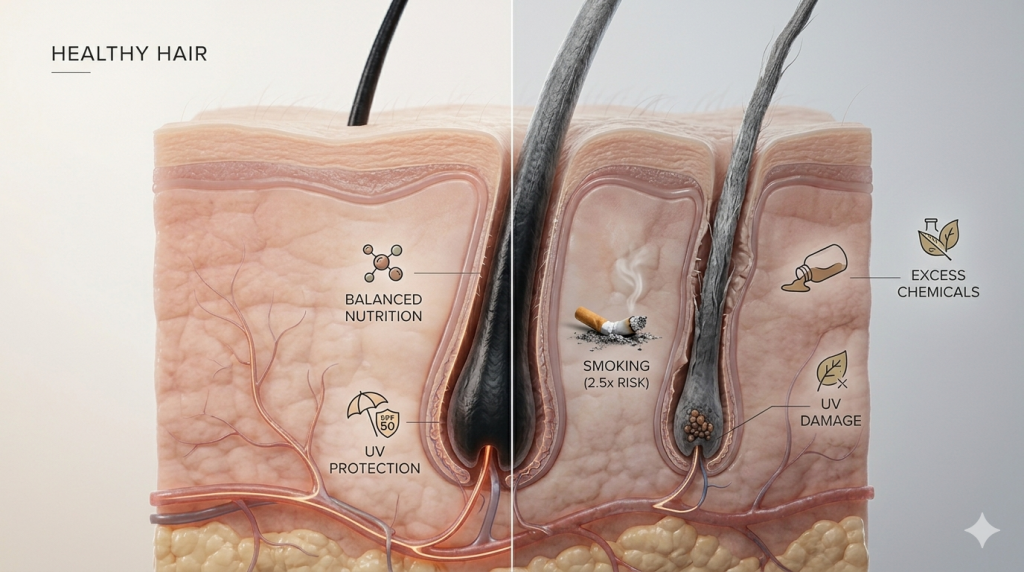
Modern lifestyle habits significantly contribute to causes of premature gray hair. Smoking, in particular, has been strongly associated with early graying.
A study found that smokers are up to 2.5 times more likely to develop premature gray hair compared to non-smokers. Additional factors include:
- Poor nutrition
- Excessive chemical treatments
- UV exposure
These explain why get gray hair in young age even without genetic predisposition.
Can Premature Gray Hair Be Reversed?
A common question is: can premature grey hair turn black again? The answer depends on the underlying cause.
- Reversible cases: Nutritional deficiencies or stress-related
- Non-reversible cases: Genetic or age-related
While complete reversal is rare, addressing deficiencies and reducing oxidative stress may help restore some pigmentation. This relates to the query: how to restore melanin in hair.
How to Prevent and Slow Down Gray Hair
If you’re wondering how to stop premature greying, evidence-based strategies can help:
Nutritional Support
- Increase intake of Vitamin B12, iron, and zinc
- Eat antioxidant-rich foods (berries, leafy greens)
Lifestyle Changes
- Manage stress through exercise and mindfulness
- Avoid smoking
- Reduce exposure to environmental toxins
Hair Care
- Use gentle, sulfate-free products
- Avoid excessive heat styling
These steps address what foods prevent grey hair and how to slow down grey hair effectively.
Conclusion
Premature gray hair is influenced by genetics, nutritional deficiencies, oxidative stress, and lifestyle factors. While it may not always indicate a serious health issue, understanding what causes premature grey hair in young adults is key to managing it.
Although not all cases are reversible, early intervention through proper nutrition, stress management, and healthy habits can significantly delay the greying process. Addressing root causes remains the most effective approach to controlling grey hair problem in young age.


Is excessive use of hair care products(shampoo & conditioners)
leads to gray hair?
Also tell the right way to use these things.