

Introduction
Circadian rhythm refers to the body’s internal 24-hour clock that regulates sleep-wake cycles, hormone release, metabolism and immune responses. This biological system is controlled by the suprachiasmatic nucleus in the brain and is highly influenced by environmental cues such as light and food timing.
Circadian rhythm biochemistry involves hormones like melatonin and cortisol, which fluctuate throughout the day to maintain physiological balance. When functioning properly, a normal circadian rhythm promotes restorative sleep, optimal metabolism and cellular repair. However, disruptions in this rhythm—commonly referred to as circadian dysrhythmia—can negatively affect multiple body systems.
What Is Circadian Rhythm Sleep-Wake Disorder?
Circadian rhythm sleep-wake disorder (CRSWD) refers to a mismatch between the body’s internal clock and external environmental demands. These disorders are clinically recognized in diagnostic systems such as DSM-5 and ICD-10 and include types like delayed sleep phase disorder and shift work disorder.
Common Types Include:
- Delayed sleep phase type
- Shift work type
- Irregular sleep-wake rhythm disorder
People with CRSWD often experience insomnia, excessive daytime sleepiness and irregular sleep patterns. These symptoms are not only disruptive but also contribute to worsening chronic health conditions.
The Connection Between Circadian Rhythm and Chronic Illness
Circadian rhythm and health issues are closely linked. Disruptions in sleep-wake cycles can increase the risk of chronic illnesses such as diabetes, cardiovascular disease, obesity and depression.
Key Mechanisms Linking Circadian Rhythm to Disease:
- Metabolic Dysfunction: Irregular eating disrupts circadian rhythm best time to eat, affecting insulin sensitivity
- Inflammation: Poor sleep increases systemic inflammation
- Hormonal Imbalance: Altered cortisol and melatonin levels
- Immune Dysregulation: Reduced ability to fight infections
Studies show that misalignment between internal biological clocks and external schedules contributes significantly to chronic disease progression (source). Additionally, sleep deprivation to reset circadian rhythm (when improperly done) may further worsen metabolic and mental health outcomes, emphasizing the need for structured therapeutic approaches.
Circadian Rhythm Therapies
Circadian rhythm disorders treatment focuses on restoring synchronization between biological and environmental timing. These therapies are increasingly used to manage chronic illness symptoms effectively.
1. Light Therapy
Exposure to bright light in the morning helps reset the circadian clock by suppressing melatonin and promoting wakefulness. It is widely used for delayed sleep phase disorders.
2. Melatonin Supplementation
Melatonin is commonly used as a medication for CRSWD to regulate sleep timing. Controlled use improves sleep onset and quality.
3. Chronotherapy and Behavioral Interventions
- Gradual adjustment of sleep schedules
- Cognitive Behavioral Therapy for insomnia (CBT-I)
- Sleep hygiene education
4. Lifestyle-Based Therapies
- Fixed sleep-wake schedule
- Timed physical activity
- Reduced screen exposure at night
Clinical reviews confirm that treatments such as light therapy, melatonin and behavioral strategies are standard approaches for managing CRSWDs.
5. Emerging Therapies
- Acupuncture for circadian regulation
- Chrononutrition (timing meals with biological clock)
Recent studies indicate that alternative therapies like acupuncture may modulate the rhythms and improve sleep quality .
Can Circadian Rhythm Disorders Be Treated Successfully?
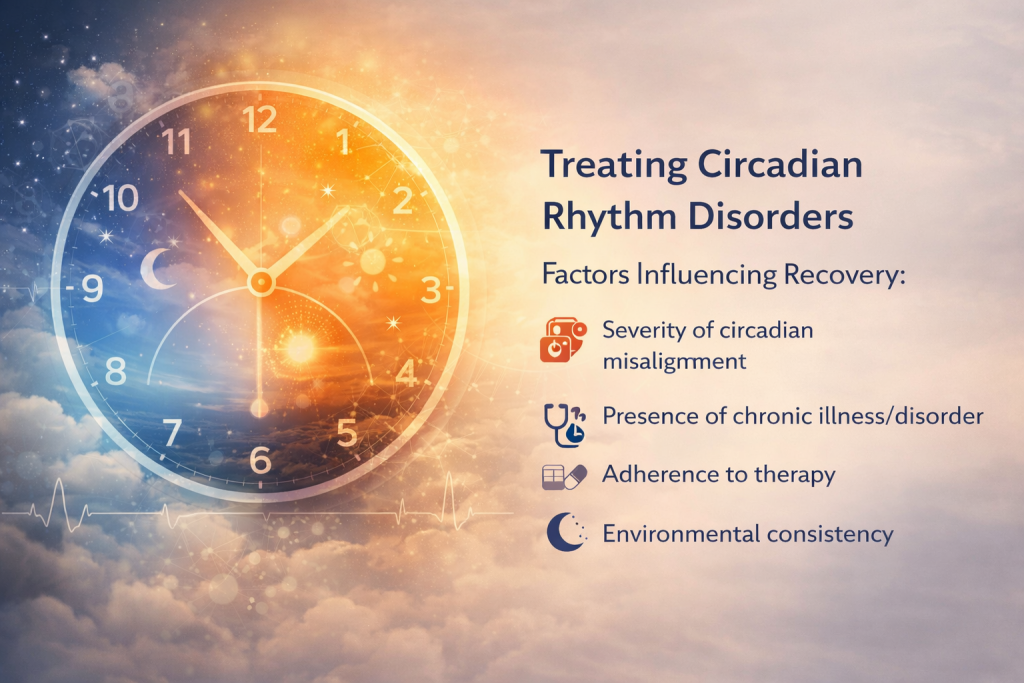
A common question is: can circadian dysrhythmia be treated? The answer is yes—especially when interventions are consistent and personalized. The normal recovery for circadian dysrhythmia varies, but many patients experience improvement within weeks of structured treatment.
Diagnostic and Monitoring Tools:
- Sleep diaries
- Actigraphy
- Melatonin phase testing
These tools help clinicians understand how to test for circadian dysrhythmia and tailor treatments accordingly.
Lifestyle Strategies to Support Circadian Health
In addition to clinical treatments, daily habits play a critical role in maintaining circadian balance.
Key Strategies:
- Maintain a consistent sleep schedule (e.g., sleeping around 10 pm)
- Get natural sunlight exposure early in the day
- Avoid caffeine and heavy meals late at night
- Follow best time to eat (daytime-focused eating)
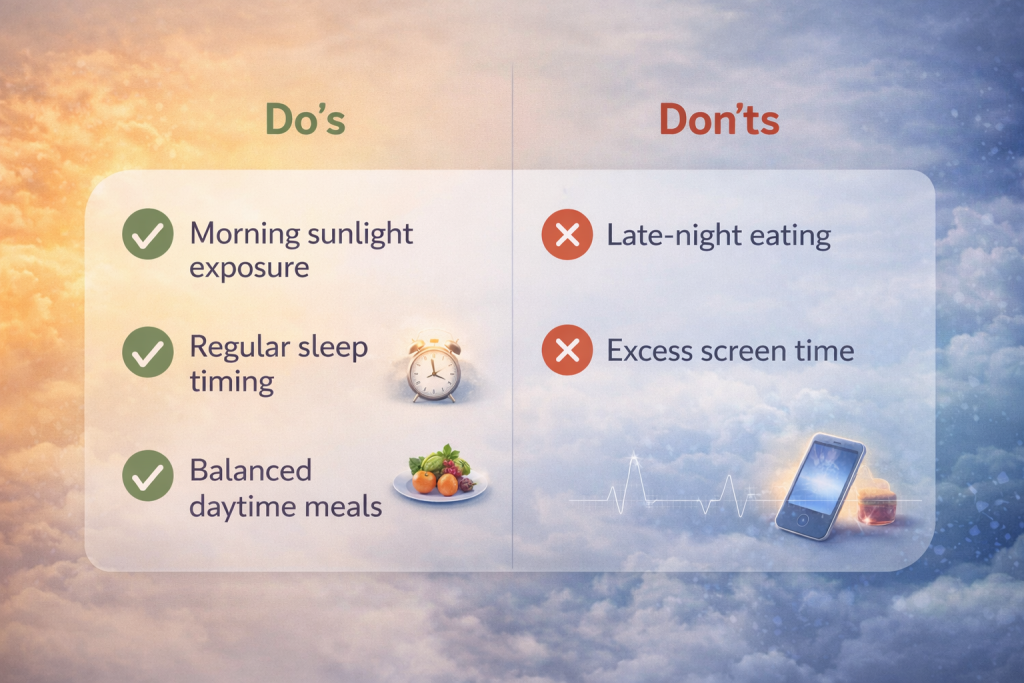
Understanding sleep and circadian rhythm allows individuals to actively manage their health and reduce the burden of chronic illness.
Conclusion
Circadian rhythm therapies are transforming the way chronic illnesses are managed by addressing the root cause—biological timing disruption. From light therapy and melatonin to lifestyle and behavioral interventions, these approaches offer a holistic and scientifically supported pathway to improved health.
As research in circadian rhythm biochemistry continues to evolve, integrating chronotherapy into mainstream healthcare may significantly enhance treatment outcomes. For individuals struggling with chronic conditions, restoring a normal circadian rhythm is not just about better sleep—it is a foundational step toward long-term healing and improved quality of life.