
Introduction
Healthy hair is often associated with oils, masks, and serums, but internal hydration plays an equally important role in maintaining hair strength and shine. The relationship between hydration and hair health is supported by biological processes that influence scalp condition, follicle activity and moisture balance. Understanding how much water hair really needs requires looking at both internal hydration and external moisture care.
What Is Hair Hydration and Why Is It Important?
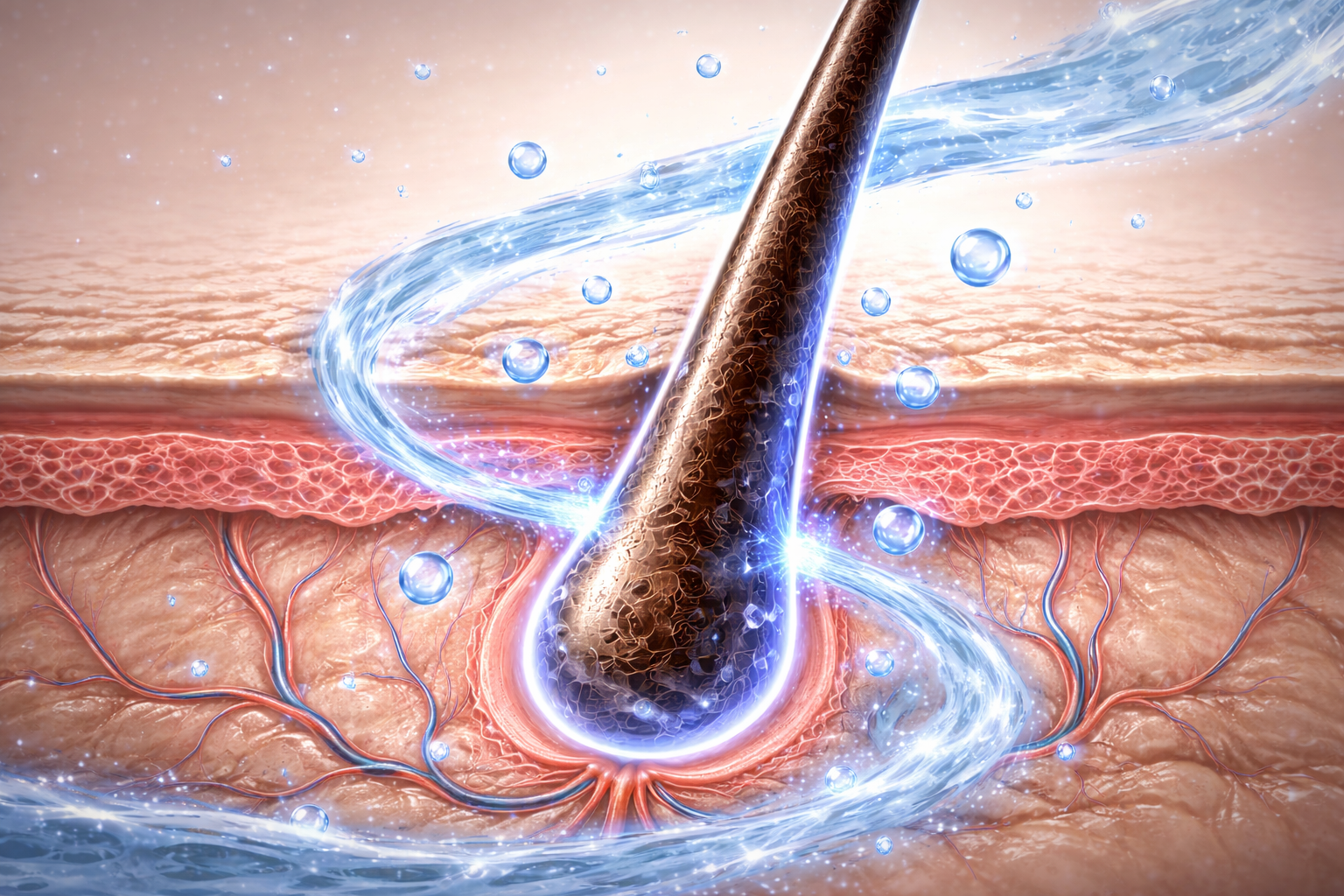
Hair hydration refers to the ability of the scalp and hair shaft to maintain adequate moisture levels. Although the visible hair strand is made of non-living keratin protein, the hair follicle beneath the scalp is metabolically active and requires proper circulation and nutrient supply.
Role of Hydration in Hair Follicle Function
- Supports blood flow and oxygen delivery
- Maintains scalp barrier integrity
- Helps regulate sebum production
Research shows that proper hydration supports cellular metabolism and tissue function, including skin and scalp health. When hydration is adequate, hair tends to appear smoother, shinier, and more elastic. Conversely, dehydrated hair becomes brittle, dull, and prone to breakage.
Does Drinking More Water Improve Hair Growth?
Many people believe increasing water intake can directly accelerate hair growth. While hydration alone does not stimulate hair follicles to grow faster, it supports the physiological environment required for normal hair cycling.
Hydration and Nutrient Transport
Water plays a critical role in transporting vitamins, minerals and amino acids necessary for keratin production. Inadequate hydration may impair circulation and increase physiological stress, potentially affecting hair shedding patterns.
A study on fluid balance highlights that dehydration can disrupt metabolic efficiency and increase fatigue and stress responses. Since stress hormones such as cortisol can influence hair growth cycles, maintaining hydration may indirectly support healthier hair density.
Practical hydration guideline:
- Aim for approximately 2–3 litres of water daily
- Adjust intake based on climate, exercise, and body weight
Hydration for hair benefits texture, reduces dryness and supports breakage prevention rather than dramatically boosting growth speed.
Signs Your Hair and Scalp Need Better Hydration
Recognizing dehydration early can help prevent long-term hair damage. Both internal and external signs should be considered.
Hair and Scalp Warning Signs
- Persistent dryness and rough texture
- Increased frizz and split ends
- Itchy or flaky scalp
- Reduced shine and elasticity
Systemic Signs of Dehydration
- Dark urine
- Headaches or dizziness
- Low energy levels
Because organs like the kidneys are highly sensitive to fluid imbalance, chronic dehydration can affect overall physiological balance. This systemic stress may indirectly influence hair quality.
Internal vs External Hair Hydration: Finding the Right Balance
Optimal hair hydration requires both internal water intake and topical moisture treatments.
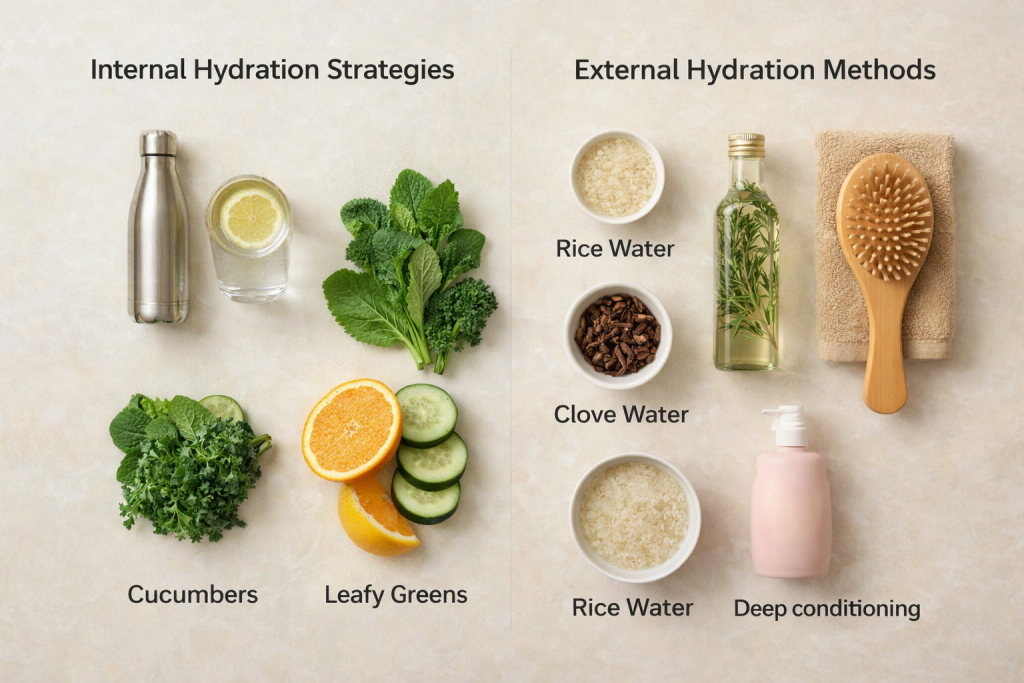
Internal Hydration Strategies
- Drink water consistently throughout the day
- Eat water-rich foods such as cucumbers, oranges, and leafy greens
- Limit excessive caffeine and processed foods
External Hydration Methods
- Deep conditioning masks
- Hydration treatments or hair hydrafacial therapies
- Natural remedies such as rice water, rosemary water, clove water and rose water
For example, rice water may improve hair smoothness due to its starch content, while rosemary-based preparations are traditionally used to support scalp circulation. A comparative dermatological study found that certain botanical treatments may help maintain scalp health and hair density over time (source).
Balancing internal hydration with gentle external care provides more sustainable results than relying solely on surface treatments.
Can Dehydration Contribute to Hair Loss or Breakage?
Dehydration rarely acts as a direct cause of hair loss, but it can worsen underlying factors such as nutritional deficiencies, hormonal changes, and scalp inflammation.
Stress and Hormonal Influences
When the body experiences fluid imbalance, stress responses may increase, potentially disrupting the hair growth cycle. Hormonal fluctuations during perimenopause or menopause can also reduce scalp oil production, making hair more brittle and prone to breakage.
Maintaining hydration supports skin elasticity and tissue resilience, which may help reduce mechanical damage to hair strands.
Practical Hydration Tips
There is no universal water intake that guarantees perfect hair, but consistent hydration habits significantly support overall hair wellness.
Daily Hydration Routine for Healthier Hair
- Start the day with one glass of water
- Spread intake evenly rather than drinking large amounts at once
- Monitor thirst signals and urine colour
- Use weekly hydration treatments for moisture retention
Combining internal hydration, balanced nutrition and mindful hair care practices can improve hair manageability and resilience over time.
Conclusion
Hydration plays a foundational yet often underestimated role in hair health. While drinking water alone will not transform hair overnight, it supports scalp circulation, nutrient delivery and moisture balance. Integrating adequate fluid intake with external hydration strategies such as conditioning treatments and natural scalp remedies can help maintain stronger, shinier and more resilient hair. Ultimately, understanding how much water hair really needs means supporting whole-body hydration for sustainable hair growth and long-term wellness.