
1. Introduction: The Link Between Digestive Bacteria and Mood
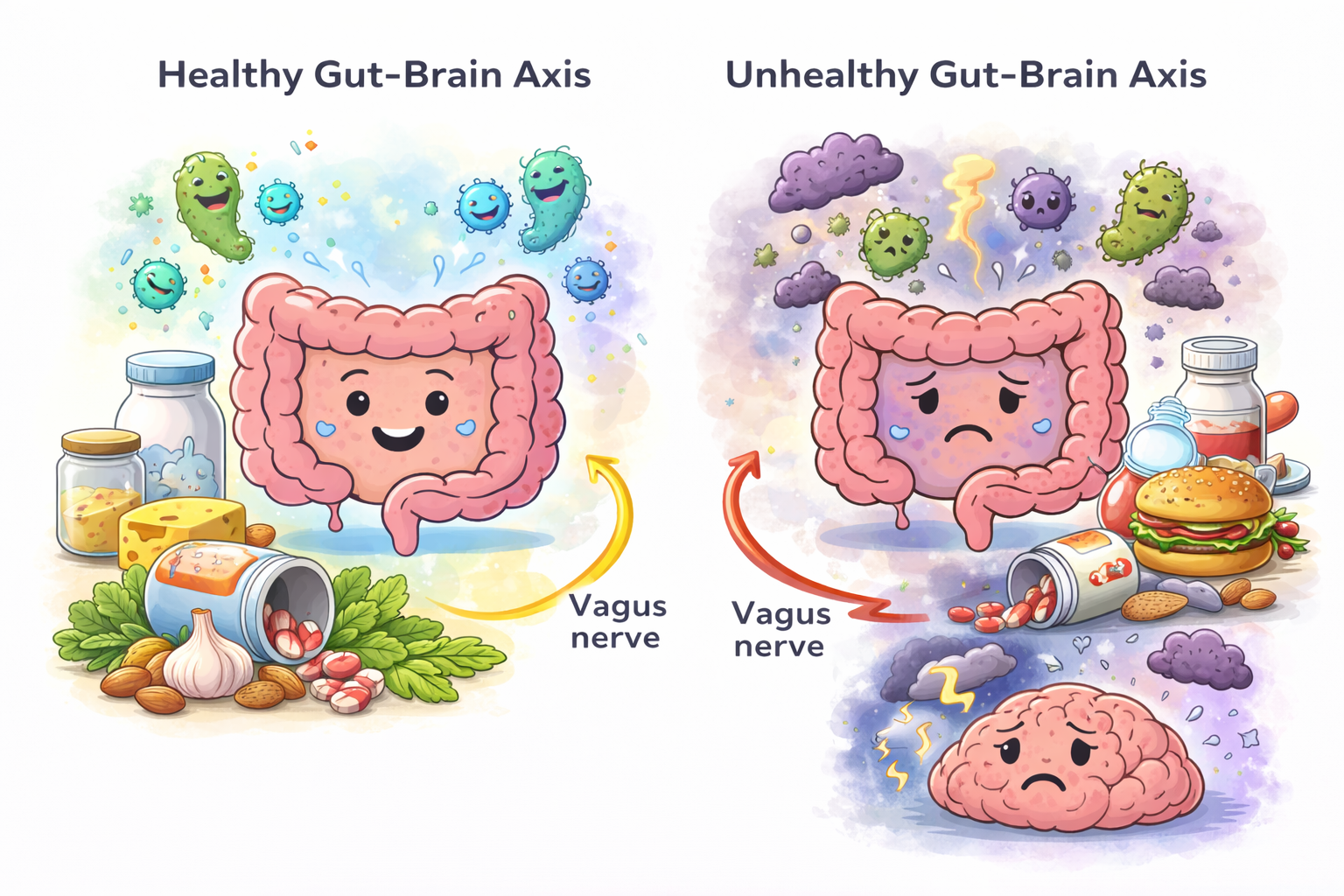
Digestive bacteria play a significant role in human health, extending beyond digestion to influence mood and mental well-being. Scientists have identified a communication system known as the gut–brain axis, which connects the gastrointestinal tract and the brain through nerves, hormones, and immune pathways. This connection explains why digestive problems can sometimes be accompanied by stress, irritability, or mood swings. Growing research on the human microbiome suggests that the balance of bacteria in the gut may affect emotional health, anxiety, and even depression (source).
2. What Are Digestive Bacteria? Understanding the Human Microbiome
The human microbiome refers to trillions of microorganisms, including bacteria, viruses, and fungi, that live in and on the body. A large portion of these microbes reside in the digestive system, particularly in the colon. They assist in breaking down food, absorbing nutrients, and producing beneficial compounds. Scientific estimates suggest that microbial cells in the body are roughly comparable in number to human cells, highlighting the microbiome’s importance in overall health.
Some bacteria living in the colon produce essential vitamins such as vitamin K and certain B vitamins, which are important for metabolic and physiological functions.
Beneficial vs Harmful Microorganisms
Not all microbes have the same effects. Beneficial bacteria help maintain digestion, strengthen immunity, and regulate metabolism. Harmful bacteria, on the other hand, may contribute to inflammation, digestive disorders, or infections if they overgrow. A balanced microbiome is essential because both beneficial and harmful microorganisms exist naturally, but health depends on maintaining equilibrium.
3. How Gut Bacteria Influence Mood and Mental Health
Research shows that gut bacteria can influence the production of neurotransmitters—chemical messengers that regulate mood. For example, about 90% of the body’s serotonin is produced in the gastrointestinal tract, where it plays important roles in both digestion and signaling pathways related to mood (source). Gut microbes also influence levels of dopamine and gamma-aminobutyric acid (GABA), which affect motivation and stress responses.
The Gut–Brain Axis Explained
The gut and brain communicate through the vagus nerve, immune signaling, and metabolic by-products produced by microbes. When gut bacteria are balanced, these signals support stable mood and cognitive function. However, an imbalance in gut bacteria has been associated with anxiety, depression, and mood swings in several studies. This explains why gut health may directly affect emotional balance and mental health.
4. Signs of an Unhealthy Gut That May Affect Mood
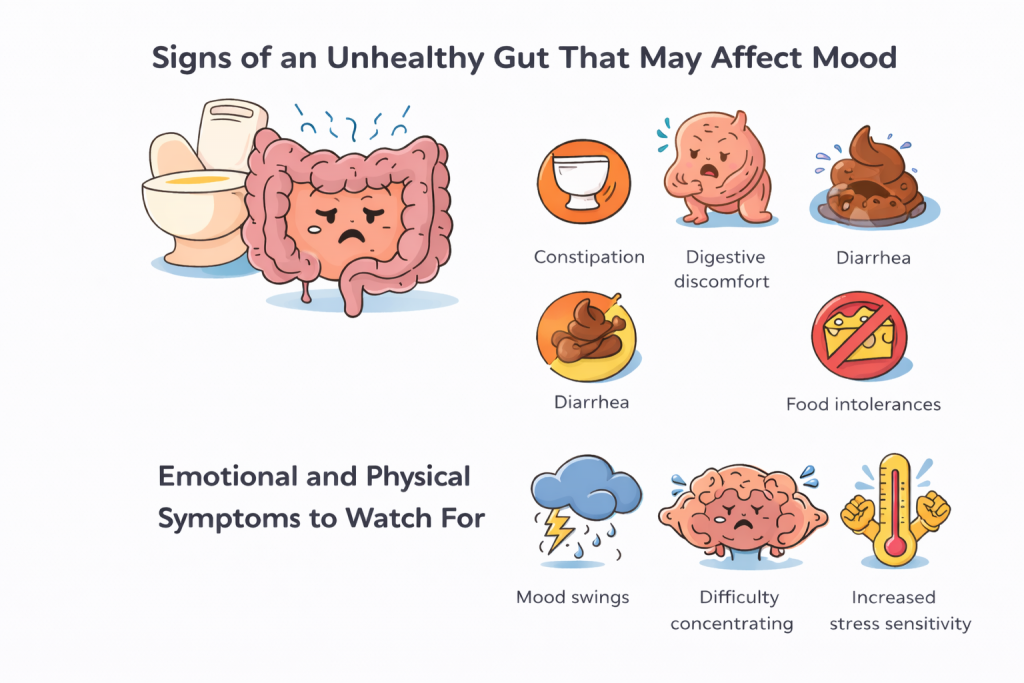
An imbalance in gut bacteria, sometimes called dysbiosis, can produce both physical and emotional symptoms. Common warning signs include digestive discomfort, bloating, constipation, diarrhea, and food intolerances. Many individuals also report fatigue, brain fog, irritability, or low mood when gut health is compromised. These effects may be linked to inflammation and altered neurotransmitter signaling associated with microbial imbalance.
Emotional and Physical Symptoms to Watch For
Mood swings, difficulty concentrating, and increased stress sensitivity may accompany digestive symptoms. These effects occur because inflammation and microbial imbalance can influence brain chemistry and hormone levels.
5. Factors That Disrupt Gut Bacteria
Several lifestyle and environmental factors can disturb the balance of gut bacteria like:
- Low fiber intake
- Chronic stress
- Lack of sleep
- Use of certain medications, especially antibiotics
- Environmental exposures
- Poor dietary habits
6. How to Improve Gut Health and Support a Better Mood
Improving gut health often begins with dietary and lifestyle changes. Eating fiber-rich foods such as fruits, vegetables, legumes, and whole grains supports beneficial bacteria. Fermented foods like yogurt, kefir, and sauerkraut introduce helpful microbes, while adequate hydration and regular physical activity support digestion and circulation. Stress-management practices such as mindful breathing and adequate sleep also contribute to a healthier microbiome. In many cases, rebalancing gut bacteria may take several weeks, depending on diet and lifestyle consistency.
7. The Role of Probiotics and Diet in Mood Regulation
Probiotics, which are beneficial bacteria found in certain foods and supplements, have shown potential to improve gut health and, in some cases, mood. Clinical reviews suggest that specific probiotic strains may reduce symptoms of stress and mild depression by supporting the gut–brain axis. Prebiotic foods, such as garlic, onions, and bananas, also nourish beneficial bacteria. However, probiotics are not a universal solution, and their effectiveness can vary depending on the individual and the strains used.
8. Conclusion: Why Gut Health Matters for Emotional Well-Being
Digestive bacteria influence more than digestion—they play a key role in mental and emotional health. Through the gut–brain axis, microbes help regulate neurotransmitters, immune responses, and inflammation, all of which affect mood. Maintaining a balanced diet, managing stress, and supporting a healthy microbiome can contribute to improved well-being. As scientific research continues to expand, the connection between gut health and mental health is becoming increasingly clear, highlighting the importance of caring for the microbiome as part of overall health.