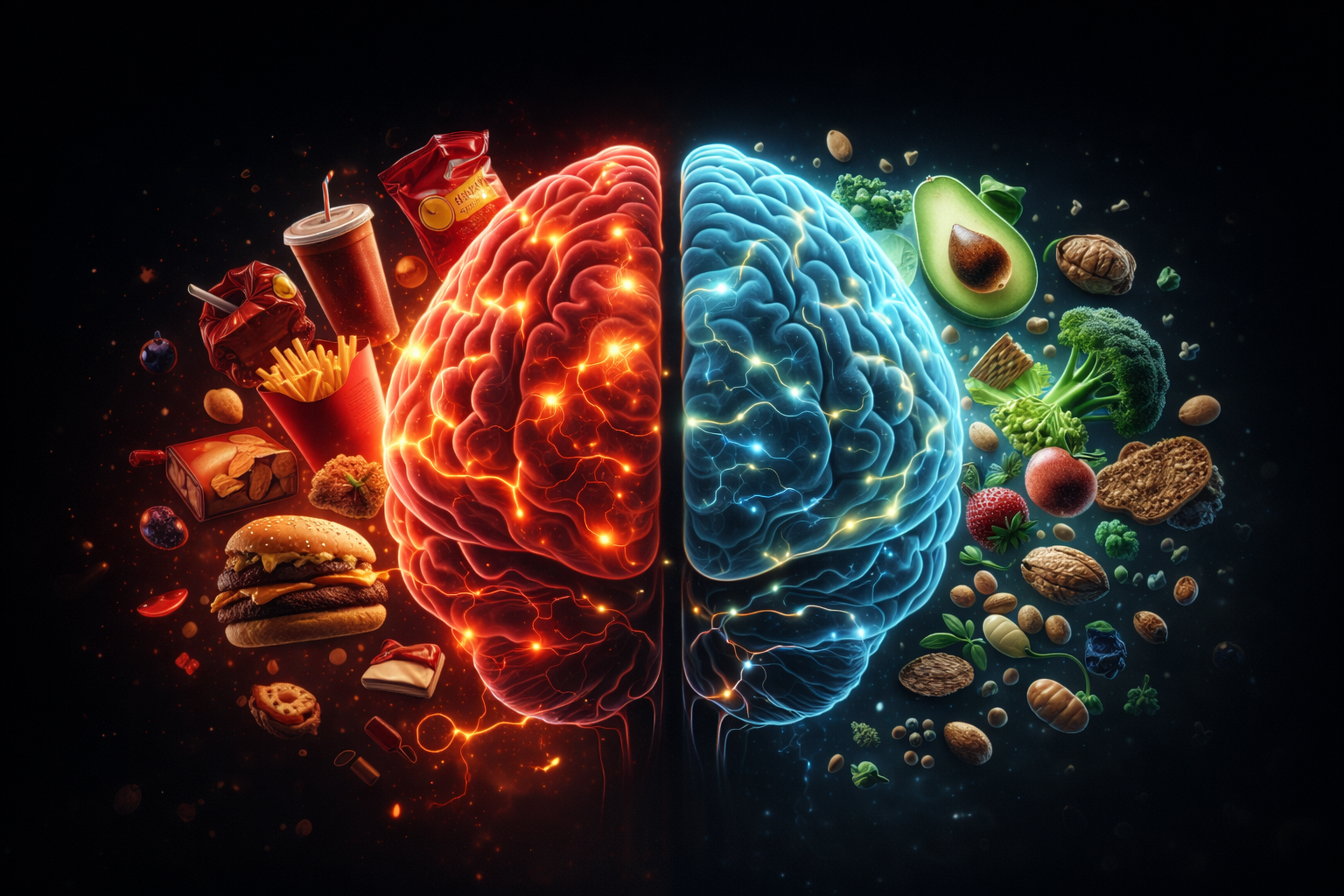

Ultra-processed foods are not just affecting waistlines — they are rewiring the brain. Research increasingly shows that ultra-processed food consumption is linked to adverse brain health outcomes, especially through its impact on the brain’s reward system.
What Are Ultra-Processed Foods?
Ultra-processed foods are industrial formulations made largely from refined ingredients, sugars, unhealthy fats, flavor enhancers, and preservatives. Unlike natural or minimally processed foods, they are engineered for maximum palatability, not nourishment.
Examples include packaged snacks, sugary cereals, soft drinks, instant noodles, and flavored processed meats.
How the Brain Reward System Works
The brain reward system relies heavily on dopamine, a neurotransmitter responsible for pleasure, motivation, and learning. Natural foods stimulate dopamine moderately, helping regulate appetite and satisfaction.
Ultra-processed foods, however, deliver intense and rapid dopamine spikes, similar to addictive substances.
How Ultra-Processed Foods Hijack the Brain
Ultra-processed foods overstimulate dopamine pathways through:
- High sugar and refined carbohydrate content
- Artificial flavor enhancers
- Rapid digestion and absorption
This constant overstimulation leads to dopamine resistance, meaning the brain requires more stimulation to feel pleasure. Over time, this rewires eating behavior, driving cravings, overeating, and loss of control.
Ultra-Processed Foods and Brain Health Outcomes
Studies show associations between ultra-processed food intake and:
- Brain inflammation
- Impaired memory and cognition
- Increased risk of dementia
- Reduced brain plasticity
Middle-aged and older adults appear especially vulnerable, as chronic inflammation accelerates age-related brain decline.
Signs Your Brain Is Affected by Ultra-Processed Foods
Common warning signs include:
- Brain fog
- Constant cravings
- Poor concentration
- Mood instability
- Fatigue after eating
These symptoms reflect disrupted neurotransmitter balance and metabolic stress in the brain.
Natural Food vs Processed Food: What the Brain Prefers
The brain thrives on natural, whole foods:
- Healthy fats support neurons
- Minerals aid neurotransmission
- Fiber stabilizes blood sugar
Traditional diets rich in whole grains, vegetables, fruits, and healthy fats support long-term brain function far better than ultra-processed diets.
How to Protect and Restore Brain Health Naturally
- Reduce sugar and refined foods
- Choose whole, natural meals
- Stay hydrated
- Allow fasting windows between meals
- Maintain consistent eating patterns
According to Dr. Barbara O’Neill, excessive refined foods overstimulate the nervous system, leading to exhaustion and dependency, while natural foods allow the brain to heal and rebalance naturally.
Final Thoughts
Ultra-processed foods don’t just affect the body — they reshape the brain’s reward circuitry, making unhealthy eating patterns harder to break. Choosing natural foods is not about restriction; it’s about restoring the brain’s natural intelligence and balance.
Your brain remembers what you feed it.
Sources
- Monteiro et al., Public Health Nutrition – Ultra-processed food classification
- Nature Reviews Neuroscience – Dopamine and reward circuitry
- BMJ (2023) – Ultra-processed foods and cognitive decline
- Dr. Barbara O’Neill – Nutrition and nervous system health (educational lectures)