
Introduction
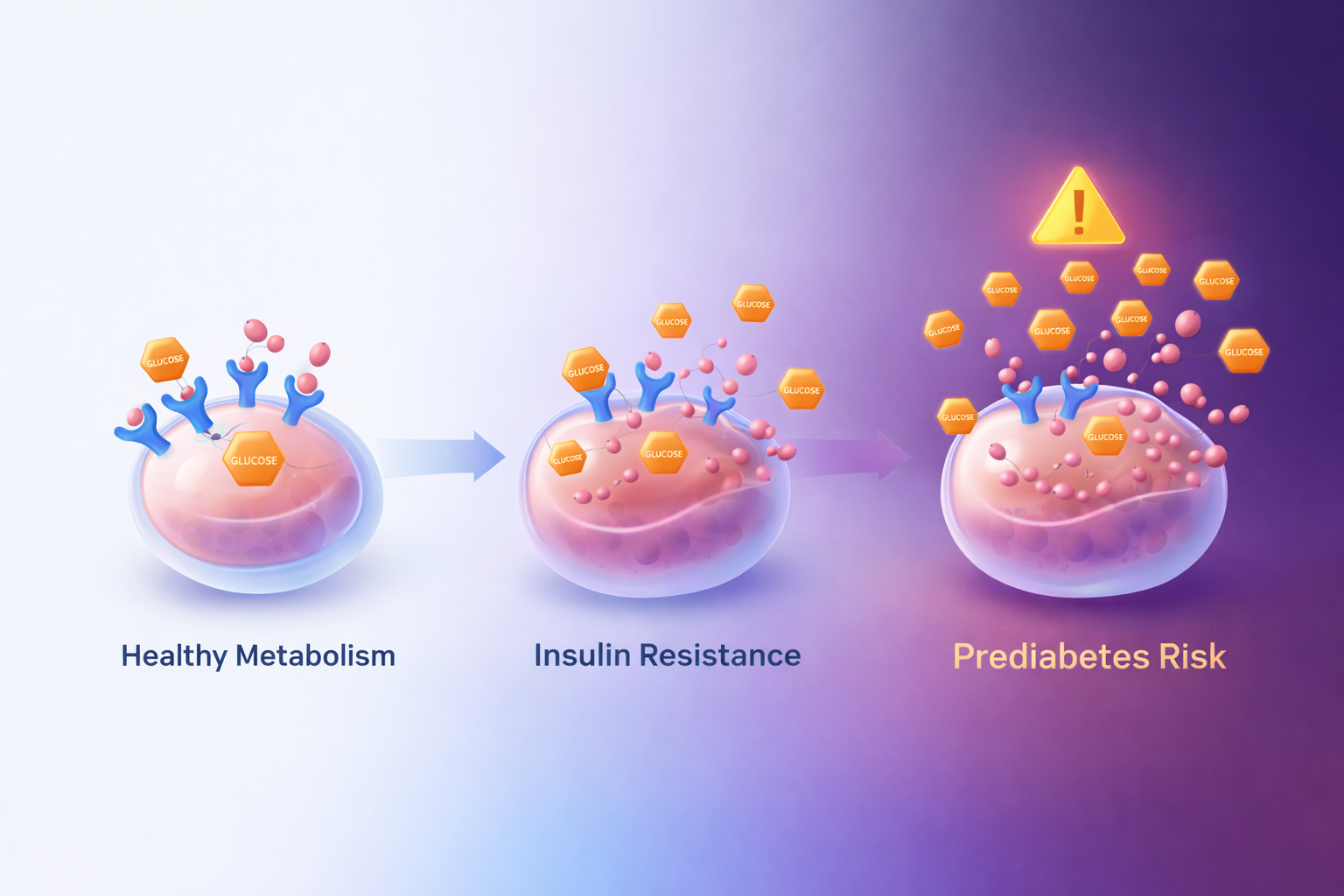
Insulin resistance is a metabolic condition in which the body’s cells become less responsive to insulin, a hormone responsible for helping glucose move from the bloodstream into cells for energy. When cells do not respond properly, the pancreas produces more insulin to keep blood sugar levels stable. Over time, this can lead to high insulin levels, prediabetes, and eventually type 2 diabetes.
Why Early Detection Matters?
Many people search for ‘what is insulin resistance or insulin resistance meaning?‘ because the condition often develops silently. Early insulin resistance may not cause dramatic symptoms but metabolic changes are already taking place in the body. Research shows that untreated insulin resistance increases the risk of metabolic syndrome, cardiovascular disease, and obesity-related complications (source). Recognizing the early signs and symptoms of insulin resistance can help prevent long-term health problems.
Early Signs and Symptoms
The early symptoms can vary from person to person, but several warning signals commonly appear before a diagnosis is made.
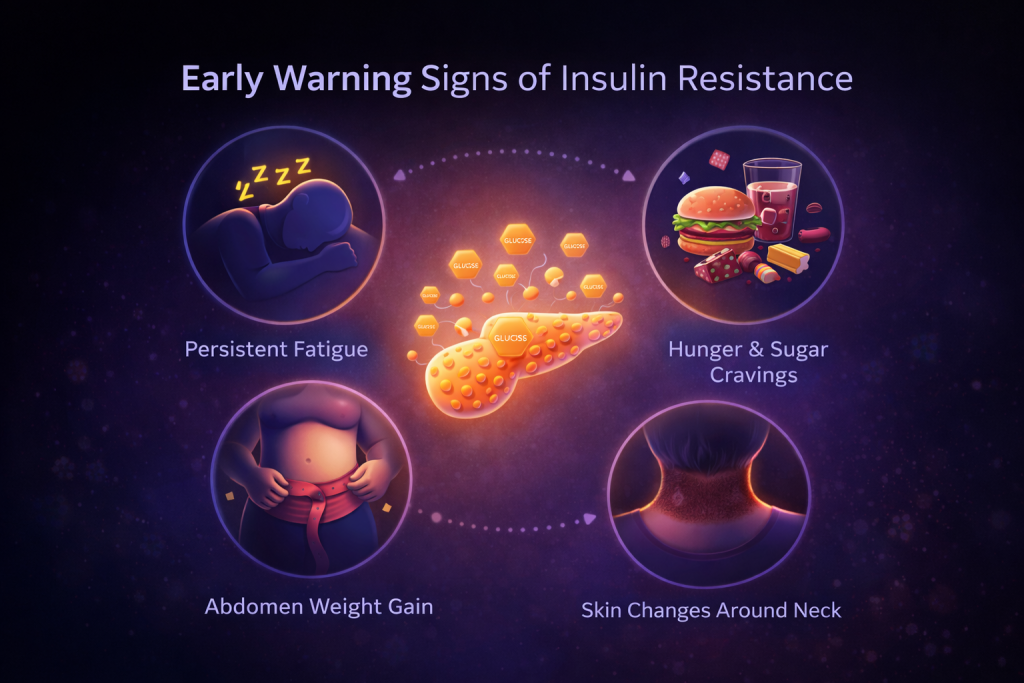
Persistent Fatigue and Low Energy
One of the most common symptoms is unexplained fatigue, especially after meals. When glucose cannot efficiently enter cells, the body struggles to produce enough energy. This is why many people with insulin resistance feel tired even after eating.
Increased Hunger and Sugar Cravings
Another frequent symptom is strong cravings for carbohydrates or sugary foods. Blood sugar fluctuations can trigger hunger signals in the brain, making individuals feel hungry shortly after eating. These cravings are often an early sign that the body is struggling to regulate glucose effectively.
Weight Gain Around the Abdomen
A noticeable increase in abdominal fat is strongly associated with insulin resistance. Visceral fat releases inflammatory substances that worsen metabolic imbalance and reduce insulin sensitivity. This is why weight gain around the waistline is often considered an early metabolic warning sign.
Skin Changes Around the Neck
Some individuals develop dark, velvety patches of skin around the neck or underarms, known as acanthosis nigricans. This condition is commonly linked with elevated insulin levels and is sometimes referred to as the early insulin resistance neck sign.
Warning Signs of Prediabetes and High Blood Sugar
Insulin resistance is closely linked to prediabetes, a condition where blood sugar levels are higher than normal but not yet in the diabetic range.
Symptoms
Many people wonder ‘what prediabetes feels like‘ but symptoms may be mild. Possible signs include fatigue, blurred vision, slow-healing wounds, and frequent infections. According to the Centers for Disease Control and Prevention, millions of adults have blood sugar level without realizing it because symptoms often develop gradually.
Signs Your Blood Sugar Is Too High
High blood sugar may also cause increased thirst, frequent urination, headaches, and irritability. Some individuals experience diabetes-related fatigue, which occurs when the body cannot effectively use glucose for energy.
Recognizing these early signs of high blood sugar is essential for preventing the progression to type 2 diabetes.
Can You Be Insulin Resistant Without Diabetes?
Yes, it can occur without diabetes. In the early stages, the pancreas produces extra insulin to compensate for reduced cellular sensitivity.
This stage is often described as silent insulin resistance because blood glucose levels may remain within the normal range for years. Many people search ‘how do you know if you are insulin resistant’ because symptoms may be subtle or easily overlooked.
Risk Factors
Several factors contribute to insulin resistance, including:
- Sedentary lifestyle
- Poor diet high in refined carbohydrates
- Genetic predisposition
- Chronic stress and poor sleep
Research also shows that it may occur even in individuals who are not overweight, although obesity significantly increases the risk.
How to Detect?
Early diagnosis is important for preventing complications. Healthcare providers use a combination of symptoms, risk factors, and laboratory tests.
Insulin Resistance Tests
Common diagnostic tests include:
- Fasting blood glucose test
- HbA1c test (average blood sugar levels over three months)
- Glucose tolerance test
Some doctors also measure fasting insulin levels to evaluate insulin sensitivity. People experiencing these early symptoms may benefit from an insulin resistance test to assess metabolic health.
How to Reverse Insulin Resistance Naturally
Lifestyle changes are one of the most effective ways to improve insulin sensitivity.
Insulin Resistant Diet
A balanced diet rich in whole foods, fiber, lean proteins, and healthy fats can help stabilize blood sugar levels. Limiting refined carbohydrates, sugary beverages, and processed foods is also important because these foods worsen the condition.
Physical Activity and Weight Management
Regular exercise helps muscles absorb glucose more efficiently, reducing blood sugar levels and improving insulin sensitivity. Research shows that both aerobic exercise and strength training can significantly improve metabolic health (source).
Additional Lifestyle Factors
Improving sleep quality, managing stress, and maintaining a healthy weight can also support insulin function. Some studies suggest that nutrients such as magnesium and omega-3 fatty acids may help improve insulin sensitivity.
Conclusion
The early signs of insulin resistance are often subtle but should not be ignored. Symptoms such as fatigue, sugar cravings, abdominal weight gain, and skin changes around the neck may indicate that the body is struggling to regulate blood sugar effectively.
Understanding these warning signals and seeking medical evaluation when necessary can help prevent the progression to prediabetes and type 2 diabetes. With early lifestyle changes, proper diet, and regular physical activity, it can often be managed successfully, supporting long-term metabolic health.