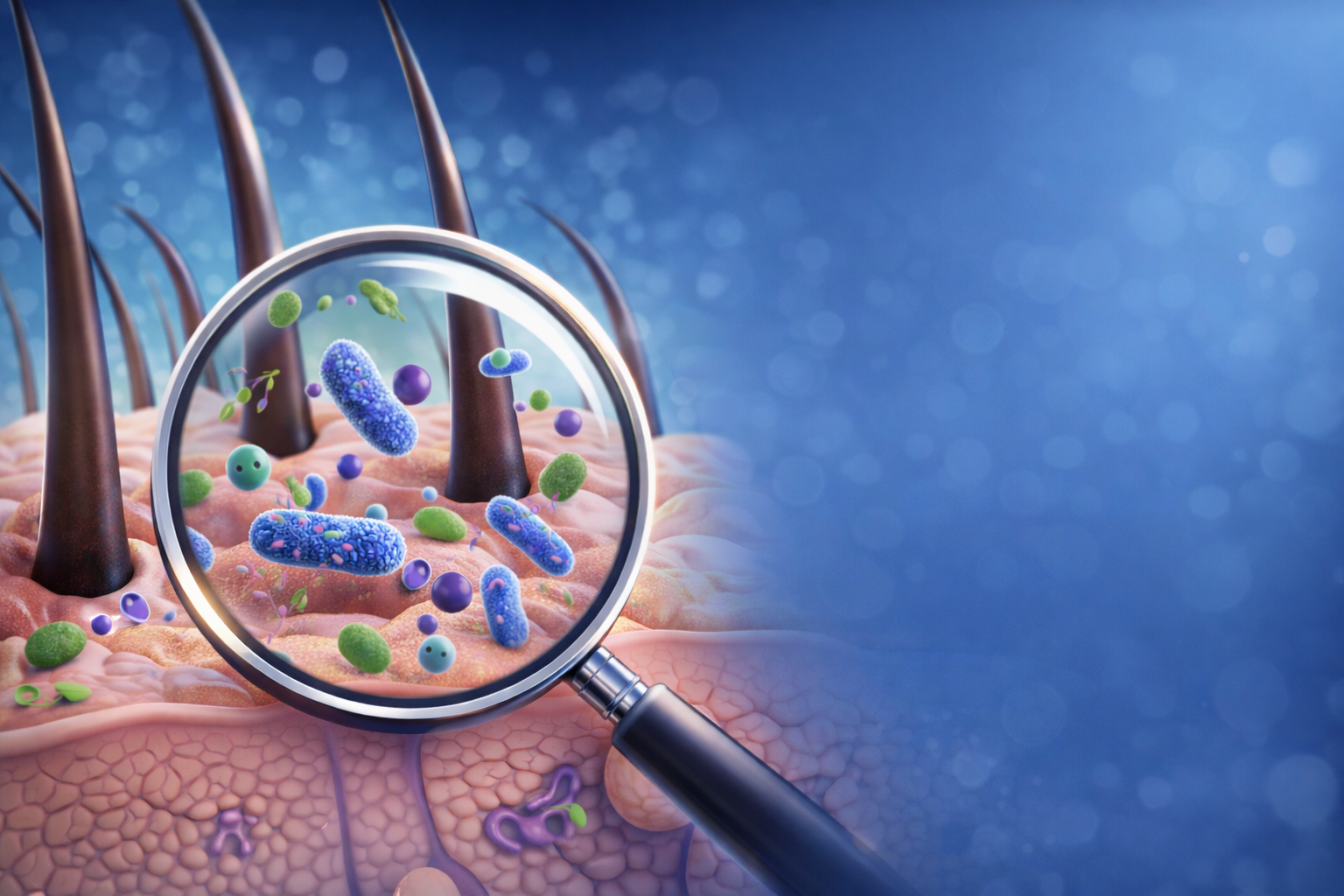

The scalp microbiome is the community of microorganisms — including bacteria and fungi — that naturally live on your scalp. Just like the gut microbiome, these tiny organisms play a crucial role in scalp health and hair growth. When the scalp microbiome is balanced, it protects the skin, regulates oil production, and helps prevent inflammation and hair loss. (Source)
What Is the Scalp Microbiome?
The scalp microbiome refers to all the microbes living on your scalp surface, including beneficial bacteria and yeasts like Malassezia. These microorganisms coexist with your skin cells and oil (sebum) to maintain a healthy environment. News-Medical
Beneficial bacteria such as Cutibacterium acnes and Staphylococcus epidermidis help regulate moisture and protect against harmful microbes that can trigger irritation or infections. (Source)
Why Good Bacteria on the Scalp Matter
1. Protection Against Harmful Microbes
Good bacteria compete with harmful species, reducing the risk of infections and inflammation. In a balanced microbiome, commensal microbes help suppress pathogens that can cause dandruff or irritation. News-Medical
2. Sebum Balance and Moisture Regulation
Healthy microbes help regulate sebum — the natural oil that keeps the scalp hydrated. Too much sebum can lead to an oily, itchy scalp, while too little can cause dryness. The right microbiome balance keeps oil production optimal. MPR Labs
3. Minimizing Inflammation and Supporting Hair Growth
Imbalances in the scalp microbiome can trigger inflammation, disrupting hair follicles and potentially contributing to hair thinning or loss. Some studies show that people with hair loss conditions like androgenetic alopecia have altered microbial profiles compared with healthy scalps. PubMed
Moreover, microbial pathways are linked to nutrient production — including amino acids and B-vitamins — needed for healthy hair growth. PubMed
Signs Your Scalp Microbiome Might Be Out of Balance
A scalp microbiome imbalance can lead to:
- Persistent itchiness or flaking
- Oily or greasy scalp
- Redness and irritation
- Unusual hair shedding or thinning
- Dandruff that doesn’t respond to regular shampoos
These symptoms often accompany microbial imbalance or scalp dysbiosis, where harmful microbes outnumber the beneficial ones. Dr Nagwani
How to Improve and Protect Your Scalp Microbiome
Gentle Cleansing, Not Stripping
Using harsh shampoos with strong detergents (like sulfates) can strip your scalp of natural oils and beneficial microbes. Choosing sulfate-free, pH-balanced shampoos helps maintain your scalp microbiome. Secure Medical
Balanced Washing Routine
Overwashing your hair can disrupt the microbiome, while under-washing may lead to buildup of sebum and dead skin cells that feed harmful microbes. For most people, 2–3 washes per week with a gentle cleanser is enough. Mercola.com
Nutrition and Healthy Lifestyle
What you eat affects microbial balance. Diets high in processed sugar and fats have been linked to microbial imbalance, while diets rich in vitamins (like D, iron, zinc) support immune health and the microbiome. MONPURE
Probiotic-rich foods such as yogurt, sauerkraut, and kefir feed beneficial microbes — similar to how they help gut health. Mercola.com
Avoid Harsh Products
Strong styling products, alcohols, or antifungal chemicals can reduce microbial diversity. Opt for natural ingredients and products labeled microbiome-friendly. Secure Medical
Can Scalp Microbiome Affect Hair Loss?
Research suggests disruptions in the scalp microbiome are associated with hair loss conditions. For example, in androgenetic alopecia, different microbial diversity levels correlate with hair thinning severity. Although causal mechanisms are still under study, microbial imbalance appears to influence inflammation and follicle environment. PubMed
Final Thoughts
Your scalp’s microbiome is an invisible ecosystem that plays a vital role in scalp health, comfort, and hair growth. Good bacteria help:
- Protect against pathogens
- Balance sebum and moisture
- Support hair follicle health
Maintaining this balance through proper washing, diet, and gentle care improves scalp comfort, reduces irritation, and creates an optimal environment for healthy hair. As research evolves, the connection between the scalp microbiome and hair health continues to be a promising frontier in dermatology and natural care science.