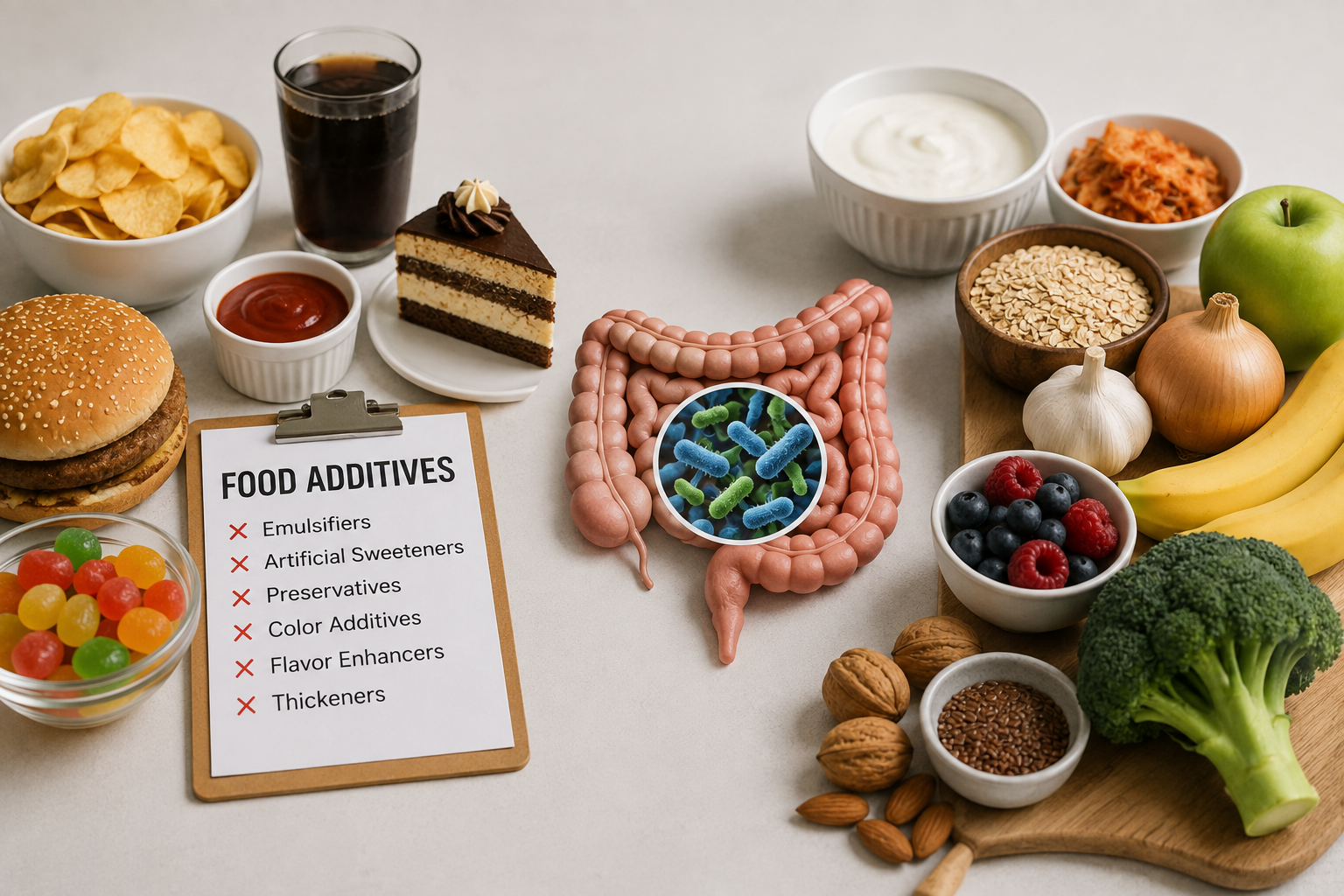

The human microbiome—home to trillions of bacteria, fungi, and microbes—plays a crucial role in digestion, immunity, metabolism, and even mental health. While many people focus on probiotics and healthy foods, a less-discussed factor is the everyday food additives found in packaged snacks, processed foods, sauces, breads, and beverages. Research shows that these additives can significantly influence the balance of your gut microbiota—sometimes positively, but often negatively. Here’s what science reveals and what it means for your health.
What Are Food Additives?
Food additives are substances added to food during processing to improve flavor, texture, color, shelf life, or stability. Common examples include:
- Emulsifiers (polysorbate 80, carboxymethylcellulose)
- Artificial sweeteners (aspartame, sucralose, saccharin)
- Preservatives (sodium benzoate, nitrates)
- Colorants (Red 40, Yellow 5)
- Flavor enhancers (monosodium glutamate or MSG)
- Thickeners (xanthan gum, guar gum)
These compounds may seem harmless, but your microbiome is extremely sensitive to chemical changes in the gut environment.
How Food Additives Affect Your Gut Microbiome
1. Emulsifiers Can Disrupt Gut Barrier Function
Emulsifiers are added to foods like ice cream, salad dressings, and sauces to improve texture. But research shows that certain emulsifiers can thin the mucus layer that protects the gut lining.
Effects on the microbiome:
- Promotes inflammation
- Encourages growth of inflammatory bacteria
- Can lead to a “leaky gut”
- Associated with metabolic disorders
Studies suggest polysorbate 80 and carboxymethylcellulose are the most problematic, altering microbiota composition and triggering low-grade chronic inflammation.
2. Artificial Sweeteners May Promote Dysbiosis
Artificial sweeteners like aspartame, sucralose, and saccharin are marketed as calorie-free sugar alternatives. However, evidence shows that they can negatively modify the microbiome.
Key effects:
- Reduce beneficial bacteria (e.g., Bifidobacteria, Lactobacillus)
- Increase the growth of harmful or opportunistic bacteria
- May raise blood sugar levels by altering gut microbial metabolism
- Can contribute to glucose intolerance and metabolic syndrome
The gut microbiome appears to “sense” artificial sweeteners, and its altered behavior can influence insulin sensitivity and weight gain.
3. Preservatives Can Slow Down Microbial Diversity
Preservatives extend shelf life, but they can suppress microbial activity inside your gut as well.
For example:
- Sodium benzoate may inhibit beneficial bacterial enzymes
- Nitrates and nitrites can alter nitrite-reducing bacteria
- Sulphites may reduce microbial diversity
Lower microbial diversity is linked with digestive disorders, slower metabolism, and a weakened immune system.
4. Color Additives May Promote Inflammation
Artificial colorants, especially synthetic dyes like Red 40 and Yellow 5, can influence inflammatory pathways.
Possible effects:
- Alter bacterial balance
- Trigger immune responses
- Contribute to hyperactivity and behavioral changes in children (indirectly linked to gut–brain axis)
Although more research is needed, early findings raise important concerns about synthetic dyes and microbiome health.
5. Thickeners Can Be Neutral or Beneficial
Not all food additives are harmful. Some thickeners and gums—like xanthan gum, guar gum, and pectin—act like prebiotic fibers.
Benefits include:
- Feeding beneficial gut bacteria
- Producing short-chain fatty acids (SCFAs)
- Supporting digestion
- Increasing stool bulk
However, when consumed in large quantities, even beneficial thickeners can cause bloating or digestive discomfort.
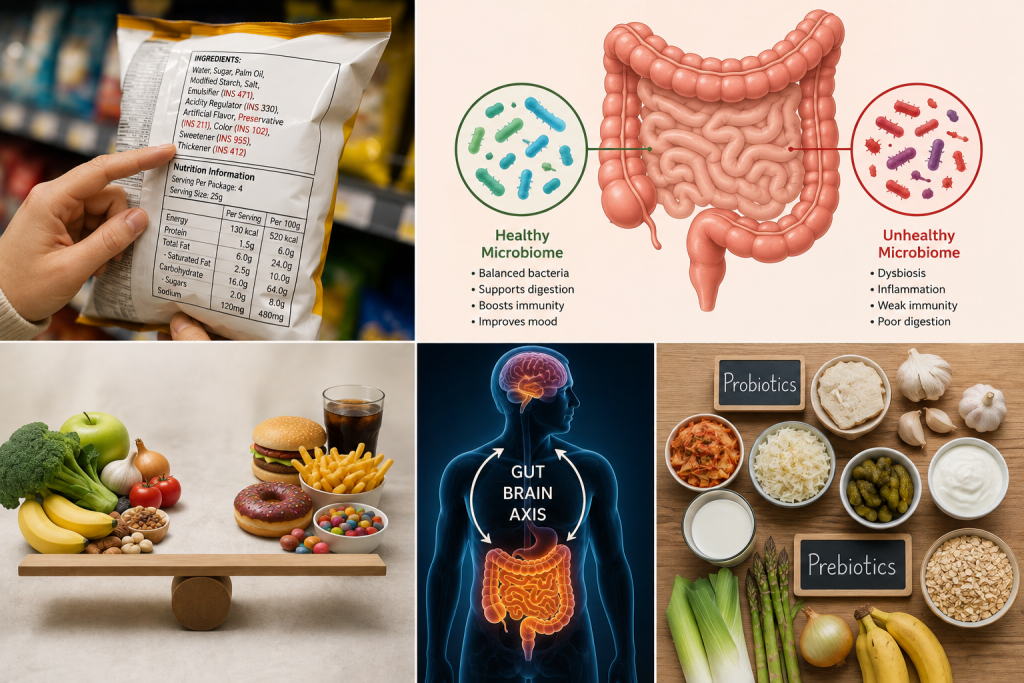
How Food Additives Influence the Gut–Brain Axis
Your microbiome communicates directly with your brain via the gut–brain axis. When additives disturb microbial balance:
- Stress and anxiety can increase
- Sleep patterns can be affected
- Cognitive function may change
- Mood fluctuations may become more common
This connection makes it essential to understand additives’ long-term effects.
How to Protect Your Microbiome from Harmful Additives
1. Read Labels Carefully
Look for:
- Artificial sweeteners
- Synthetic dyes
- Emulsifiers
- Preservatives
The fewer ingredients, the better.
2. Choose Minimally Processed Foods
Fresh fruits, vegetables, whole grains, legumes, nuts, and lean protein support a healthy, diverse microbiome.
3. Add Probiotics and Prebiotics
Foods like yogurt, kefir, kimchi, garlic, and onions help rebuild a healthy gut ecosystem.
4. Avoid Ultra-Processed Foods
Anything with long, complicated ingredient lists almost always contains additives that can disrupt gut balance.
Final Thoughts
Food additives are deeply woven into modern diets, but their impact on the gut microbiome is often overlooked. While not all additives are harmful, many—especially emulsifiers, artificial sweeteners, and preservatives—can create imbalances that influence digestion, immunity, metabolism, and even mental health.
A healthier gut begins with mindful eating choices. By prioritizing whole foods and reducing reliance on processed options, you can protect your microbiome and support long-term well-being.